
Robohub.org
Women in Robotics Update: Melonee Wise, Maren Bennewitz, Alicia Casals
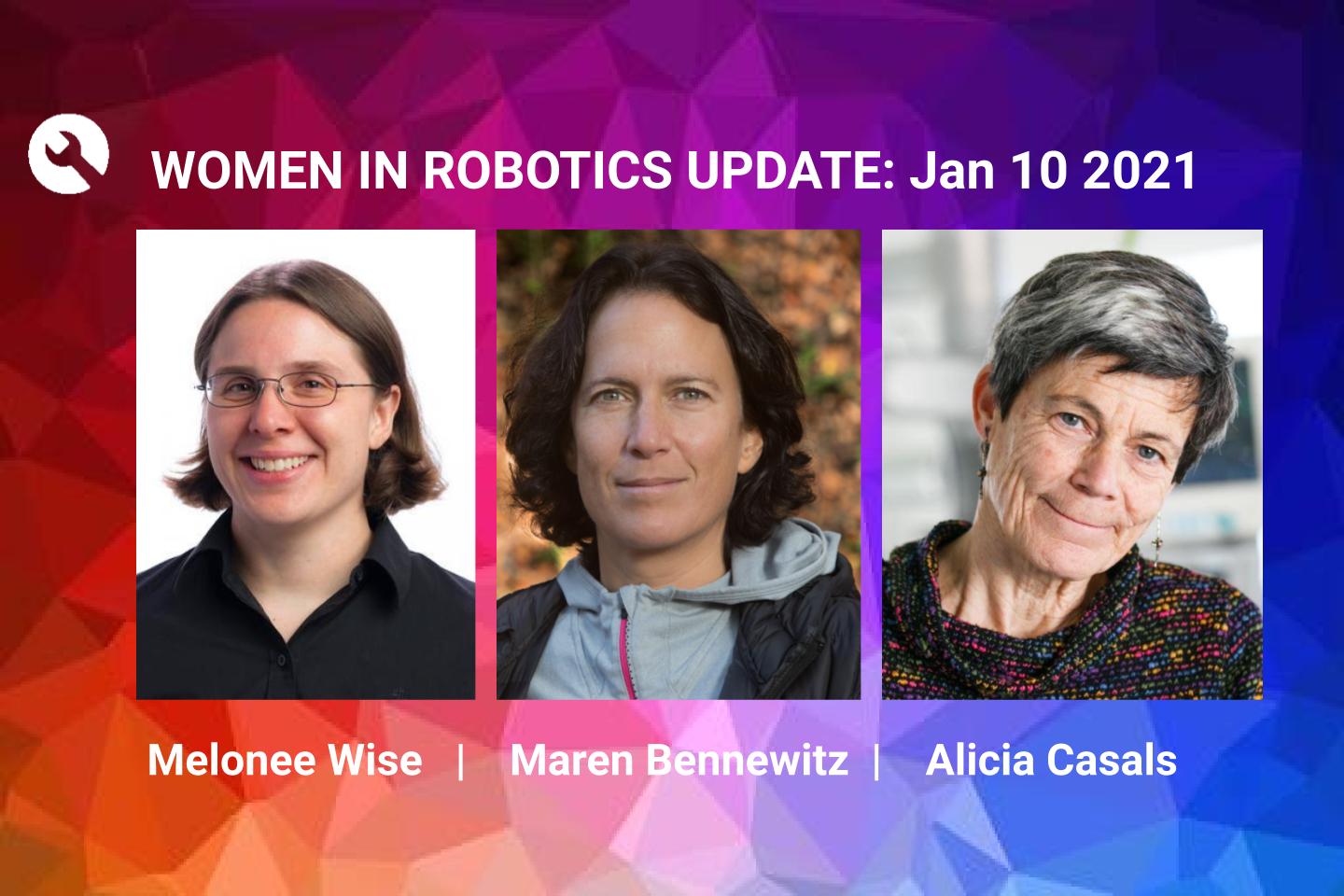
Introducing the seventh post in our new series of Women in Robotics Updates, featuring Melonee Wise, Maren Bennewitz and Alicia Casals and from our first “25 women in robotics you need to know about” list in 2014. These women have pioneered foundational research in robotics, created organizations of impact, and inspired the next generations of robotics researchers, of all ages.
 |
Melonee Wise
CEO of Fetch Robotics
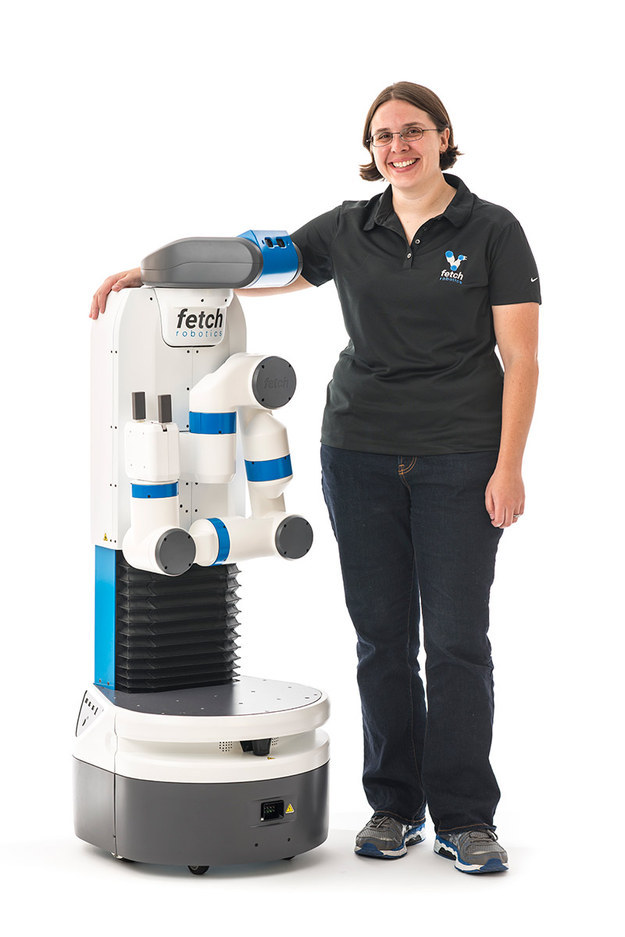
Melonee Wise(featured in 2014), now a CEO of Fetch Robotics has been designing, building, and programming robotic hardware for an autonomous boat, autonomous car, personal robot platforms, battlebots, and several low cost platforms since 19 years. At Fetch Robotics, she and her team provide the best AMR or Autonomous Mobile Robot solutions for the logistics industry through a fleet of products that provide ‘On Demand Autonomy’. Fetch Robotics was also the first winner of Overall Excellence Award in the Silicon Valley Robotics ‘Good Robot’ Industry Awards in 2020. Wise was recognized by Silicon Valley Business Journal as 40 under 40 and by Technology Review TR35 as a ’40 female founders who crushed it’ in 2016. She also received the Women of Influence in 2017 Silicon Valley Business Journal. She has more than 4 Patents and more than 20 published articles. Wise received the Distinguished Alumni Award from University of Illinois at Champaign Urbana in 2016. After the ceremony Wise shared that, “Women in Engineering is definitely a small community. There’s only so many women in engineering and there’s only so many engineers in robotics. So you’re looking at a pretty thin cross-section of a population that is not as diverse as we all hope it would be. And so sometimes it can be very challenging. But I actually think it’s harder as a start-up entrepreneur to be a woman than it is to be potentially a roboticist.” |
 |
Maren Bennewitz
Professor at the University of Bonn
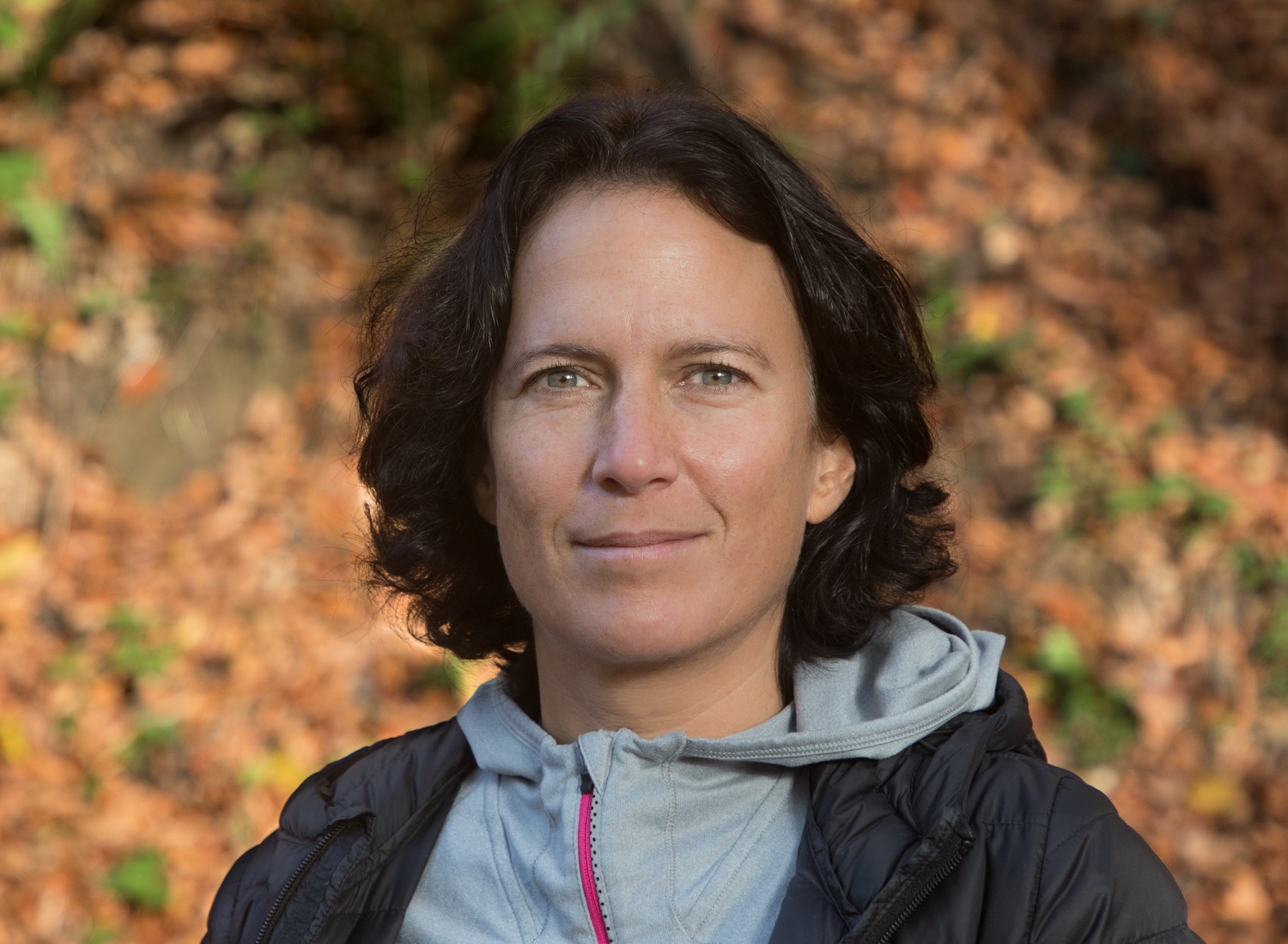
Maren Bennewitz (featured in 2014) is a professor for humanoid robots and vice rector for IT at the University of Bonn and her research focuses on robots acting in human environments. She and her team have developed several innovative solutions for robotic systems co-existing and interacting with humans such as probabilistic techniques for navigation with humanoid and wheeled robots, as well as for reliably detecting and tracking humans from sensor data and analyzing their motions. She is also on the Executive Board of the Cluster of Excellence PhenoRob and the Center for Mind Research since 2019.
Bennewitz was Inspired by the participation in the Minerva project, led by Sebastian Thrun back in 1998, where she and the team programmed a robot to act as a museum tour guide in the National Museum of American History. ” My favorite thing is doing experiments on real robots evaluating novel developed techniques,” says Bennewitz. “Which is also one of my least favorite things since it is so time-consuming to get the algorithms running on real-world systems with real sensor data, even when the algorithms worked reliably in simulation before.” |
 |
Alicia Casals
Professor at Universitat Politècnica de Catalunya (UPC)
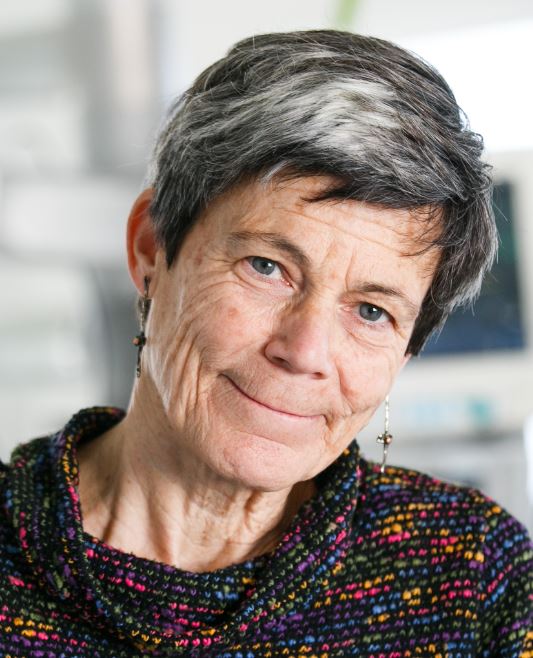
Alicia Casals (featured 2014) is professor at Universitat Politècnica de Catalunya (UPC) doing her research in medical robotics, mainly in the surgical field, and has been collaborating with companies and other non-academic institutions to find the solutions to the challenges that come with Integration of robotics to real situations. She has been recently cofounder of two companies in the robotic medical field. Casals received the “Nit de la Robòtica” award as recognition of her research and professional career, awarded in 2019 by the Industrial Engineers of Catalunya. She has been active as referent model that drives scientific and technical vocations amongst young women while taking into account the human side within the area. Casals is significantly involved with the IEEE, IEEE Robotics and Automation Society and IEEE Engineering in Medicine and Biology (IEEE RAS and IEEE EMBS), European Robotics Network (EURON), and founded the Spanish Robotics Chapter. In this 2015 Oral History for Engineering and Technology History Wiki, Casals describes what got her started in robotics, her projects, her startup experience and her message to all the young roboticists, “It’s important to think on the ethics of robotics, on the efficiency of the work, and so trying to really solve what the problem is, because it’s a very wide area, so it’s easy that the projects solve things but don’t reach anything in particular. But because robotics has a wide field of applications, and they can be very good and can be used as an assistant tool. We are working in the medical field, so we basically work in robotics for aiding people. So that is a fantastic area of research we consider.” |
Want to keep reading? There are 180 more stories on our 2013 to 2020 lists. Why not nominate someone for inclusion next year!
And we encourage #womeninrobotics and women who’d like to work in robotics to join our professional network at http://womeninrobotics.org
tags: women in robotics

AUAI is supported by:









