Robohub.org
Can artificial intelligence learn to scare us?
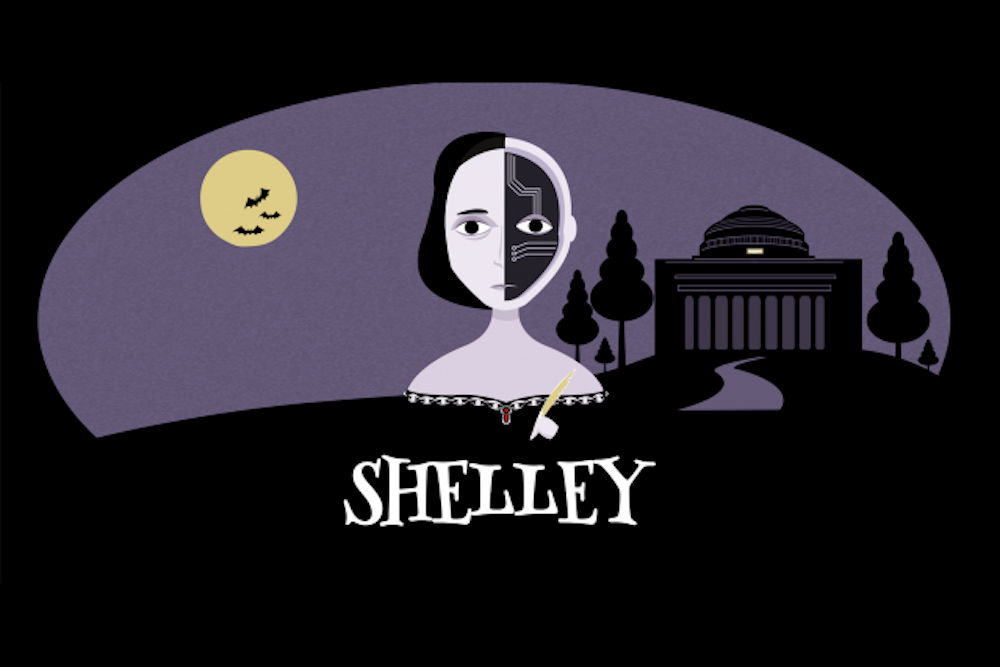
Just in time for Halloween, a research team from the MIT Media Lab’s Scalable Cooperation group has introduced Shelley: the world’s first artificial intelligence-human horror story collaboration.
Shelley, named for English writer Mary Shelley — best known as the author of “Frankenstein: or, the Modern Prometheus” — is a deep-learning powered artificial intelligence (AI) system that was trained on over 140,000 horror stories on Reddit’s infamous r/nosleep subreddit. She lives on Twitter, where every hour, @shelley_ai tweets out the beginning of a new horror story and the hashtag #yourturn to invite a human collaborator. Anyone is welcome to reply to the tweet with the next part of the story, then Shelley will reply again with the next part, and so on. The results are weird, fun, and unpredictable horror stories that represent both creativity and collaboration — traits that explore the limits of artificial intelligence and machine learning.
“Shelley is a combination of a multi-layer recurrent neural network and an online learning algorithm that learns from crowd’s feedback over time,” explains Pinar Yanardhag, the project’s lead researcher. “The more collaboration Shelley gets from people, the more and scarier stories she will write.”
Shelley starts stories based on the AI’s own learning dataset, but she responds directly to additions to the story from human contributors — which, in turn, adds to her knowledge base. Each completed story is then collected on the Shelley project website.
“Shelley’s creative mind has no boundaries,” the research team says. “She writes stories about a pregnant man who woke up in a hospital, a mouth on the floor with a calm smile, an entire haunted town, a faceless man on the mirror … anything is possible!”
One final note on Shelley: The AI was trained on a subreddit filled with adult content, and the researchers have limited control over her — so parents beware.
tags: c-Research-Innovation