Robohub.org
 

Canada’s approach to risk management for nighttime drone flights

by
03 March 2015


share this:
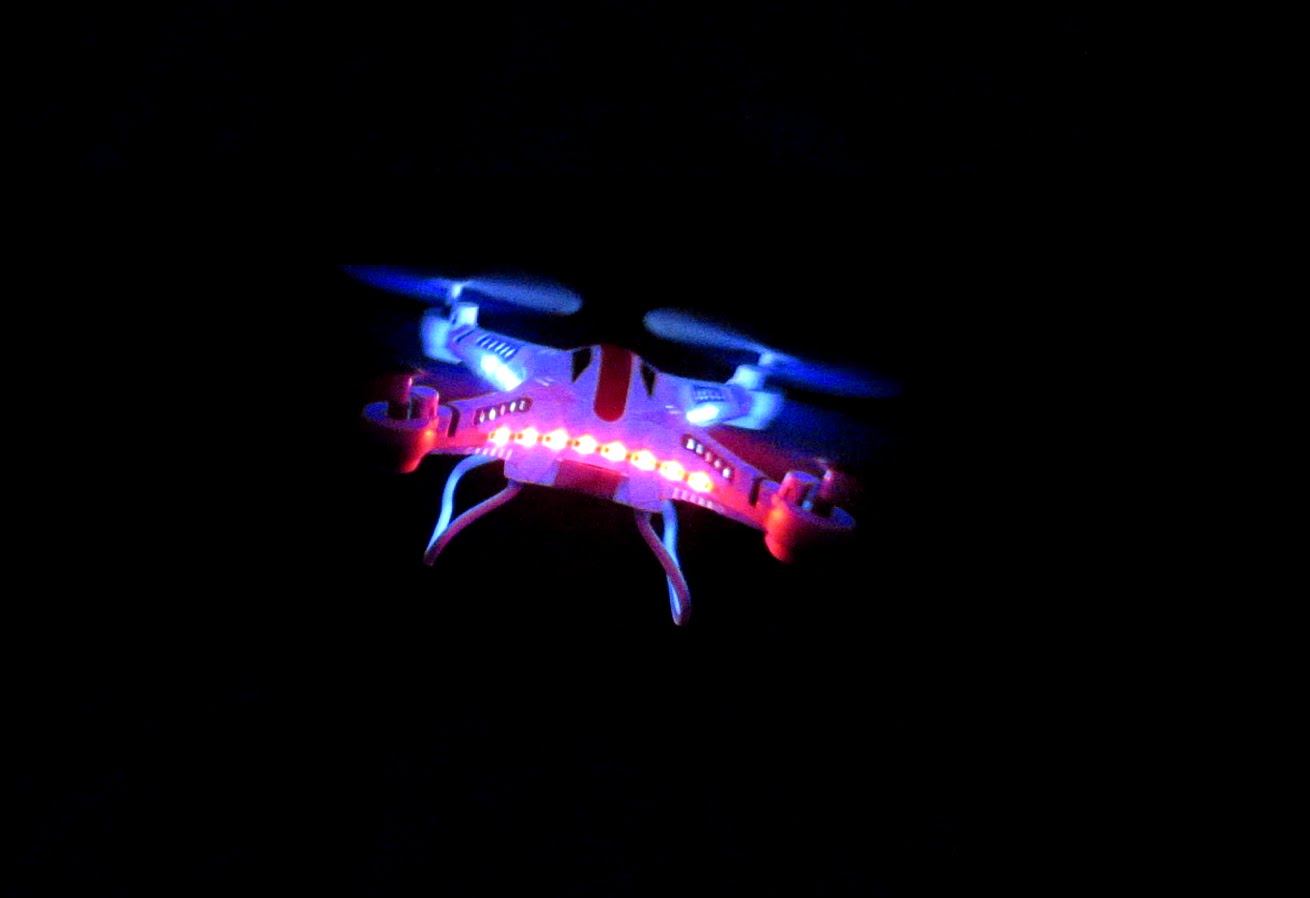
JJRC H8C Quadcopter Drone - Night Flight. Source Youtube.

JJRC H8C Quadcopter Drone – Night Flight. Source YouTube.

The FAA’s Notice of Proposed Rulemaking (NPRM) for small unmanned aircraft systems (SUAS) limits SUAS operations to daylight hours. The FAA concedes that the restriction on nighttime flights may negatively impact the ability to use SUAS in northern regions such as Alaska that have very few hours of daylight during winter months. The FAA has invited stakeholders to comment on how risk may be mitigated in the course of nighttime operations. Here is a breakdown of the Canadian approach to risk management for nighttime flights…

In Canada, nighttime operations are possible under the Special Flight Operations Certificate (SFOC) system. Transport Canada’s Staff Instruction 623-001 outlines the following conditions for nighttime operations:

  • If the UAV has lights, the lights must be on during night flights
  • If the UAV does not have lights, there must be a means of illumination that would enable visual contact with the UAV
  • The crew must have a portable emergency light source available
  • The pilot must not have visual limitation of depth perception, colour blindness or problems seeing at night
  • Visual observers providing the sense and avoid function (i.e. where the pilot is using FPV) cannot use night vision goggles

Transport Canada further states that if light emitting diodes (LEDs) are used to satisfy the lighting requirement for nighttime operations, the LEDs must have sufficient intensity to enable the pilot or visual observer and other airspace users to have visual contact with the UAV.


tags: , , , ,


Diana Marina Cooper is Vice President of Legal and Policy Affairs at PrecisionHawk.


Related posts :


MIT engineers design an aerial microrobot that can fly as fast as a bumblebee

  31 Dec 2025
With insect-like speed and agility, the tiny robot could someday aid in search-and-rescue missions.

Robohub highlights 2025

  29 Dec 2025
We take a look back at some of the interesting blog posts, interviews and podcasts that we've published over the course of the year.

The science of human touch – and why it’s so hard to replicate in robots

  24 Dec 2025
Trying to give robots a sense of touch forces us to confront just how astonishingly sophisticated human touch really is.

Bio-hybrid robots turn food waste into functional machines

  22 Dec 2025
EPFL scientists have integrated discarded crustacean shells into robotic devices, leveraging the strength and flexibility of natural materials for robotic applications.

Robot Talk Episode 138 – Robots in the environment, with Stefano Mintchev

  19 Dec 2025
In the latest episode of the Robot Talk podcast, Claire chatted to Stefano Mintchev from ETH Zürich about robots to explore and monitor the natural environment.

Artificial tendons give muscle-powered robots a boost

  18 Dec 2025
The new design from MIT engineers could pump up many biohybrid builds.

Robot Talk Episode 137 – Getting two-legged robots moving, with Oluwami Dosunmu-Ogunbi

  12 Dec 2025
In the latest episode of the Robot Talk podcast, Claire chatted to Oluwami Dosunmu-Ogunbi from Ohio Northern University about bipedal robots that can walk and even climb stairs.


Robohub is supported by:


Would you like to learn how to tell impactful stories about your robot or AI system?


scicomm
training the next generation of science communicators in robotics & AI


©2025.05 - Association for the Understanding of Artificial Intelligence