
Robohub.org
David Gardner, CEO of RASE, at Oxford Farming Conference
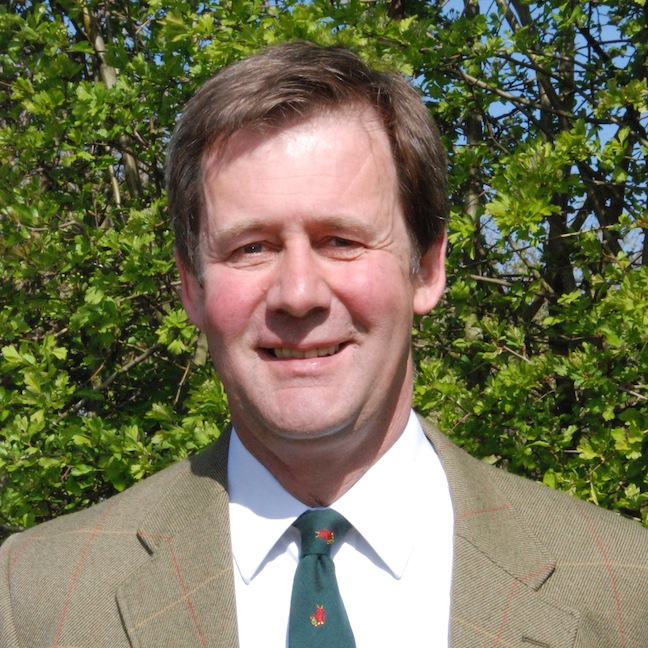
Together with Professor Maurice Maloney, Director of Rothamsted Research, David Gardner, CEO of The Royal Agricultural Society of England, speaking with Charlotte Smith of the BBC R4’s Farming Today, for the January 5th edition of Farming Today This Week, covering the 2013 Oxford Farming Conference (held Jan. 2nd-4th on the campus of Oxford University), had this to say on the morning of the last day of the conference:
I think engineering has a huge amount to offer. We’ve seen a huge growth in the last decade or so in terms of precision farming on arable farms, so the whole concept of measuring in detail what we are doing on an individual field basis, and indeed within parts of fields, that gives us the opportunity firstly to reduce inputs, so for example we can identify which parts of the field need particular fertilizer, and just applying them to that part of the field. We can identify which parts of the field need particular weed killers and apply them just to that part of the field, rather than applying them to the field as a whole. And today I’m going to talk, and it will be quite controversial at the conference, I think, but I’m going to talk about relatively small, light-weight gantries that are autonomous, that don’t have a driver on them.
And a bit further on…
A farm in 1980 looked nothing like a farm in 1945. Now I think the really exciting thing is that a farm in the middle part of this century will look nothing like a farm does today. I think we will see much less pesticide use. I don’t think it will be eliminated completely, but I think there will be a lot less pesticide use, a lot less fertilizer use, and I think we’ll see mechanization that is just completely different, with the sort of autonomous machines that I’ve talked about, and robots doing things like picking apples and picking strawberries in the landscape – just completely different from what we do today – and I wish I was starting my career again, because I think it’s going to be immensely exciting.
Professor Maloney agrees…
The idea of different technologies interdigitating and solving a problem is key to this. Robotization is something that will happen in agriculture. It’s already happening in Santa Clara County in the U.S., weeding lettuce fields it’s entirely done by robotization now, but robots are not inconsistent with a very benign, bucolic environment, and in fact it would give opportunities to farmers to spend more time thinking about the rest of the environmental considerations that they would like to contribute to but simply don’t have the time because they’re doing mundane activities.
The recording is available from the iTunes store. Begin at 12 min 30 sec, or, for better context, at 10 min 30 sec.
tags: agricultural robotics

AUAI is supported by:









