
Robohub.org
 

Nestlé 1st big buyer of Softbank’s Pepper robot

by
03 November 2014


share this:
Pepper-and-Softbank-CEO_800_613_80

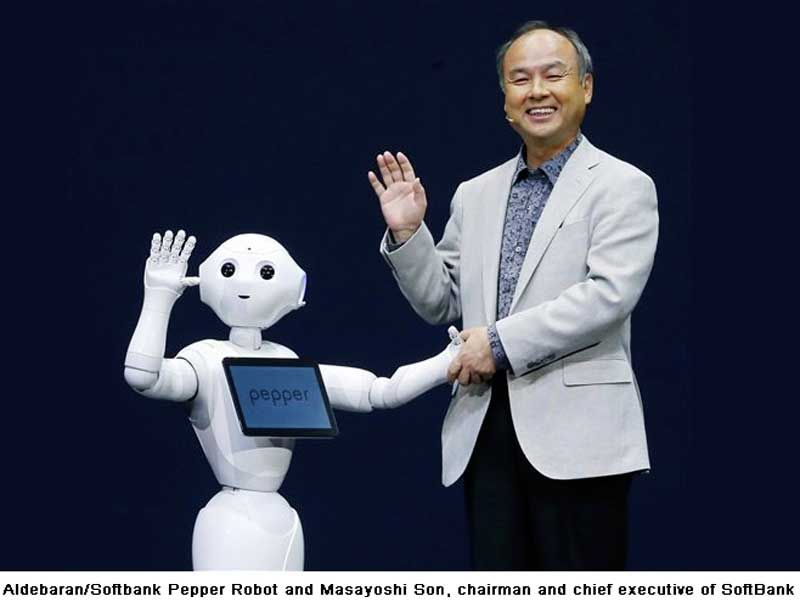
Earlier this year Softbank announced the launch of Pepper, a robot created specifically for SoftBank and the Japanese market. Last week Nestlé announced that it will use Pepper to sell its Nescafé products.

Pepper is designed to be engaging and friendly, a companion able to communicate through an intuitive artificial intelligence interface that reads and interprets voice, touch and emotions. It has two arms and rolls around on wheels. It is 47 inches tall and weighs around 60 pounds.

According to Bloomberg Businessweek Magazine, the plan is to start slowly, with 20 Peppers by the end of the year. But Nestlé has big hopes for the little robots and expects to deploy them in 1,000 stores next year.

The Nestlé deal is just the beginning of SoftBank’s Pepper ambitions. SoftBank plans on selling the robots to Japanese consumers early next year, and it will make the Pepper available in the U.S. at retail stores of Sprint, the telecom carrier acquired last year by SoftBank in a $22 billion deal. Bruno Maisonnier, chief executive of Aldebaran, SoftBank’s French company developing the robot, expects to sell “millions” of the machines, he told Bloomberg News in June. “We’re betting that a huge number of people will buy the robots.”

Pepper is able to read and respond to human emotion – to read people’s facial expressions and listen to their tone of voice to analyse how they’re feeling.

“Pepper will be able to explain Nescafé products and services and engage in conversation with consumers. I hope that this new consumer engagement model will expand across the world as an example of Japanese innovation” said Kohzoh Takaoka, President and CEO of Nestlé Japan.


tags: , , ,


Frank Tobe is the owner and publisher of The Robot Report, and is also a panel member for Robohub's Robotics by Invitation series.

            AUAI is supported by:


Subscribe to Robohub newsletter on substack


Related posts :

These tiny drones are powered by sound

  24 Aug 2026
EPFL engineers have designed acoustic cavities that convert sound waves into thrust, propelling small robots and ultralight aerial vehicles without on-board actuators or electronics.

#AAMAS2026 blue sky award winner: Foundation world models for agents in changing environments

and   21 Aug 2026
Hear from the AAMAS 2026 Best Blue Sky Paper Award winner.

Robotics roadmaps from around the world spotlight of the month: Japan

Robots have been a prolific theme in Japanese pop culture and media since the 1950s

Intermittent swimming promotes the energy efficiency of fish-like robot movements

How zebrafish-inspired robots save energy by swimming in bursts.

What does it take for a robot to hold a conversation with a room, not just a person?

and   14 Aug 2026
Find out about a summer school held at Imperial College London.

Robotics roadmaps from around the world

We embark on a tour into some of the recent and prominent robotics roadmaps from around the world.

A ‘5-in-1’ seed-sized surgical robot

Mini robot can move, cut tissue, release drugs, grip and store samples, and generate heat wirelessly

AI agents create virtual playgrounds to help robots get crucial training data

  07 Aug 2026
“SceneSmith” system uses collaborative AI agents to create realistic 3D environments of places like kitchens, hotels, and living rooms, where robots can simulate everyday chores.


AUAI is supported by:


Subscribe to Robohub newsletter on substack


©2026.05 - Association for the Understanding of Artificial Intelligence









