
Robohub.org
Telepresence, or tele-existence? 4 devices seeking to break down barriers to remote presence
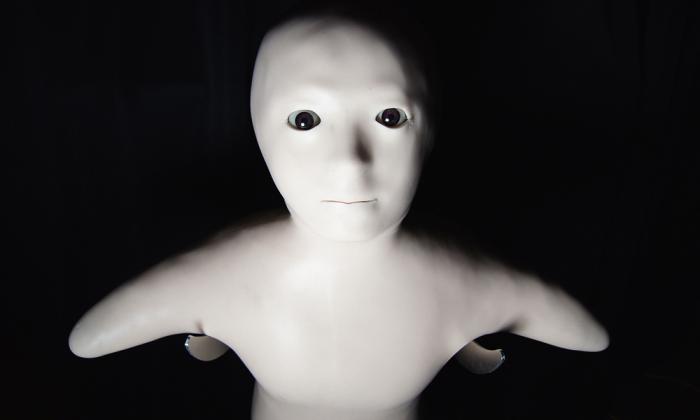
Telenoid
This telepresence series wouldn’t be complete without covering the fringe territory of the unique and unusual. These robots push the boundaries of telepresence to push social engagement and cross into tele-existence. While I applaud the creativity of these researchers, I think there are some that shouldn’t make it outside the research lab, at least not yet!
My first example, the Telenoid, was designed to transfer the presence of the human operator. Developed as a partnership between Osaka University and Advanced Telecommunications Research Institute International this android robot, the Telenoid is an advanced video conferencing tool that focuses on tactile involvement with the participant to enhance the emotional connection. With its pale white skin and stubby arms, it is meant to have neither a specific sex or age, allowing participants to imagine the face of the operator onto the face of the robot. The Telenoid has no mobility and is meant to be held, like a small child. The Telenoid reminds me more of Paro, a pet therapy robot used in Japanese hospitals, than of a telepresence robot.
Then there is OriHime, the robot avatar. There are several versions ranging from a head and base to a small humanoid. All the models are intended to be used as a surrogate for the operator, particularly for those that are sick. OriHime was created by Kentaro Yoshifuji as a means to fight loneliness. Rather than appearing on a monitor, the unit allows a patient to comfortably participate without having to show themselves. Similar to the Telenoid, the generic face requires some imagination from the participants. Pre-programmed movements. like nodding yes or no, allow OriHime to come to life and create a more emotional connection.
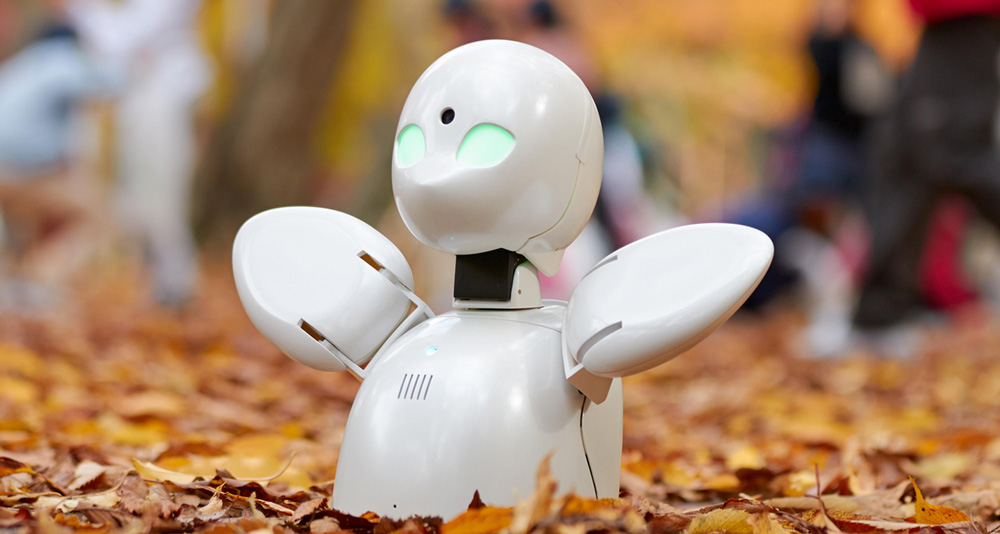
OriHime
I have yet to understand the MH-2 shoulder robot. When it was presented at ICRA in 2012 it was described as “a remotely operated avatar.” There are obvious and significant technical hurdles to be overcome if this were to enter the market as a product. Realistically there are larger issues like the user interface which requires you to constantly look over your shoulder to see what a friend may be pointing out. This seems cumbersome in comparison to something like Google Glass. With Glass, you can see and hear your friends without neck strain, and you won’t get strange looks when people wonder about the robot perched upon your shoulder.
Not all unusual telepresence robots come out of Japan. Me-Bot hails from the Personal Robotics Group at the MIT Media Lab. Using a smartphone for your face, the motorized base has small arms and a neck, allowing operators to become more physically expressive. This is fantastic for those of us who talk with our hands. The research paper that was written on the MeBot showed much better response in both engagement and cooperation over a traditional means of videoconferencing.
The primary aim of all of these telepresence robots is to become more socially engaging and promote non-verbal communication. While many of us are used to the telephone, meeting face to face is a much more enriching experience, particularly when it comes to building relationships. Telepresence lowers this barrier with visual communication, but these robots aim to lower it even further. As more of your senses become involved, your level of engagement increases. The ultimate goal is tele-existance, where you are fully immersed and participating remotely.
Up next: service robots. If you haven’t run into them yet, you soon will.
tags: c-Research-Innovation, telepresence

AUAI is supported by:









