Robohub.org
The inevitability of the global march toward self-driving vehicles
Perhaps the biggest upcoming robotics-driven economic and social change will be the arrival of fully autonomous (self-driving) vehicles. Imagine a world full of self driving cars, planes and boats — the benefits will range from life-saving and cost reduction to greater mobility options for people of all ages.
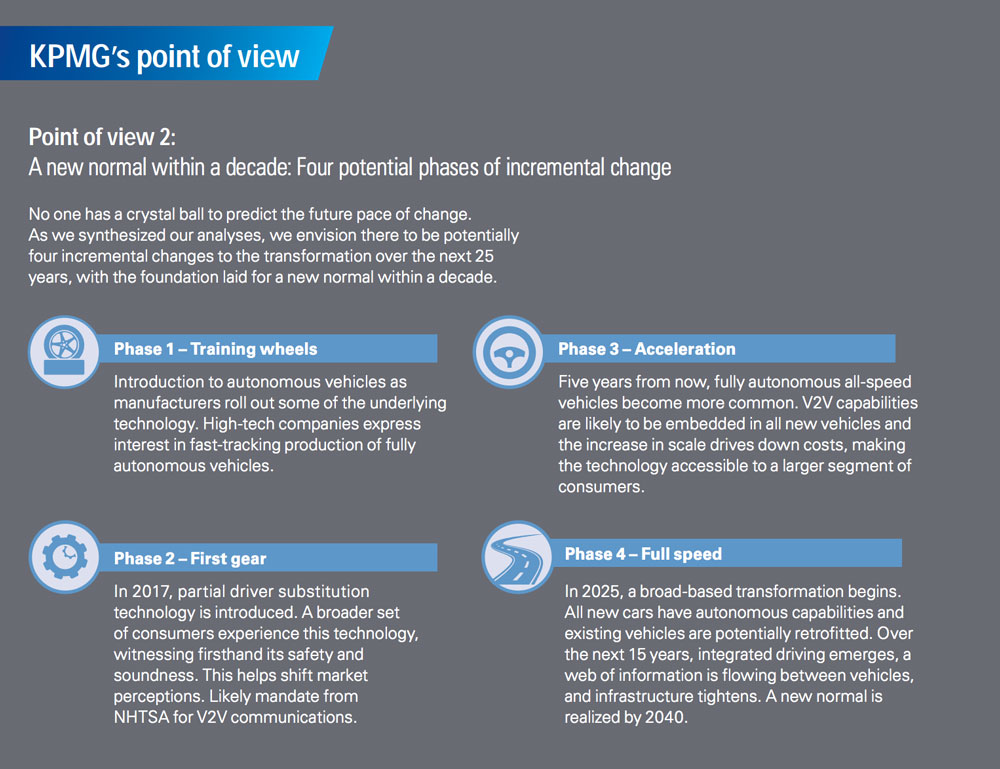
Source: KPMG
Billions are currently being invested into making autonomous cars and planes a reality in the very near future. Traditional car companies such as BMW, General Motors and Toyota and new entrants like Tesla, Google and Apple are vying to be the among the first to introduce fully autonomous vehicles to our roads.
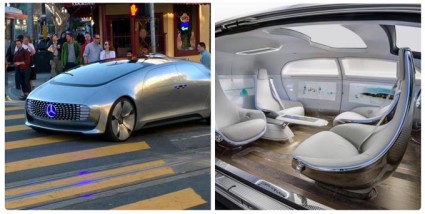 At CES, the big global technology show held earlier this month in Las Vegas, most of the car companies and their major suppliers from around the world either had booths or meeting rooms to show off their concepts for the future and projects and products from now until then. This Mercedes concept sedan – which drove autonomously around the Las Vegas Strip and on the CES stage – was the hit of the show.
There’s a certain inevitability to the global march toward self-driving vehicles. According to Singularity U’s Brad Templeton:
- More than 160,000 lives could be saved each year
- 500,000 injuries could be prevented each year
- Over $1 trillion in insurance, legal and accident costs could be saved each year
- More than 250 billion gallons of gas and oil could be saved each year
- Over 10% of urban land currently devoted to parking could be put to new use
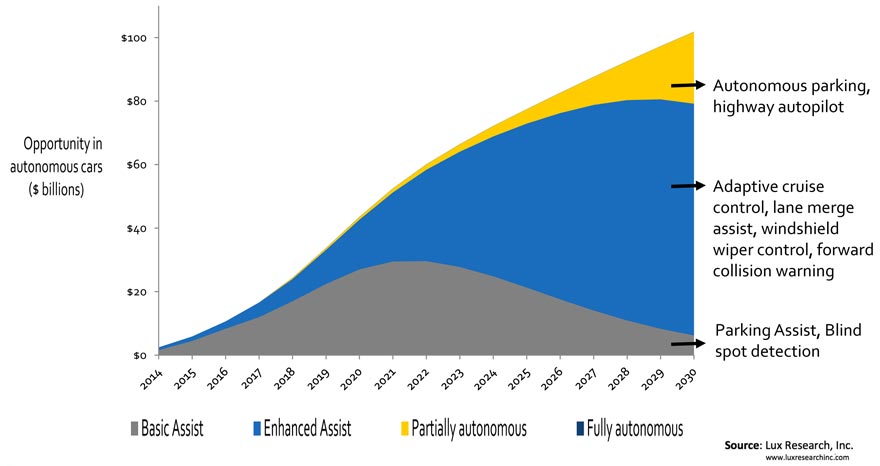
Source: Lux Research
Some of the biggest thought leaders around the world have worked on timetables for all this change. The KPMG projection shown above and this chart from Lux Research mostly reflect their consensus that it will be an incremental series of changes leading from basic safety and assistance to partially autonomous, to segments becoming fully autonomous (such as city taxis and delivery vehicles and planes), to a time (somewhere between 2030 and 2040) where all new vehicles will have autonomous capabilities.
Many new issues will become important along the way:
- whether or not vehicle ownership is viable;
- will AI emergency driving choices be ethically correct;
- will there still be a need for vehicle insurance; etc.
Already robo-ethicists have begun to bring some of these items up for discussion.
Personally, I look forward to watching this transformation from the comfort of my Mercedes sedan… today, from the driver’s seat; a few years from now as a passenger; and a few years later as a passenger in some service provider’s Mercedes.
tags: Automotive, Autonomous Cars, autonomous driving