Robohub.org
3 exoskeleton companies go public
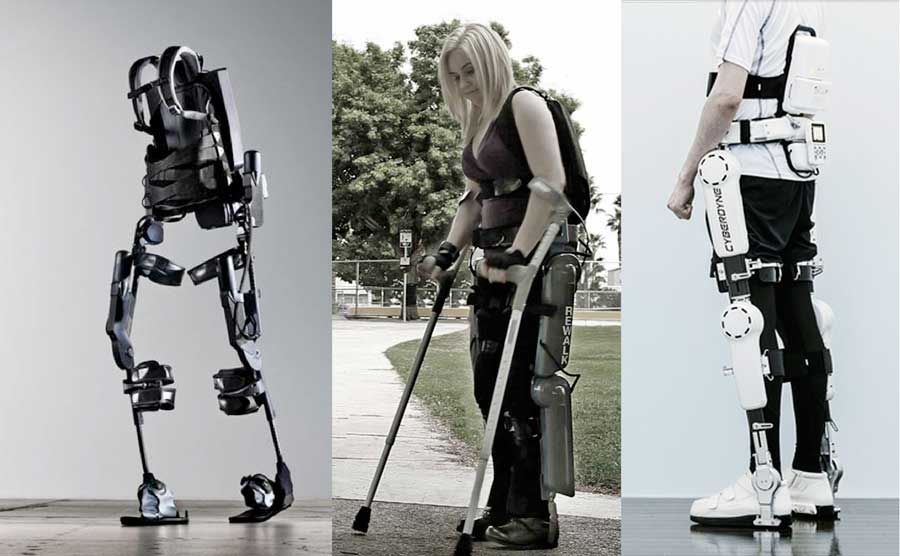
First came Ekso Bionics with an alternative public offering that netted $30.3 million; then Cyberdyne let its stock be listed on the Tokyo Stock Exchange; and last week the WSJ reported that ReWalk Robotics had filed an IPO and planned to raise $57.5 million.
A recent Wintergreen research report said that the rehabilitation robot market will grow from $43.3 million to $1.8 billion by 2020. The report covers products such as rehab/therapy robots, active prostheses, exoskeletons and wearable robotics. It also describes patient needs for all types of injuries, disabilities and therapies and recaps dozens of companies involved in the industry, particularly AlterG, InMotion, Ekso Bionics, Myomo, Cyberdyne, ReWalk Robotics and Hocoma. Now, three of those companies have gone public.
 Rewalk Robotics (previously named Argo Medical Technologies), an Israeli start-up, received FDA approval in June for their exoskeleton to aid movement for people with lower body paralysis and last week the WSJ reported that the company plans to raise up to $57.5 million from an IPO. It has partnered with Yaskawa and others involved in the distribution of rehabilitation devices. The company is now headquartered in Marlborough, MA and the stock will appear on the NASDAQ Exchange.
 Cyberdyne, a spin-off from the University of Tsukuba, has developed a complete line of exoskeleton products (HAL) for brain and mobility disabilities as well as non-medical purposes such as eldercare and worker assistance devices. On March 26, 2014, Cyberdyne let its stock be listed on the Tokyo Stock Exchange CEO Yoshiyuki Sankai will retain the majority voting rights “in order to prevent the company’s technology from ever being used for military purposes.” Cyberdyne is offering a lower-limb version of their HAL device in Europe after receiving CE Marking approval. FDA approval is pending. Cyberdyne also has a line of industrial grade autonomous floor cleaning robots.
 Ekso Bionics Holdings did an alternative public offering in January, 2014 and changed its name once again – from Berkeley Bionics to Ekso Bionics to Ekso Bionics Holdings. The company has licensed a military version of its exoskeleton to Lockheed Martin and also has set up a division to further intellectual property through contracts and research grants. Their Ekso exoskeleton is available through collaborative rehab centers all over the world.
tags: Cyberdyne, Ekso Bionics, exoskeleton, healthcare

AUAI is supported by: