
Robohub.org
International standards with Gurvinder Virk

In this episode we hear from Professor Gurvinder Virk from the University of Gävl about how international standards are created in the ISO. He also tells us why he thinks they are essential for robotics and how you can participate and contribute.
Gurvinder Virk
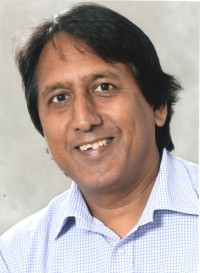 Gurvinder Virk is a Professor of Robotics and the Built Environment, at University of Gävle, Sweden as well as Professor of Robotics and autonomous systems at KTH, Sweden.
He is also Chairman of CLAWAR Association Ltd. in a voluntary capacity. CLAWAR is a UK registered charity with the mission to advance education and science for the public benefit in the field of robotics and associated technologies.
He is a technical expert in control theory and its applications with particular experience in service robotics and building management systems, and the use of advanced model-based control to a variety of applications. His current interests are in personal care robots, physical assistance exoskeletons, medical robots, olfactory navigation for mobile robots, and renewable energy systems for buildings. He has extensive experience of project management and leading large international projects. He has produced over 300 papers and 11 books.
Prof. Virk is a leading actor in international robot standardisation and the Convener of two robot safety work groups, ISO TC184/SC2/WG7 Personal care robot safety, and IEC TC62/SC62A & ISO TC184/SC2 JWG9 Medical electrical equipment and systems using robotic technology.
Links:
- Download mp3 (32.1MB)
- Subscribe to Robots using iTunes
- Subscribe to Robots using RSS
- Gurvinder Virk’s website
- ISO member organizations
- The ISO on wikipedia
- The home page of the ISO
tags: ISO, podcast

AUAI is supported by:









