Robohub.org
078
Blended reality with Natalie Freed, David Robert and Adam Setapen
In today’s episode we meet with Natalie Freed, David Robert and Adam Setapen from Cynthia Breazeal’s Personal Robots Group at the MIT Media Lab. They’ll be telling us about the Playtime Computing System, a playground where kids can interact with the physical world and its virtual extension.
The playground looks like a dream-like play-area with objects kids can interact with, including a robot that looks like an alphabet block and can be decorated with letters, shapes and even a mustache. The physical playground is surrounded by an engaging virtual world projected on a set of screens. Robot characters can seamlessly transition from the real world to the virtual world by entering a portal (which is basically a robot garage). Since anything is possible in the virtual world, robots can gain new capabilities, such as flying, and kids can rearrange the world or add their own virtual objects to the mix using a Creation Station. The children’s behavior is tracked using 3D motion capture as well as other sensors such as cameras and audio inputs.
The playground brings a whole new dimension to the idea of play, getting kids off the couch, engaging in creative activity that could bring them to a virtual cafe in France to learn french or allow them to build a whole new world to share with other kids around the world. In the interview, David, Adam and Natalie tell us what they learned from experiments with the Playtime Computing System, the fun anecdotes that come-up when working with kids, and the future of interactive media.
So when do we get one of these at home?
Natalie Freed
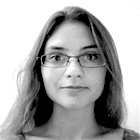 Natalie Freed finished her Masters in Computer Science at Arizona State University with a concentration in Arts, Media, and Engineering. She joined the MIT Media lab last summer as a graduate student and has since been interested in studying human-robot interactions with kids.
David Robert
 David Robert has a decade of expertise in the film industry working as a Technical Director and Animator. Over the years he’s consulted and worked with the world’s top animation studios including PIXAR, Dreamworks, LucasArts, ILM and Disney Imagineering. He also taught at The Academy of Art, Walt Disney Feature Animation, Pixar University and gave lectures around the world. He’s currently doing a PhD at the Personal Robots group as a first step in showing that the “future of animation is off the screen”.
Adam Setapen
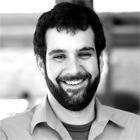 Adam Setapen has a Masters in Computer Science from the University of Texas at Austin and a strong background in AI. He joined the Personal Robots Group as a graduate student with the hope of developing robots for children that support long term interaction.
Links:
- Download mp3 (14 MB)
- Subscribe to Robots using iTunes
- Subscribe to Robots using RSS
- Personal Robots Group homepage
tags: Cynthia Breazeal, human-robot interaction, podcast