Robohub.org
051
50 years of robotics (Part 2) with Jean-Christophe Zufferey, Dan Kara, Kristinn Thórisson, Andrea Thomaz and Terry Fong
Welcome to the second part of our 50th episode special! To celebrate 50 episodes of Robots, we’re doing a review of some of the greatest advances in robotics during the last 50 years, and predictions on what we can hope to see in the next half century. In last week’s episode we covered embodied AI, robot toys, androids, underwater robots, education robots and brain-machine interfaces.
In today’s episode we speak with Jean-Christophe Zufferey on flying robots, Dan Kara on the robotics market, Kristinn Thórisson on AI, Andrea Thomaz on human robot interactions, Terry Fong on space robotics and Richard Jones on nano robots.
Finally, don’t forget to check out all the new features of our website including episode browsing by topic, interviewee and tag or leaving comments under our blog posts or in the forum.
Jean-Christophe Zufferey
 Jean-Christophe Zufferey is a researcher at the Laboratory of Intelligent Systems at the Swiss Federal Polytechnic in Lausanne, Switzerland, where he works on cutting-edge research in Micro Air Vehicles (MAVs). His latest advances have led him to create the startup SenseFly that specializes in small and safe autonomous flying systems for applications such as environmental monitoring and aerial photography.
Dan Kara
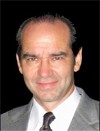 Dan Kara is President of Robotics Trends and the Robotics Business Review, which are web-portals and research firms specialized in the robotics markets. He’ll be telling us about the past products which have marked the minds and the future developments that will be gathering the buck in the future.
Kristinn R. Thórisson
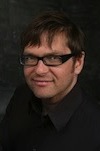 Kristinn Thórisson is Associate Professor at the School of Computer Science, Reykjavik University in Iceland. Active in the field of Artificial Intelligence for a couple decades, Thórisson is pioneering new approaches such as constructivist AI which he hopes will bring us towards more adaptive and complex artificial systems.
Andrea Thomaz
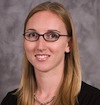 Andrea Thomaz is professor at Georgia Tech and the director of the Socially Intelligent Machines Research Laboratory. Lately, she’s been seen with her new humanoid Simon and his expressive traits. We were able to catch her at this year’s ICRA conference for a little chat on the past and future of human robot interactions.
Terry Fong
 Terry Fong is the Director of the Intelligent Robotics Group at the NASA Ames Research Center. As an expert in space robotics, he’ll be telling us about robots leaving the solar system to explore our universe and how humans and robots will work together towards this endeavor.
Richard Jones

Richard Jones is the author of the book Soft Machines: nanotechnology and life and a blog on the subject also named Soft Machines. From the University of Sheffield in the UK, where he is Professor of Physics, Jones has been looking at how to make nanoscale robots which can eventually be used in the body for medical applications.
Links:
- Download mp3 (24.4 MB)
- Subscribe to Robots using iTunes
- Subscribe to Robots using RSS
- Jean-Christophe Zufferey’s Webpage
- Dan Kara’s Webpage
- Kristinn Thórisson’s Webpage
- Andrea Thomaz’s Webpage
- Terry Fong’s Webpage
- Richard Jones’s Webpage
Latest News:
For more information on this episode’s news, including a video of Kumagai’s balancing BallIP robots, McGill’s rapid ice sculpture prototyping system, and Stanford’s perching UAV as well as more coverage from the ICRA 2010 conference, visit the Robots Forum.
tags: entertainment, human-robot interaction, podcast