
Robohub.org
ShanghAI Lectures 2013, Lecture 6 – Soft Robotics and Bioinspiration II
Lecture 6 – Soft Robotics and Bioinspiration II
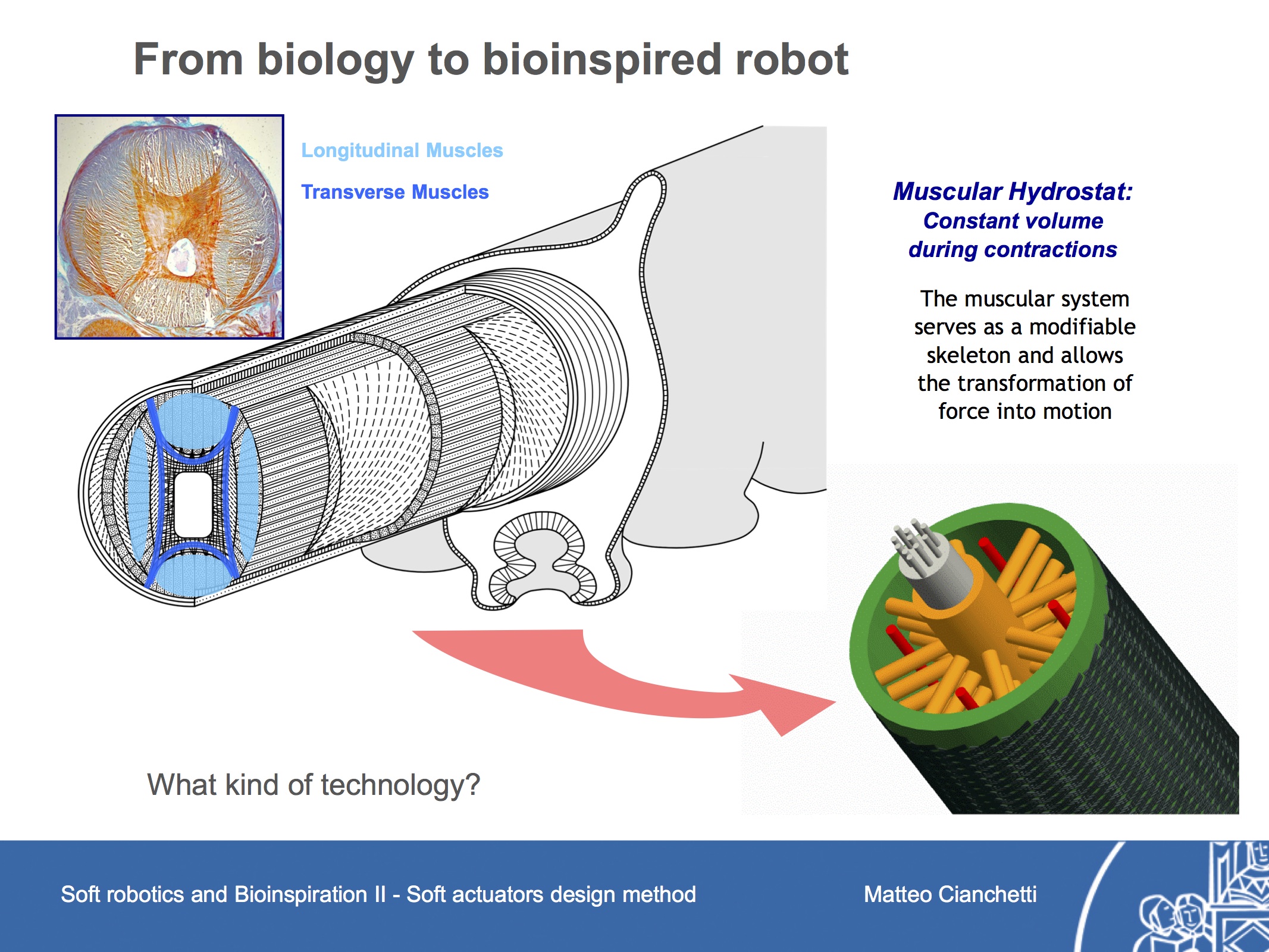
In this second lecture hosted by the Scuola Superiore S. Anna, Matteo Cianchetti builds on the previous lecture to talk about building soft actuators for soft robots. In Matteo’s lecture, titled “Soft actuator design methods“, he explains that the devil is in the details, but that it’s possible to build soft actuators by insightfully exploiting the properties of Shape Memory Alloy (SMA). Want to learn how?
Guest Lecture – “Can ‘Synthetic Methodology’ cause a paradigm shift?” by Minoru Asada
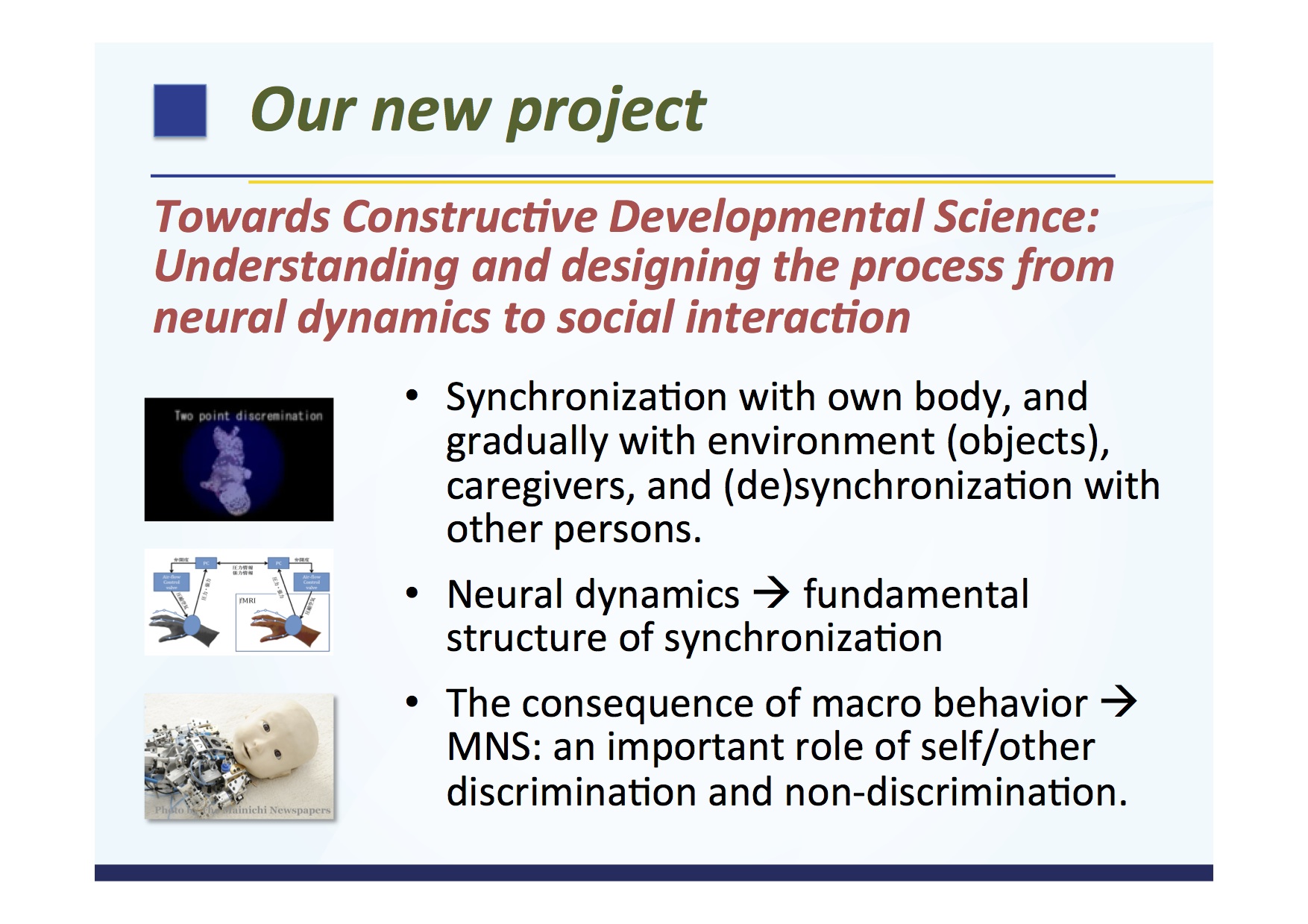 In this talk Prof. Minoru Asada from the University of Osaka, in Japan, shows the results and discusses the underlying principles of his research on developmental robotics and the of the psychological development of the basic human cognitive functions in the baby and even in the fetus! This is an iconic example of synthetic methodology application.
How can we simulate the development of a fetus, for example? And above all, can ‘Synthetic Methodology’ really cause a paradigm shift? Watch Asada’s lecture here:
About the ShanghAI Lectures
 While in the classical approach “intelligence” was essentially viewed as information processing taking place in the brain, the more recent insight that interaction with the environment is of central importance is gaining acceptance. This has led to the metaphor of embodiment, i.e., that intelligence is always a property of an entire organism — an idea that has far-reaching implications and often leads to surprising insights, but which has not so far been widely exploited in industry practice.
The ShanghAI Lectures project aims to:
- Build a sustainable community of students and researchers in the area of Embodied Intelligence
- Make education and knowledge on cutting-edge scientific topics accessible to everyone
- Explore novel methods of knowledge transfer
- Overcome the complexity of a multi-cultural and interdisciplinary learning context
- Bring global teaching to a new level
These lectures about Natural and Artificial Intelligence have been held via videoconference at the University Carlos III of Madrid in Spain, the University of Zurich in Switzerland, Scuola Superiore Sant’Anna of Pisa, Italy, Humboldt University Berlin in Germany, University of Plymouth and University of Salford in the UK, and 10 other universities around the globe. Students from the participating universities are still working together on the exercises, using Webots by Cyberbotics, and Ludobots by the University of Vermont.
The lectures have also been streamed to allow remote participation to anybody.
The ShanghAI Lectures differ from ‘conventional’ MOOCs as they exploit telecommunication technology to build a global, distributed lecture hall that allows rich interaction rather than simply implementing the good old fashioned TV broadcasting model on a different medium. They also differ from other AI courses as they propose a new paradigm approach to embodied cognition (a.k.a. AI and Robotics). It is a kind of Copernican revolution with respect to GOFAI and its robotics application — and thus a research program for the coming decades.
This year I coordinated the lectures, with help from Prof. Rolf Pfeifer and Dr. Nathan Labhart at the University of Zurich . Rolf Pfeifer and I provided the context (introduction, moderation, and conclusion). As always, there were 2-3 invited guest lectures each week.
tags: bioinspired, lectures & seminars, Minoru Asada, research, robohub focus on soft robotics, ShanghAI Lectures, ShanghAI Lectures 2013, soft robotics

AUAI is supported by:









