
Robohub.org
The new AI and robotics: Lecture by Fabio Bonsignorio
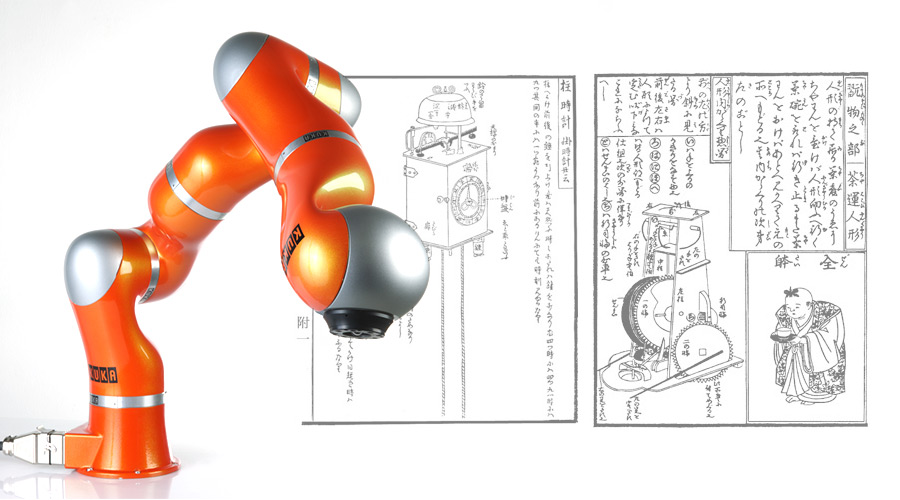
In this video lecture Fabio Bonsignorio talks about novel ideas that might just lead to a paradigm change robotics that will allow us to apply robot systems to natural environments, and not just factories where systems are operated and controlled by professionals. He believes that the solution to building robotic systems that can intuitively adapt to uncontrolled environments requires more than just technology; we will also need to figure out how to spend less computing power and rely more on cognitive knowledge extracted from network interaction physical agents.
So how do we do that? Watch Bonsignorio’s presentation to learn more about his novel approach to intelligent systems. (You can download the full .pptx presentation here.)

Fabio Bonsignorio is the founder and CEO of Heron Robots as well as an affiliate professor at the Biorobotics Institute (Scuola Superiore Sant’Anna, Italy).
For more than twenty years he has worked in the R&D departments of Italian and US companies, such as Elsag- BM in CIM (Computer Integrated Manufacturing), ORSI Automazione, Imation, cooperating with, for example, E&Y and Oracle. He is author and co-author of more the 100 publications in the areas of robotics, cognition and manufacturing systems.
Prof. Bonsignorio is interested in foundational and epistemological issues in (embodied) cognition and robotics, while chasing viable real world applications. He is a member of IEEE/RAS, AAAI, CLAWAR, and euCognition. He coordinated the EURON Special Interest Group on Good Experimental Methodology and Benchmarking in Robotics, and is now the coordinator of the euRobotics TG on Benchmarking the Competition, as well as co chairing the IEEE RAS TC-Pebras. He is the coordinator of the ShanghaiLectures, www.shanghailectures.org.
Bonsignorio F. IJARS Video Series: New AI and Robotics [online video]. International Journal of Advanced Robotic Systems, 2015, 12:V1. DOI: 10.5772/60398
If you liked this lecture, you may also be interested in:
- ShanghAI Lectures: Josh Bongard “Morphological Change in Machines Accelerates the Evolution of Robust Behavior”
- ShanghAI Lectures: Fabio Bonsignorio “Embodied Finance: Embodying Disruptive Innovation in Embodied Cognitive Systems”
- 30 years of AI with Rolf Pfeifer: A robotics legend delivers his farewell talk
See all the latest robotics news on Robohub, or sign up for our weekly newsletter.
tags: AI-cognition, Fabio Bonsignorio, Italy, research
AUAI is supported by:









