
Robohub.org
Tabletop telepresence finding its niche
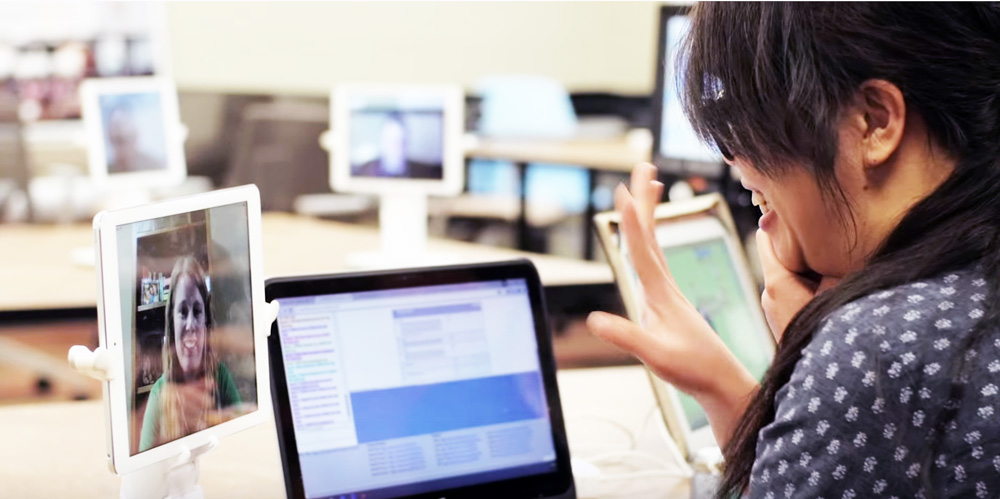
Tabletop telepresence devices began to pop up on the market about two years ago. Though its a small slice of the telepresence market, it’s differentiated enough from other categories to be mentioned in a separate post. Many telepresence users simply want the ability to pan and tilt around a room. While this solution doesn’t work well for places like museums, it’s perfect for classrooms, meetings, or get togethers where you don’t need much mobility.
The scene pictured above is taken from a hybrid course taught at Michigan State, where both online and local students can participate in a traditional classroom setting. By comparison, classes that are taught completely online are limited to group video chat. The hybrid class concept was tested with both tabletop telepresence, like the Kubi, as well as with full size devices like the Double. With the telepresence robots, students were no longer viewing the class from a wall mounted monitor, and they reported feeling more engaged in the class and participated more actively than previously. The research is ongoing but the tabletops seem to have received a better initial response. You can learn more about Michigan State’s research on integrating telepresence into classrooms in the following video:
So far there are three entrants in this category: Kubi by Revolve Robotics, Pivot by WowWee, and the TableTop TeleMe from MantaRobot. All work with iOS and Android, while Kubi seems to be the only one that works with Windows.
Kubi is finding niches in ambulances for telemedicine, where mobility is restricted and a smaller footprint has an advantage. Another advantage of these tabletop models is power: since you’re not mobile, you can be plugged in continuously and not worry about needing downtime for recharging.
As with the full size tablet robots, you are still limited to the embedded camera on the tablet of your choosing. This is one area where I’d like to see some development to obtain more peripheral vision.
With products like Jibo and Amazon’s Echo showing up in our homes, I anticipate tabletop devices will become more prevalent. A stationary hands-free device that can pivot while you move around saves you from having to robot-proof your home; fixing door thresholds and moving stray cords can be a cumbersome chore at best, or a complete floor plan change of your home at worst.
Next up are telepresence toys, where we will scale down to fun size using a smart phone.
tags: c-Consumer-Household, telepresence

AUAI is supported by:









