
Robohub.org
Collaborating machines and avoiding soil compression
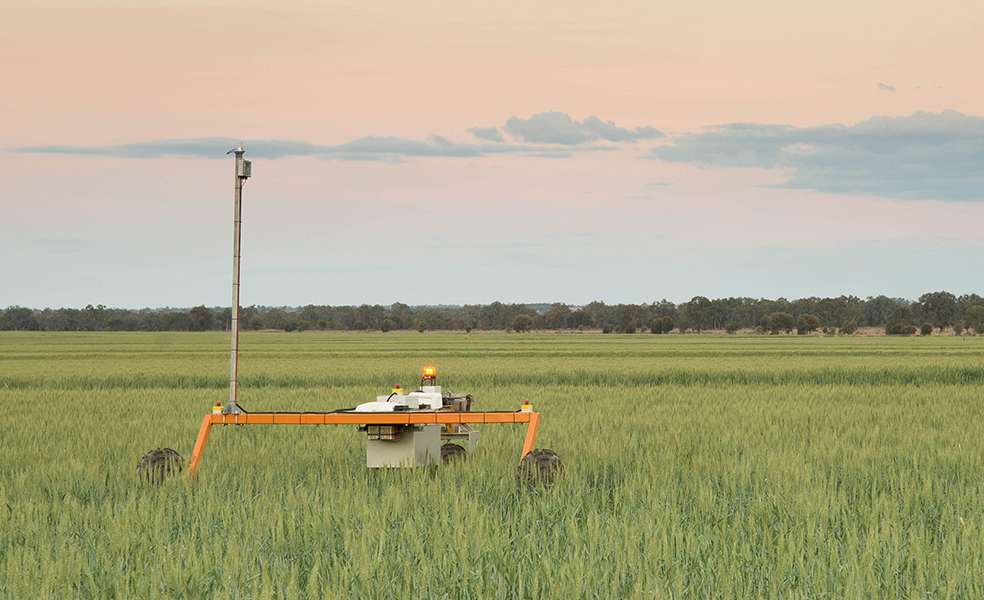
Image: Swarmfarm
Soil compression can be a serious problem, but it isn’t always, or in all ways, a bad thing. For example, impressions made by hoofed animals, so long as they only cover a minor fraction of the soil surface, create spaces in which water can accumulate and help it percolate into the soil more effectively, avoiding erosion runoff.
The linear depressions made by wheels rolling across the surface are more problematic because they create channels that can accelerate the concentration of what would otherwise be evenly distributed rainfall, turning it into a destructive force. This is far less serious when those wheels follow the contour of the land rather than running up and down slopes.
Taking this one step further, if it is possible for wheeled machines to always follow the same tracks, the compression is localized and the majority of the land area remains unaffected. If those tracks are filled with some material though which water can percolate but which impedes the accumulation of energy in downhill flows, the damage is limited to the sacrifice of the portion of the overall land area dedicated to those tracks and the creation of compression zones beneath them, which may result in boggy conditions on the uphill sides of the tracks, which may or may not be a bad thing, depending on what one is trying to grow there.
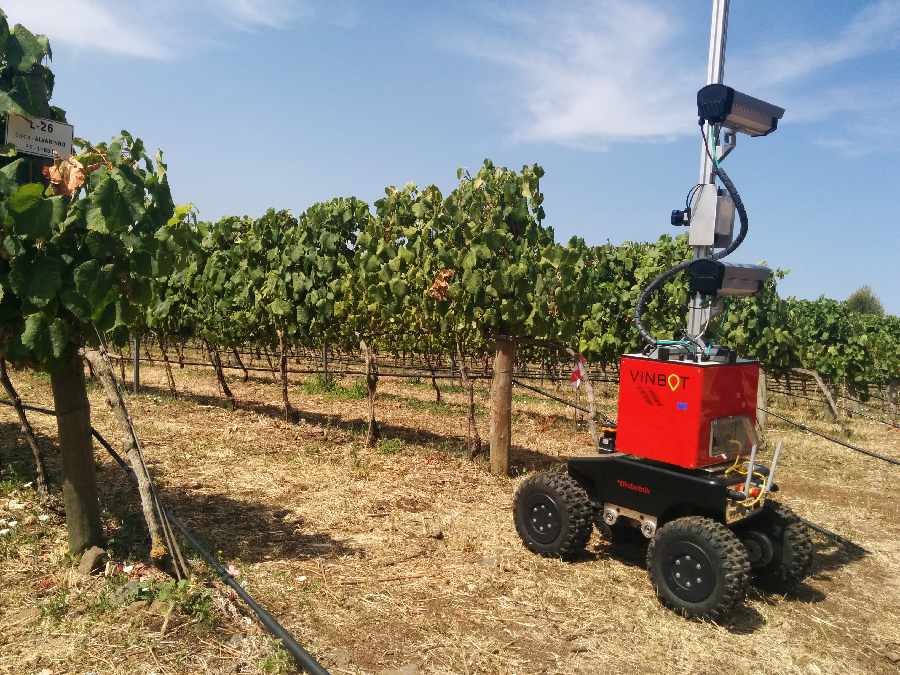
Source: vinbot.eu
(I should note at this point that such tracks, when they run on the contour, are reminiscent of the ‘swales’ used in permaculture and regenerative agriculture.)
Tractors with GPS guidance are capable of running their wheels over the same tracks with each pass, but the need for traction, so they can apply towing force to implements running through the soil, means that those tracks will constitute a significant percentage of the overall area. Machines, such as dedicated sprayers, with narrower wheels that can be spread more widely apart, create tracks which occupy far less of the total land area, but they are not built for traction, and using them in place of tractors for all field operations would require a very different approach to farming.
It is possible to get away from machine-caused soil compression altogether, using either aerial machines (drones) or machines which are supported by or suspended from fixed structures, like posts or rails.
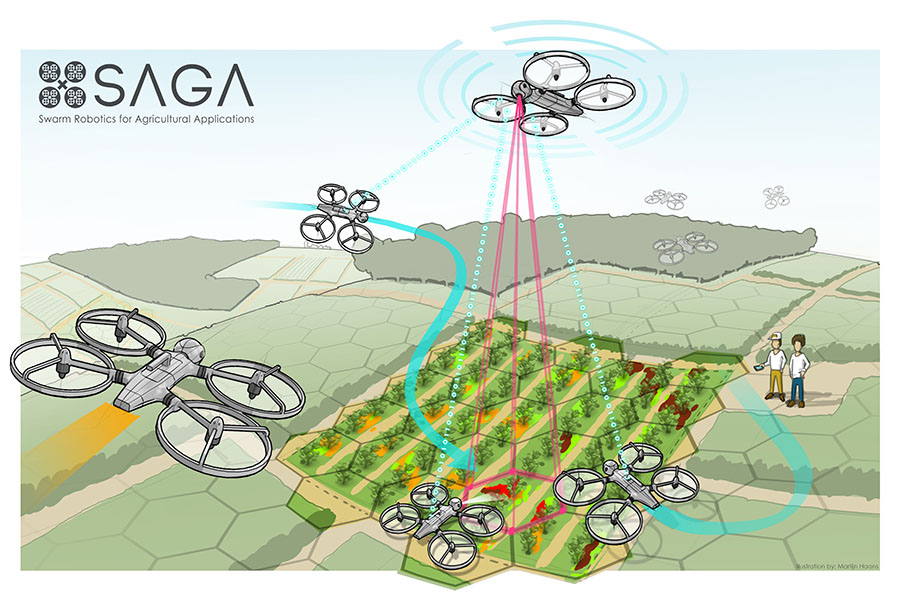
Small drones are much like hummingbirds in that they create little disturbance, but they are also limited in the types of operations they can perform by their inability to carry much weight or exert significant force. They’re fine for pollination but you wouldn’t be able to use them to uproot weeds with tenacious roots or to harvest watermelons or pumpkins.
On the other hand, fixed structures and the machines that are supported by or suspended from them have a significant up-front cost. In the case of equipment suspended from beams or gantries spanning between rails and supported from wheeled trucks which are themselves supported by rails, there is a tradeoff between the spacing of the rails and the strength/stiffness required in the gantry. Center-pivot arrangements also have such a tradeoff, but they use a central pivot in place of one rail (or wheel track), and it’s common for them to have several points of support spaced along the beam, requiring several concentric rails or wheel tracks.
Strictly speaking, there’s no particular advantage in having rail-based systems follow the contour of the land since they leave no tracks at all. Center-pivot systems using wheels that run directly on the soil rather than rail are best used on nearly flat ground since their round tracks necessarily run downhill over part of their circumference. In any rail-based system, the “rail” might be part of the mobile unit rather than part of the fixed infrastructure, drawing support from posts spaced closely enough that there were always at least two beneath it. However, this would preclude using trough-shaped rails to deliver water for irrigation.
Since the time of expensive machines is precious, it’s best to avoid burdening them with operations that can be handled by small, inexpensive drones, and the ideal arrangement is probably a combination of small drones, a smaller number of larger drones with some carrying capacity, light on-ground devices that put little pressure on the soil, and more substantial machines supported or suspended from fixed infrastructure, whether rail, center-pivot, or something else. Livestock (chickens, for example), outfitted with light wearable devices, might also be part of the mix.
The small drones, being more numerous, will be the best source of raw data, which can be used to optimize the operation of the larger drones, on-ground devices, and the machines mounted on fixed infrastructure, although too much centralized control would not be efficient. Each device should be capable of continuing to do useful work even when it loses network connection, and peer-to-peer connections will be more appropriate than running everything through a central hub in some circumstances.
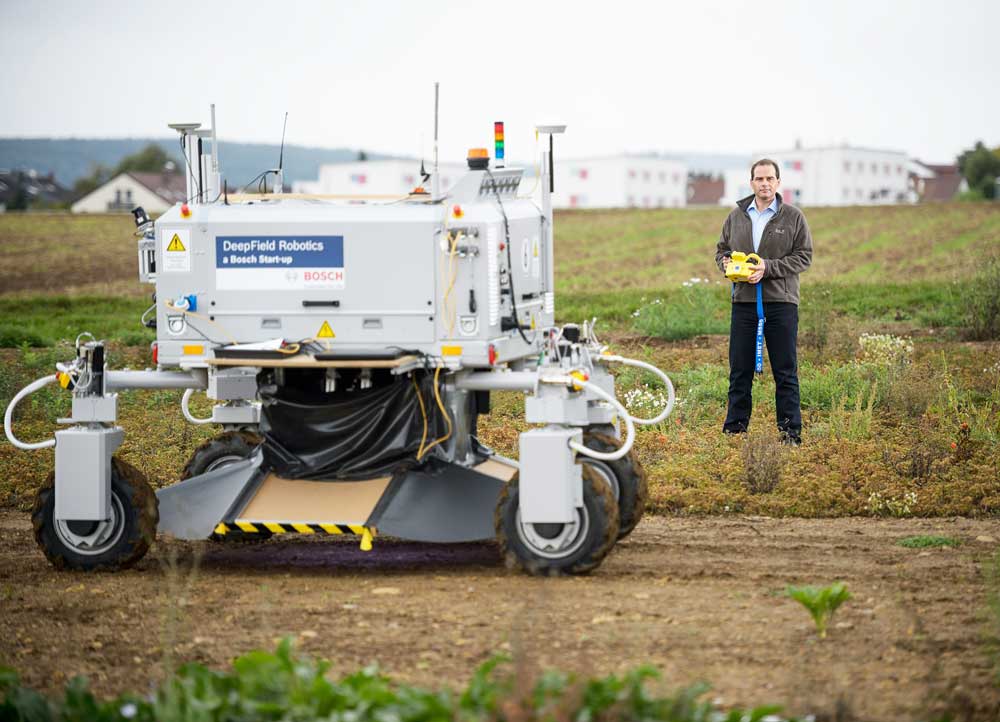
Bonirob, an agricultural robot. Source: Bosch
This is essentially a problem in complex swarm engineering, complex because of the variety of devices involved. Solving it in a way that creates a multi-device platform capable of following rules, carrying out plans, and recognizing anomalous conditions is the all-important first step in enabling the kind of robotics that can then go one to enable regenerative practices in farming (and land management in general).
If you enjoyed this article, you may also want to read:
- How regenerative agriculture and robotics can benefit each other
- How AR technology can help farmers stay relevant
- Robohub roundtable: Robotic bee swarms from Black Mirror – what’s hype, what’s real?
- Drought and desertification: How robots might help
- Keeping a robotic eye on pollution
See all the latest robotics news on Robohub, or sign up for our weekly newsletter.
tags: agricultural robotics, drones, Environment-Agriculture, Robotics technology, Service Professional Field Robotics Agriculture

AUAI is supported by:









