
Robohub.org
Calling all do-it-yourselfers: Robohub seeking contributions for focus series on “Getting Started in Robotics”
In light of the popularity of his AR.Drone tutorials, we have invited Robohub contributor Mike Hamer to act as Guest Editor for our next focus series “Getting Started in Robotics.”
Like many children who show an early interest in science, technology, engineering and mathematics (STEM), my childhood years were spent constructing Lego masterpieces and deconstructing household electronics. My introduction to the world of robotics came through my parents, who opened one of the first robotics online-shops in Australia in order to support my interests. Inspired, I spent the next few years of my life playing with Lego Mindstorms, hexapods and Basic-Stamps, and running a “Robot Wars” competition with my best friend.
Call for Contributions:
Getting Started in Robotics
Submit your:
Articles
Tutorials
Personal Stories
Deadline:
September 16, 2013
Submit to:
mike@robohub.org
My interest during these years was not in the mechanics, but rather in the software and electronics that controlled the robots. This interest lead me to study computer systems engineering at a bachelor level. During this degree, I entered local robotics competitions and quickly realized that, in order to further my interest in robotics, I needed a better understanding of mechanics and control systems – a direction that I followed in my masters degree, and have since continued as a PhD student under the supervision of Professor D’Andrea, whom you may remember from his TED talk on Machine Athleticism.
Over the last few months, largely in response to this TED talk, I and my colleagues at Robohub and the Flying Machine Arena have received many emails from interested students and hobbyists asking us “How do I get started with robotics?”
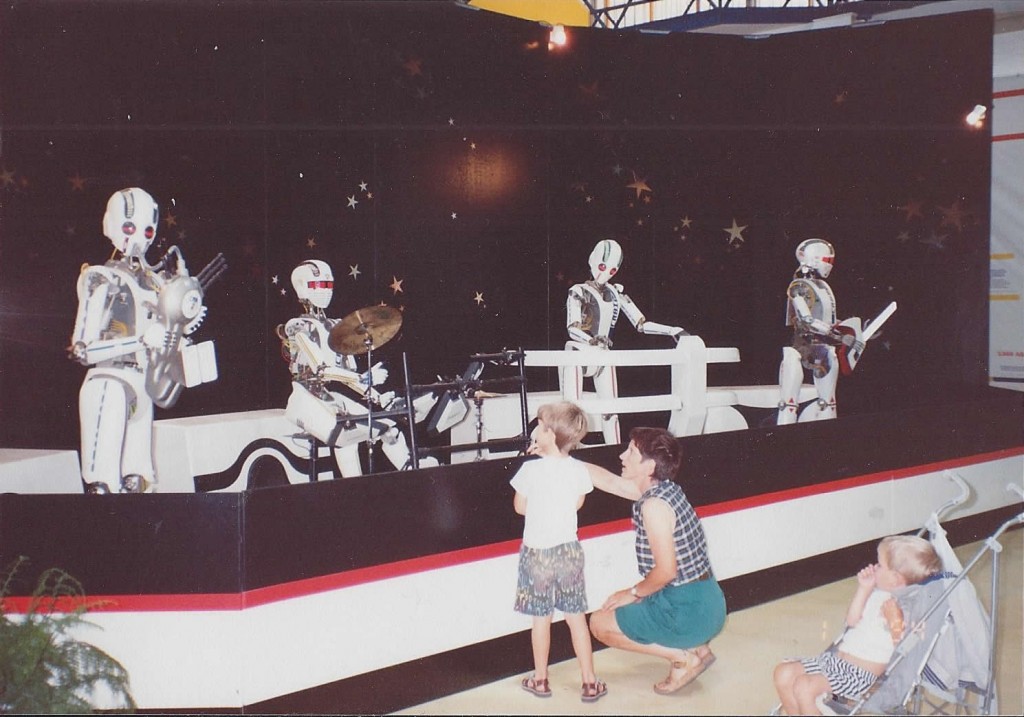
To begin to answer this, we first need to dive a little deeper and address the questions “what is robotics?” and “what is a robot?”
Asking the general public, I received answers varying from “manufacturing” and “smart vacuum cleaners” to “intelligent machines capable of making their own decisions”. As a robotics researcher, I define robotics to be the field at the intersection of mechanics, electronics, mathematics, programming and algorithms, and a robot to be a dynamic (capable of moving) device that can sense and interact with its environment by using a combination of mechanics, electronics and software.
The fact is, robotics means different things to different people, and this makes getting started a difficult task, regardless of age, education or prior experience – there is no one-size-fits-all answer!
To help guide curious and aspiring minds of all ages and backgrounds, Robohub will be running a two week focus series on how to get started in robotics. This series will consist of hands-on tutorials and discussions about educational pathways, as well as personal “getting started” stories and advice from roboticists, hobbyists and robotics students. These will be complemented by a closer look at some high-profile robotics projects, in order to highlight how mechanics, electronics, mathematics, programming and algorithms work together to produce a robotic system.
Interested in contributing to the focus series? We’d like to hear from you.
tags: c-Education-DIY, education, review, Social aspect

AUAI is supported by:









