
Robohub.org
Clamor for Bay Area and Silicon Valley talent
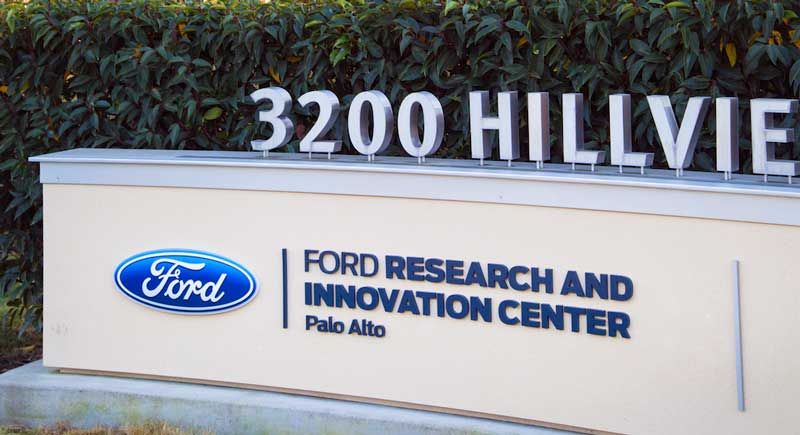 Silicon Valley and the whole San Francisco Bay area have such an abundant talent pool that global companies and startups alike are setting up research labs and offices there to secure engineering and programming expertise.
The diversity of the talent pool can be seen in the goals and job descriptions of companies doing research there.
For example, Ford is opening a new 25,000 sq ft Research and Innovation Center to accelerate its development of technologies and experiments in connectivity, mobility, autonomous vehicles, customer experience and big data.
- Some of the labs planned communication projects include in-car, car-to-car, car-to-home and remote parking.
- For autonomous vehicles, Ford is providing Stanford with vehicles equipped with aDRIVE (Autonomous Driving Refined in Virtual Environments) to test algorithms such as traffic sign recognition in dynamic driving situations and preparation for on-road testing.
- Human-machine smartphone, tablet and in-car interfaces will be tested for natural language speech recognition tasks. Also, developing seats which adapt to the backs of it’s drivers (which is the same kind of actuation and molding that robotic grippers are doing but in a different scenario).
- To analyze how customers are using their vehicles, Ford plans to use big data analytics to detect patterns that can lead to product improvements or new mobility services.
Ford plans to have one of the largest automotive research teams in Silicon Valley by the end of 2015 with 125 researchers, engineers and scientists in their new Palo Alto facility.
“At Ford, we view ourselves as both a mobility and an auto company, as we drive innovation in every part of our business,” said Mark Fields, Ford Motor Company president and CEO. “This new research center shows Ford’s commitment to be part of the Silicon Valley innovation ecosystem – anticipating customers’ wants and needs, especially on connectivity, mobility and autonomous vehicles. We are working to make these new technologies accessible to everyone, not just luxury customers.”
Ford isn’t the only auto company competing for talent in the area: Honda has both a research lab and a developer studio for writing apps that can work in cars; Mercedes-Benz has a research lab as does BMW, Audi, GM and Nissan-Renault.
Also present in SV and the Bay Area, are Tier 2 and Tier 3 companies. Bosch is a good example. They have a facility focused on robotics, AI and autonomous driving, and are attempting to hire engineers and interns for all three teams.
tags: business, research

AUAI is supported by:









