Robohub.org
Coding for underwater robotics
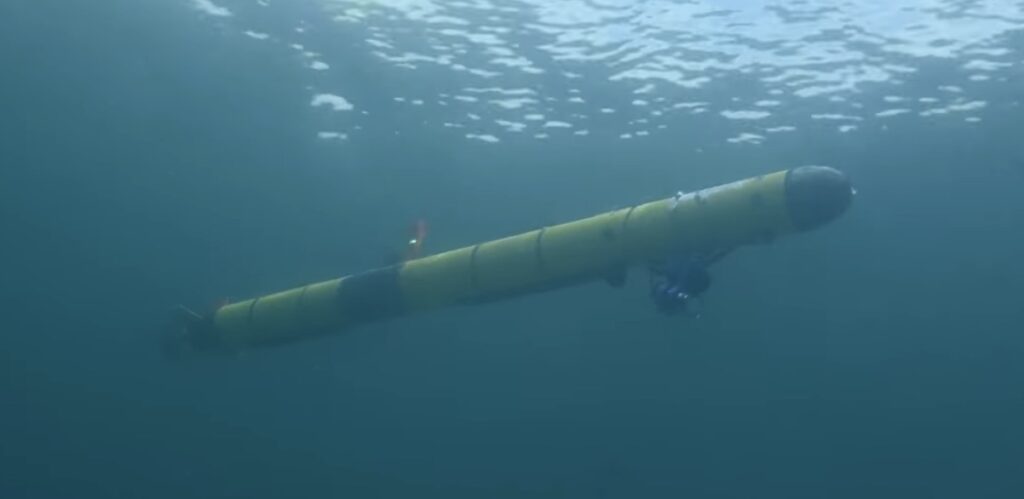 Screenshot from video showing underwater robotic vehicle. Credit: Tim Briggs/MIT Lincoln Laboratory.
During a summer internship at MIT Lincoln Laboratory, Ivy Mahncke, an undergraduate student of robotics engineering at Olin College of Engineering, took a hands-on approach to testing algorithms for underwater navigation. She first discovered her love for working with underwater robotics as an intern at the Woods Hole Oceanographic Institution in 2024. Drawn by the chance to tackle new problems and cutting-edge algorithm development, Mahncke began an internship with Lincoln Laboratory’s Advanced Undersea Systems and Technology Group in 2025.
Mahncke spent the summer developing and troubleshooting an algorithm that would help a human diver and robotic vehicle collaboratively navigate underwater. The lack of traditional localization aids — such as the Global Positioning System, or GPS — in an underwater environment posed challenges for navigation that Mahncke and her mentors sought to overcome. Her work in the laboratory culminated in field tests of the algorithm on an operational underwater vehicle. Accompanying group staff to field test sites in the Atlantic Ocean, Charles River, and Lake Superior, Mahncke had the opportunity see her software in action in the real world.
“One of the lead engineers on the project had split off to go do other work. And she said, ‘Here’s my laptop. Here are the things that you need to do. I trust you to go do them.’ And so I got to be out on the water as not just an extra pair of hands, but as one of the lead field testers,” Mahncke says. “I really felt that my supervisors saw me as the future generation of engineers, either at Lincoln Lab or just in the broader industry.”
Says Madeline Miller, Mahncke’s internship supervisor: “Ivy’s internship coincided with a rigorous series of field tests at the end of an ambitious program. We figuratively threw her right in the water, and she not only floated, but played an integral part in our program’s ability to hit several reach goals.”
Lincoln Laboratory’s summer research program runs from mid-May to August. Applications are now open.
Video by Tim Briggs/MIT Lincoln Laboratory | 2 minutes, 59 seconds