
Robohub.org
Generations in Dialogue: Human-robot interactions and social robotics with Professor Marynel Vasquez
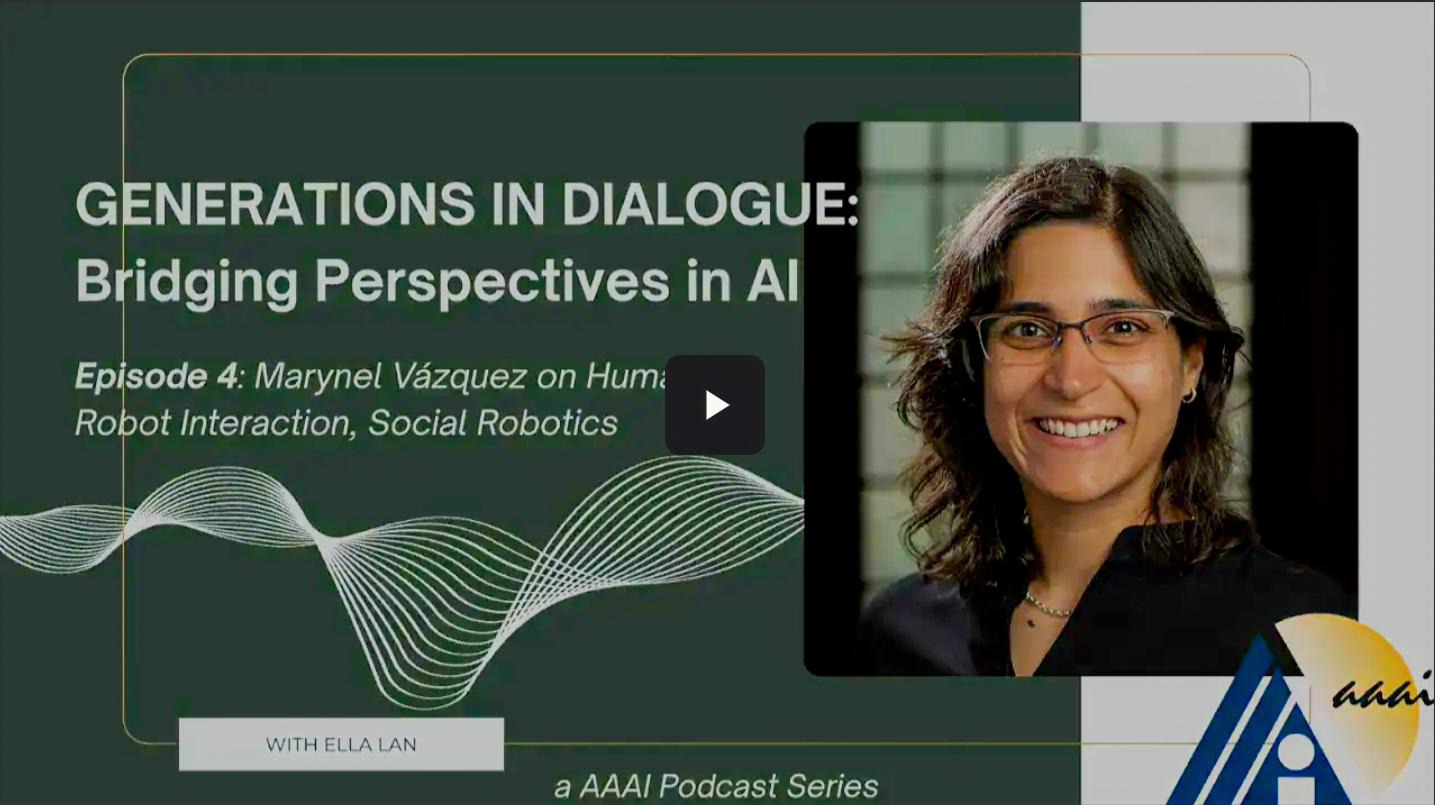
Generations in Dialogue: Bridging Perspectives in AI is a podcast from AAAI featuring thought-provoking discussions between AI experts, practitioners, and enthusiasts from different age groups and backgrounds. Each episode delves into how generational experiences shape views on AI, exploring the challenges, opportunities, and ethical considerations that come with the advancement of this transformative technology.
Human-robot interactions and social robotics with Professor Marynel Vázquez
In the fourth episode of this new series from AAAI, host Ella Lan chats to Professor Marynel Vázquez about what inspired her research direction, how her perspective on human-robot interactions has changed over time, robots navigating the social world, potential for using robots in education, modeling interactions as graphs, addressing misunderstandings with regards to robots in society, getting input from target users, the challenge of recognising when errors happen, making robots that adapt, and more.
About Professor Marynel Vázquez:
Marynel Vázquez is a computer scientist and roboticist whose research focuses on Human-Robot Interaction (HRI), particularly in multi-party settings. She studies social group dynamics—such as spatial behavior and social influence—in HRI, and develops perception and decision-making algorithms that enable autonomous, socially aware robot behavior. A central theme in her work is modeling interactions as graphs, allowing robots to reason about individuals, relationships, and groups simultaneously. Her interdisciplinary approach combines computer science, behavioral science, and design, and she enjoys building new robotic systems and research infrastructure to bring theoretical ideas into real-world practice.
About the host
Ella Lan, a member of the AAAI Student Committee, is the host of “Generations in Dialogue: Bridging Perspectives in AI.” She is passionate about bringing together voices across career stages to explore the evolving landscape of artificial intelligence. Ella is a student at Stanford University tentatively studying Computer Science and Psychology, and she enjoys creating spaces where technical innovation intersects with ethical reflection, human values, and societal impact. Her interests span education, healthcare, and AI ethics, with a focus on building inclusive, interdisciplinary conversations that shape the future of responsible AI.

AUAI is supported by:









