Robohub.org
Plenary and Keynote talks focus series #3: Anya Petrovskaya & I-Ming Chen
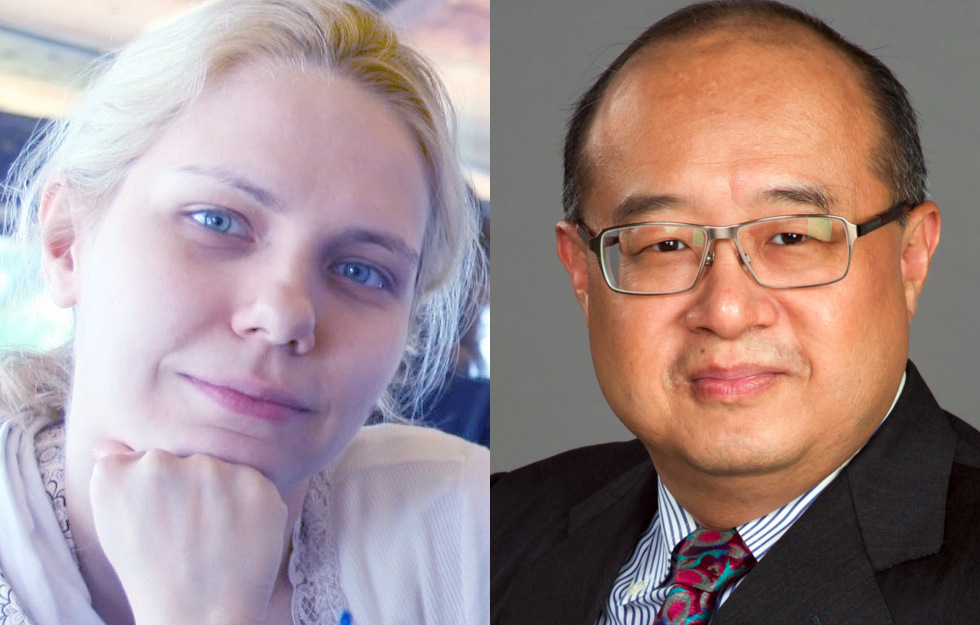
In this new release of our series showcasing the plenary and keynote talks from the IEEE/RSJ IROS2020 (International Conference on Intelligent Robots and Systems) you’ll meet Dr. Anya Petrovskaya (Stanford University), talking about driverless vehicles and field robots, and Prof. I-Ming Chen (Nanyang Technological University), whose talk is about food handling robots.

|
Dr. Anya Petrovskaya – A Journey through Autonomy Topical Area: Driverless Vehicles and Field Robots Bio: Dr. Anna Petrovskaya is a scientist and entrepreneur with decades of experience in the field of AI, autonomy, and 3D computer vision. Most recently, Anna built a 3D mapping startup that was acquired by Mobileye/Intel, where she became Head of LiDAR AI. She completed her Doctorate degree in Computer Science at Stanford University in 2011, where she focused on Artificial Intelligence and Robotics. In 2012, her thesis was named among the winners of the IEEE Intelligent Transportation Systems Society Best PhD Thesis Award. Anna was part of the core team that built the Stanford autonomous car Junior, which was a precursor to the Waymo/Google autonomous car. She has served as an Associate Editor for International Conference on Robotics and Automation (ICRA) since 2011. Based on her expertise, Anna has been invited to co-author chapters for the Handbook of Intelligent Vehicles and the 2nd edition of the Handbook of Robotics |
|
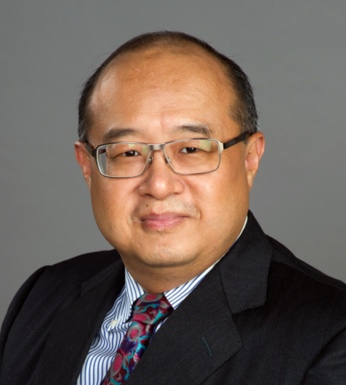
Prof. I-Ming Chen – Automation of Food Handling: From Item-Picking to Food-Picking Topical Area: Food Handling Robotics Bio: I-Ming Chen received the B.S. degree from National Taiwan University in 1986, and M.S. and Ph.D. degrees from California Institute of Technology, Pasadena, CA in 1989 and 1994 respectively. He is currently Professor in the School of Mechanical and Aerospace Engineering of Nanyang Technological University (NTU) in Singapore, and Editor-in-chief of IEEE/ASME Transactions on Mechatronics. He is Director of Robotics Research Centre in NTU from 2013 to 2017, and is also a member of the Robotics Task Force 2014 under the National Research Foundation which is responsible for Singapore’s strategic R&D plan in future robotics. Professor Chen is Fellow of Singapore Academy of Engineering, Fellow of IEEE and Fellow of ASME, General Chairman of 2017 IEEE International Conference on Robotics and Automation (ICRA 2017) in Singapore. His research interests are in logistics and construction robots, wearable devices, human-robot interaction and industrial automation. He is also CEO of Transforma Robotics Pte Ltd developing robots for construction industry and CTO of Hand Plus Robotics Pte Ltd developing robotics and AI solutions for logistics and manufacturing industry. |
tags: research
AUAI is supported by: