
Robohub.org
Lots of robots coming onboard in 2013, 2014 and 2015

Pure science is an integral part of robotics and often leads to solutions for strategic needs for an audience of willing buyers. Here are a few examples of that process from companies with products scheduled to hit the marketplace in the next four years.
Harvest Automation
- Servicing ornamental horticulture market ($35 billion industry)
- Focused on nurseries and greenhouses and their continual need to move potted plants
- Each robot to produce 10,000 hours of production and do the work of one laborer
- Will be in field beta testing in 2012; full rollout of commercial product in 2013
- This year’s field testing quite successful
- More than 10 prospective nursery clients signed on to be test sites and contributed to the development process
- Fully venture funded until 2015 projected profitability
Foxconn – throwing all the other numbers out of whack
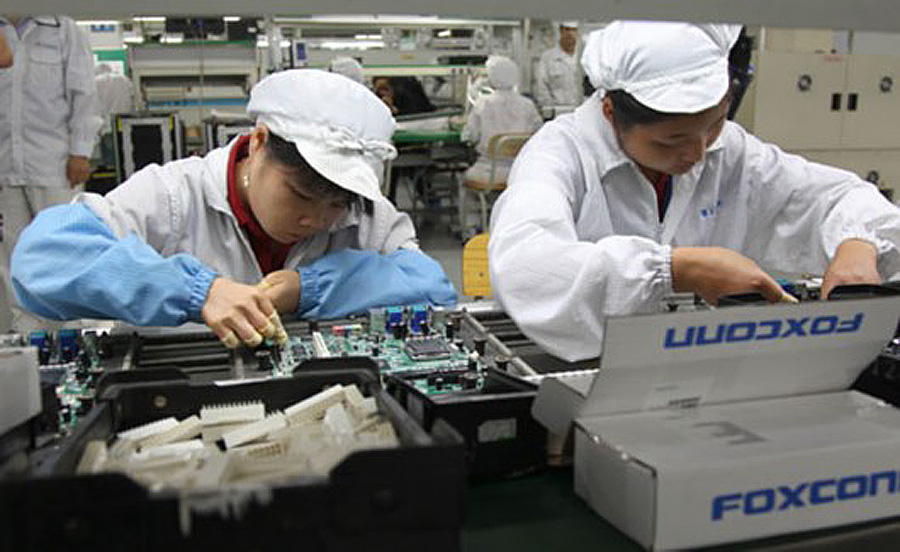
- Building $223 million R & D and manufacturing facility to produce assembly-line robots
- Plans to go from 10M present number of robots to 300M by end of 2013 to 1MM by end of 2015
- Mammoth rollout in Western terms; but not for Asian factories
- Hiring 2,000 Taiwanese engineers and scientists to make it happen
- Foxconn has had problems managing all their employees (1.2 MM)
- Replacing 1 million dull, dirty and dangerous tasks in their own factories with robots will eliminate 500M positions; Foxconn says they are planning to move up those 500M rather than lay them off; also saves necessity to hire 500M more workers
- Robots will likely be low-level polishers, painters, welders and transporters with intricate assemblies still done by human hands

- Office of Naval Research sponsored research to develop robotic underwater device to clean ship hulls
- Science is to mimic the behavior of sea creatures
- $1 billion in excess fuel and cleaning attributable to biofouling – barnacles and biofilm adhering to ships hulls
- Hull Bug, Sea Robotics new robot, is a fully autonomous submersible that figures out how to efficiently traverse a complicated three dimensional environment consisting of the contours of a ship
- Sensors determine clean or not clean thus robot can determine the surfaces it has yet to sweep
- Other sensors inspect for barnacles and they are removed differently
- Cool and descriptive video and an in-depth report on the details of the project
- Currently being tested with deployment in 2015 across the US Navy’s fleet
These three examples are just the tip of an iceberg of near-term robot deployments. Other announcements include hoped-for companies like Heartland Robotics and the commercialization of DARPA science projects such as the ARM Project which is slated to complete in 2014, to niche robot markets like the one to maintain and inspect high voltage transmission lines from the Electric Power Research Institute due to be deployed in 2014.
Heartland Robotics’ project is a big hope for American-based robotics businesses if and when it produces a factory assistant robot – a co-robot – for small and medium-sized enterprises. Similar to Harvest Automation – Heartland has enlisted manufacturer partners to help them help each other. No field trials yet nor planned dates given.
DARPA’s ARM Project is developing software and hardware that enables a robot to autonomously manipulate, grasp, and perform complicated tasks, with humans providing only high-level supervision. The ARM robot will be able to adapt to unstructured, dynamic environments. Imagine a two-armed security robot unzipping or unsnapping personal luggage and then rifling through searching for illegal objects and then closing it back up again.
All of this activity is online and heading for a bright robotic future and I haven’t even mentioned the healthcare field where robotic assistants of all types are flourishing and in line at the FDA and European CE agencies awaiting approvals… but that’s another story next month.

tags: FOXCONN, Harvest Automation, Heartland Robotics

AUAI is supported by:









