
Robohub.org
 

Nestlé 1st big buyer of Softbank’s Pepper robot

by
03 November 2014


share this:
Pepper-and-Softbank-CEO_800_613_80

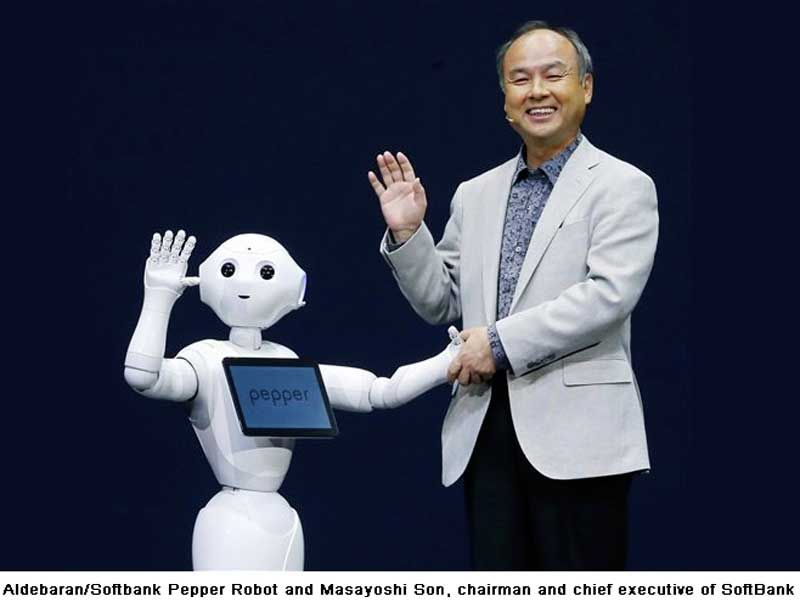
Earlier this year Softbank announced the launch of Pepper, a robot created specifically for SoftBank and the Japanese market. Last week Nestlé announced that it will use Pepper to sell its Nescafé products.

Pepper is designed to be engaging and friendly, a companion able to communicate through an intuitive artificial intelligence interface that reads and interprets voice, touch and emotions. It has two arms and rolls around on wheels. It is 47 inches tall and weighs around 60 pounds.

According to Bloomberg Businessweek Magazine, the plan is to start slowly, with 20 Peppers by the end of the year. But Nestlé has big hopes for the little robots and expects to deploy them in 1,000 stores next year.

The Nestlé deal is just the beginning of SoftBank’s Pepper ambitions. SoftBank plans on selling the robots to Japanese consumers early next year, and it will make the Pepper available in the U.S. at retail stores of Sprint, the telecom carrier acquired last year by SoftBank in a $22 billion deal. Bruno Maisonnier, chief executive of Aldebaran, SoftBank’s French company developing the robot, expects to sell “millions” of the machines, he told Bloomberg News in June. “We’re betting that a huge number of people will buy the robots.”

Pepper is able to read and respond to human emotion – to read people’s facial expressions and listen to their tone of voice to analyse how they’re feeling.

“Pepper will be able to explain Nescafé products and services and engage in conversation with consumers. I hope that this new consumer engagement model will expand across the world as an example of Japanese innovation” said Kohzoh Takaoka, President and CEO of Nestlé Japan.


tags: , , ,


Frank Tobe is the owner and publisher of The Robot Report, and is also a panel member for Robohub's Robotics by Invitation series.

            AUAI is supported by:


Subscribe to Robohub newsletter on substack


Related posts :

Developing active and flexible microrobots

  13 May 2026
This class of robots opens up possibilities for biomedical applications.

How to teach the same skill to different robots

  11 May 2026
A new framework to teach a skill to robots with different mechanical designs, allowing them to carry out the same task without rewriting code for each.

Robot Talk Episode 155 – Making aerial robots smarter, with Melissa Greeff

  08 May 2026
In the latest episode of the Robot Talk podcast, Claire chatted to Melissa Greeff from Queen's University about autonomous navigation and learning for drones.

New understanding of insect flight points way to stable flapping-wing robots

  07 May 2026
The way bugs and birds flap their wings may look effortless, but the dynamics that keep them aloft are dizzyingly complex and difficult to quantify.

Robotically assembled building blocks could make construction more efficient and sustainable

  05 May 2026
Research suggests constructing a simple building from interlocking subunits should be mechanically feasible and have a much smaller carbon footprint.

Robot Talk Episode 154 – Visual navigation in insects and robots, with Andrew Philippides

  01 May 2026
In the latest episode of the Robot Talk podcast, Claire chatted to Andrew Philippides from the University of Sussex about what we can learn from ants and bees to improve robot navigation.

Ultralightweight sonar plus AI lets tiny drones navigate like bats

  29 Apr 2026
Researchers develop ultrasound-based perception system inspired by bat echolocation.

Gradient-based planning for world models at longer horizons

  28 Apr 2026
What were the problems that motivated this project and what was the approach to address them?


AUAI is supported by:


Subscribe to Robohub newsletter on substack


©2026.02 - Association for the Understanding of Artificial Intelligence









