Robohub.org
 

NHTSA redefines “driver” of self-driving car

by
13 February 2016


share this:
google-buggy_car_autonomous_robocar

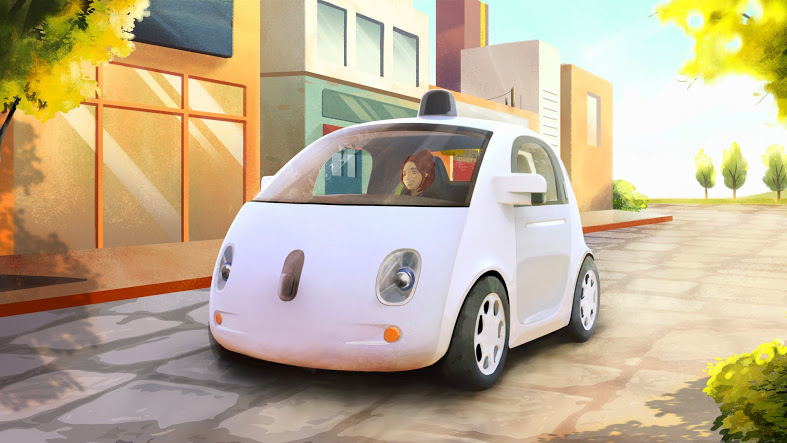
The National Highway Traffic Safety Administration (NHTSA) took an important step towards interpreting safety standards in ways that could make self-driving cars a reality for the public: it said that computers controlling those cars can be considered drivers just like humans.

The NHTSA said that it would write guidelines for self-driving cars within six months. Their answer was specifically given in response to a detailed request from Google, and was posted online so all could see.

Their answer to over 20 questions was that the SDS (self-driving computer and AI system) is the driver. But when it came to eliminating brake pedals, the NHTSA said that safety regulations and laws would need to be changed before brakes could be removed from the passenger compartment.

The question of who is responsible for a self-driving car is an important starting point for legal, insurance, and safety considerations. Setting the computer (and thus the maker of the computer and software) as the “driver” and as the responsible person/entity, is the first step along a long pathway toward establishing all the new rules for self-driving cars – including eliminating the need for brake pedals controlled by the human driver.

In a recent speech in Washington DC, the president of Volvo Cars, Hakan Samuelsson, said that the US is currently “the most progressive country in the world in autonomous driving… but it risks losing its leading position” because of the lack of Federal guidelines for the “testing and certification” of autonomous vehicles. Unanswered ethical and legal concerns, particularly when it comes to liability for driverless car accidents, are also stalling development. Thus the NHTSA's promise to write guidelines for self-driving cars within six months, and their defining the SDS as a driver, are both good signs.


tags: , , ,


Frank Tobe is the owner and publisher of The Robot Report, and is also a panel member for Robohub's Robotics by Invitation series.


Subscribe to Robohub newsletter on substack


Related posts :

A history of RoboCup with Manuela Veloso

and   24 Mar 2026
Find out how RoboCup got started and how the competition has evolved, from one of the co-founders.

Robot Talk Episode 149 – Robot safety and security, with Krystal Mattich

  20 Mar 2026
In the latest episode of the Robot Talk podcast, Claire chatted to Krystal Mattich from Brain Corp about trustworthy autonomous robots in public spaces.

A multi-armed robot for assisting with agricultural tasks

  18 Mar 2026
How can a robot safely manipulate branches to reveal hidden flowers while remaining aware of interaction forces and minimizing damage?

Graphene-based sensor to improve robot touch

  16 Mar 2026
Multiscale-structured miniaturized 3D force sensors for improved robot touch.

Robot Talk Episode 148 – Ethical robot behaviour, with Alan Winfield

  13 Mar 2026
In the latest episode of the Robot Talk podcast, Claire chatted to Alan Winfield from the University of the West of England about developing new standards for ethics and transparency in robotics.

Coding for underwater robotics

  12 Mar 2026
Lincoln Laboratory intern Ivy Mahncke developed and tested algorithms to help human divers and robots navigate underwater.

Restoring surgeons’ sense of touch with robotic fingertips

  10 Mar 2026
Researchers are developing robotic “fingertips” that could give surgeons back their sense of touch during minimally invasive and robotic operations.

Robot Talk Episode 147 – Miniature living robots, with Maria Guix

  06 Mar 2026
In the latest episode of the Robot Talk podcast, Claire chatted to Maria Guix from the University of Barcelona about combining electronics and biology to create biohybrid robots with emergent properties.


Robohub is supported by:


Subscribe to Robohub newsletter on substack


©2026.02 - Association for the Understanding of Artificial Intelligence