Robohub.org
100
Dynamic systems with Raffaello D’Andrea
To celebrate our 100th episode, we welcome Raffaello D’Andrea, Professor at ETHZ and co-founder of Kiva Systems.
Raffaello D’Andrea
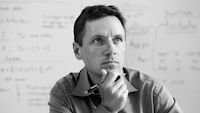 Raffaello D’Andrea is Professor of Dynamic Systems and Control at ETH Zürich, and co-founder and chief technical advisor for US company Kiva Systems. His research focus is pushing the boundary of autonomous systems capabilities, with an emphasis on adaptation and learning.
He tells us about his first impressions following one of the biggest deals in the history of robotics, the acquisition of Kiva Systems by Amazon for an estimated USD 775M. D’Andrea was on the show in 2008 to talk about Kiva’s pioneering warehouse automation solution, which uses fleets of up to 1000 mobile robots to streamline the process of picking, packing, and shipping e-commerce products. We also look at work in dynamic systems out of his lab, including projects from the Flying Machine Arena (listen to a previous interview on the Distributed Flight Array) and a recent collaboration with Gramazio & Kohler on the construction of undulated brick walls using quadrocopters. We then dive into the Art scene with projects such as the Blind Juggling Machine, the Robotic Chair and Table and finally take a step back to discuss the importance of fundamental research in engineering and strategies for translating knowledge in complex systems to industry.
D’Andrea is the recipient of the Wilson Medal, the Invention and Entrepreneurship in Robotics and Automation Award, the National Science Foundation Career Award, and the United States Presidential Early Career Award for Science and Engineering. As the faculty advisor and system architect of the Cornell Robot Soccer Team he was also four-time world champions at the international RoboCup competition. His work has been exhibited at numerous international venues, including the Venice Biennale, Ars Electronica, the Smithsonian, and the Spoleto Festival, and two of his robotic art pieces have become part of the permanent collection of the National Gallery of Canada.
https://www.youtube.com/watch?v=xvN9Ri1GmuY
Join the Team
The ROBOTS podcast is run by an international team of researchers and robot enthusiasts based in seven countries on four continents. To join the team, send us an email with your interests (audio or video editing, interviewing or blogging) at jointheteam@robotspodcast.com.
Links:
- Download mp3 (17.9 MB)
- Subscribe to Robots using iTunes
- Subscribe to Robots using RSS
- Raffaello D’Andrea’s Homepage
tags: ETH Zurich, podcast