Robohub.org
 

ShanghAI Lectures 2013, Lecture 9 – Towards a theory of intelligence

by
07 April 2014


share this:
Lecture09SlidesFabsShEyesjpg

Lecture 9: Towards a theory of intelligence

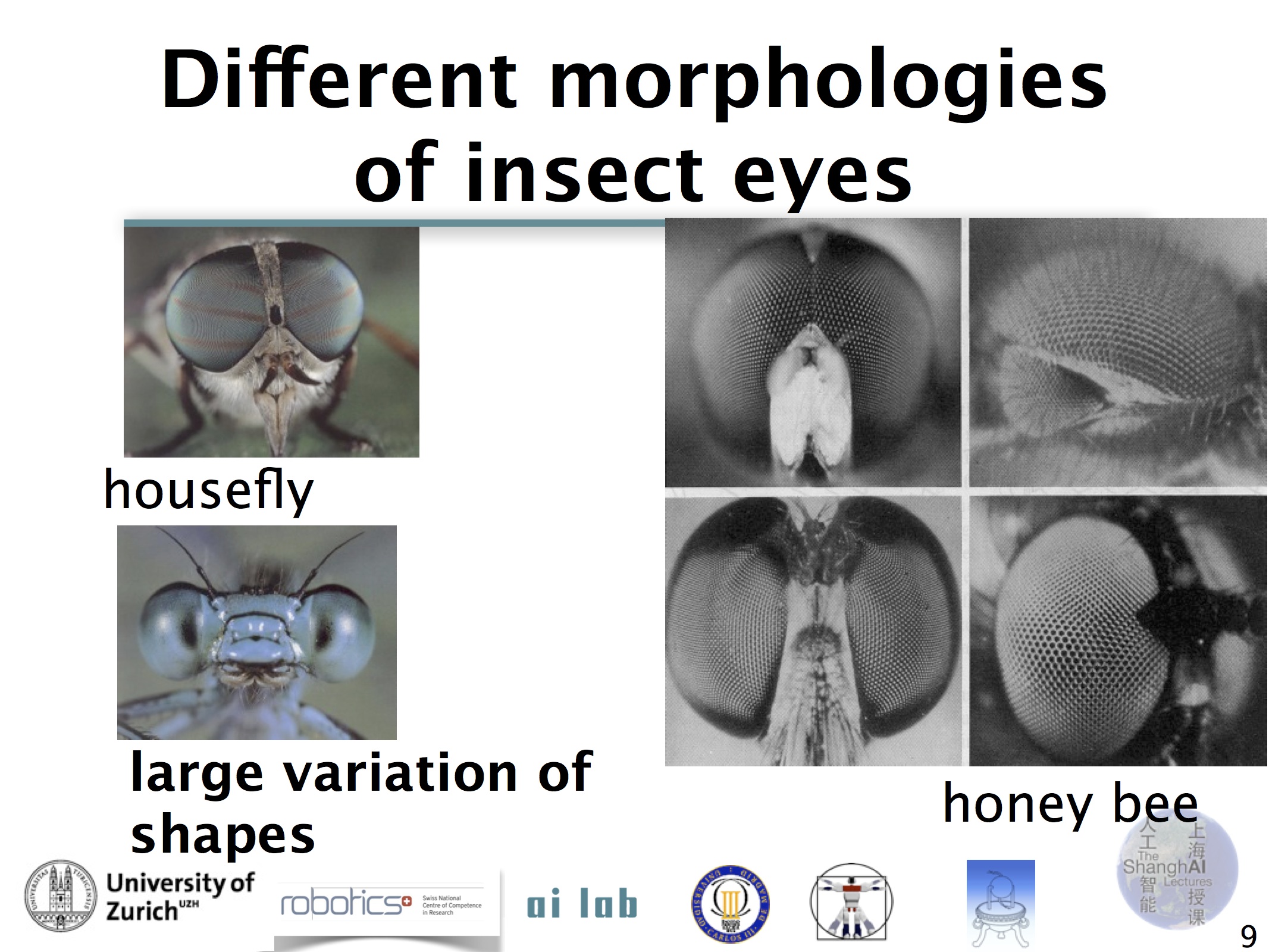
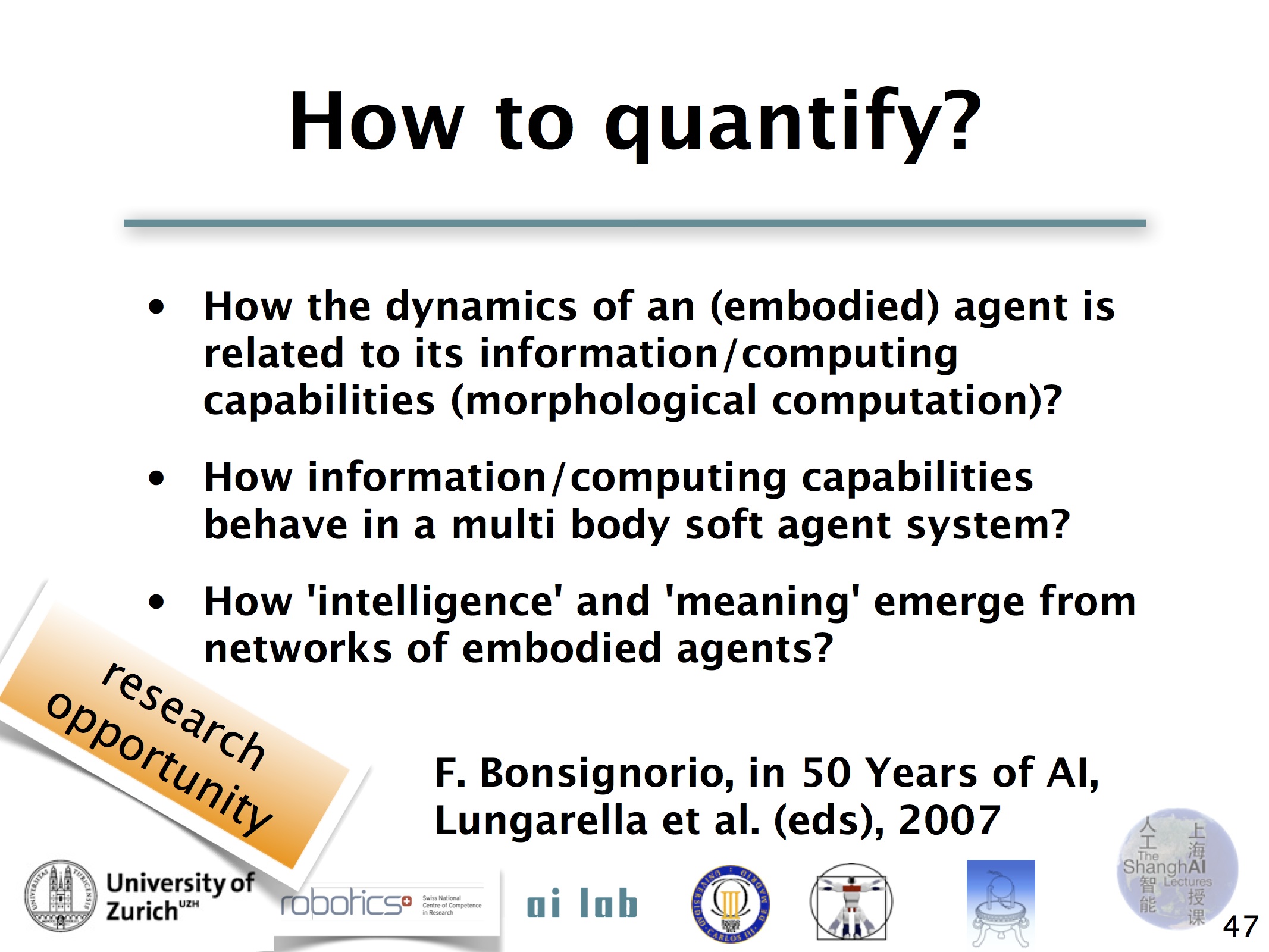
This lecture, which I hosted at the the University Carlos III (Madrid, Spain), suggests principles and design guidelines for the development of embodied intelligent systems that are more similar to animal-like intelligence than what has been proposed so far. How to build a self-organizing embodied intelligence? It’s a difficult challenge, but you may find some clues here:
Lecture09SlidesFabsShjpgHOW

Guest lecture: “Evolution of Morphological Complexity” by Josh Bongard
Lecture09SlidesFabsShjpgJosh

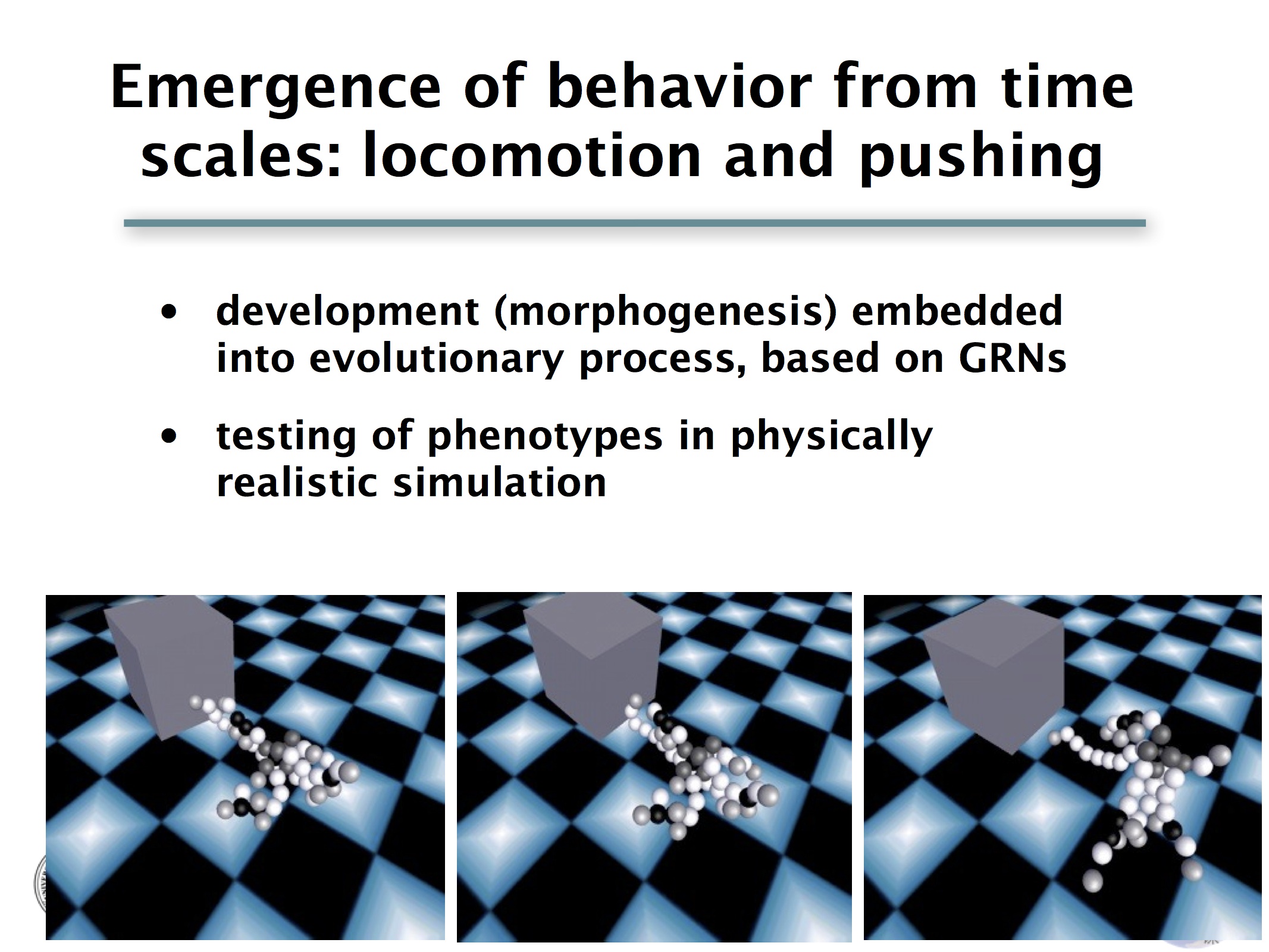
In this guest lecture Prof. Josh Bongard from the University of Vermont (USA) shows how the evolution of morphological complexity we observe in nature can actually be reproduced in artificial simulated computational models, and gives us some insights on the very core issues of embodied intelligence. Curious? Watch his talk:


Guest lecture: “Developing intelligence in humanoid robots” by Giorgio Metta

Prof. Giorgio Metta, the Director of the iCub facitily at the IIT, Genova (Italy) shows how the problem of developing cognitive capabilities in a robo-toddler is approached on the popular iCub platform. The iCub is now used by many labs around the world as a test-rig for the study of embodied intelligence. An example was given by Angelo Cangelosi, from the University of Plymouth in one the earlier lectures of this year’s ShanghAI edition.  Learn about the development of intelligence in robot babies here:

Guest lecture: “From Embodied Intelligence To Fetal Development – A Quest for The Fundamentals of Humanoid Intelligence” by Yasuo Kuniyoshi

An even more radical approach to the study of developmental learning in embodied systems (based on the synthetic methodology) is pursued by Prof. Yasuo Kuniyoshi, from the University of Tokyo. Kuniyoshi is an outstanding researcher in robotics and embodied intelligence. If you wish to really understand intelligence, perhaps you should begin with the fetus…  Don’t miss this strange but fascinating talk:


tags: , , , , ,


Fabio Bonsignorio is a professor in the BioRobotics Institute at the Scuola Superiore Sant'Anna (Pisa, Italy).

            AUAI is supported by:


Subscribe to Robohub newsletter on substack


Related posts :

Entangled robotic matter with cohesive motion

  15 Jun 2026
Engineers have developed a robotic collective that behaves less like a machine and more like a material that flows.

Robot Talk Episode 160 – Robotic blacksmiths, with Edward Mehr

  12 Jun 2026
In the latest episode of the Robot Talk podcast, Claire chatted to Edward Mehr from Machina Labs about their RoboCraftsman that shapes complex metal parts for the aerospace, defence, and automotive industries.

Congratulations to the #AAMAS2026 best paper award winners

  08 Jun 2026
Find out who won in the categories of best paper, best student paper, and best blue sky paper.

Robot Talk Episode 159 – Robot sensing and manipulation, with Maria Koskinopoulou

  05 Jun 2026
In the latest episode of the Robot Talk podcast, Claire chatted to Maria Koskinopoulou from Heriot-Watt University about autonomous robotic manipulators for surgery, industry, and beyond.

Global robotics technology roadmap

  03 Jun 2026
A multi-regional, cross-domain strategic perspective for Europe, Asia, and the United States.

RoboChem Flex: democratisation of the autonomous synthesis robot

  02 Jun 2026
A versatile, modular design and the option for "human-in-the-loop" analytics.

Robot Talk Episode 158 – Autonomous robot deliveries, with Ahti Heinla

  29 May 2026
In the latest episode of the Robot Talk podcast, Claire chatted to Ahti Heinla from Starship Technologies about their AI-powered delivery robots that operate independently on streets and pavements.

Light-activated gel could impact wearables, soft robotics, and more

  28 May 2026
In the field of ionotronics, data are transferred through ions, potentially providing a bridge between electronics and biological tissue.


AUAI is supported by:


Subscribe to Robohub newsletter on substack


©2026.05 - Association for the Understanding of Artificial Intelligence