
Robohub.org
The Drone Center’s Weekly Roundup: 1/4/16
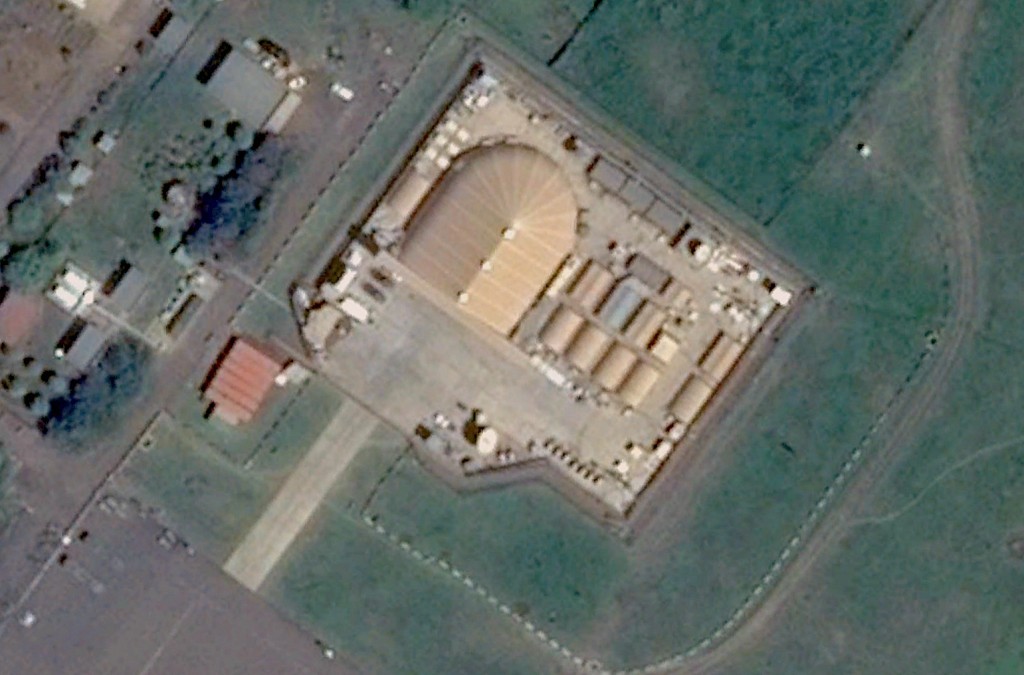
The US is expected to close the drone base at Arba Minch, Ethiopia. Image via CNES/Astrium.
At the Center for the Study of the Drone
2015 was a busy year in the drone world. As we head into 2016, we looked back at the biggest news stories of the year. Here’s the 2015 Drone Year in Review.
News
DJI, the China-based manufacturer of the popular Phantom drones, introduced a new version of its geofencing software. The beta system, called Geospatial Environment Online (GEO), will prevent users from taking off in restricted areas like Washington D.C. and will alert users when their drones enter restricted airspaces. Some users that register with the company will be able to opt out of the system. (Verge)
The U.S. military will no longer fly drones from a base in Arba Minch, a town in Ethiopia. According to a statement by the U.S. Embassy in Ethiopia, an American team has flown drones from the base over neighboring Somalia since 2011. Ethiopia is a partner in an international coalition fighting the al-Qaeda-allied al-Shabaab. (Bloomberg Business)
Commentary, Analysis and Art
At Slate, Justin Peters argues that “2015 was the year of the drone.”
At Motherboard, Jason Koebler writes that the Federal Aviation Administration has shut down at least three dozen model aircraft flying clubs around Washington, D.C.
At the Wall Street Journal, Mike Billings writes that investment in drone startup companies skyrocketed in 2015.
At the Asia Times, Bill Gertz argues that Chinese drones are made using stolen design data from the United States.
At the Sydney Morning Herald, Nick Bryant examines Peter W. Singer’s vision of what the future holds for military robots and drones.
At CNBC, Jacob Pramuk writes that the federal government and local governments are increasingly finding themselves at odds over who has authority to regulate drones.
At Al Monitor, Metin Gurcan writes that a recent drone test is evidence that Turkey is investing heavily in armed drones.
At Frost and Sullivan, Michael Blades published a lengthy study of the commercial drone market.
At Gizmag, Nick Lavars put together a gallery of a few of the best drone images of 2015.
At the Diplomat, Franz-Stefan Gady writes that Vietnam’s new drone will be used to patrol the South China Sea in 2016.
Know Your Drone
Endgadget takes a look at the world’s smallest camera-equipped drone.
Chipmaker Qualcomm has released a video previewing its latest drone chip, which includes autonomous obstacle avoidance capabilities. (The Verge)
The Wall Street Journal takes a closer look at ADS-B systems, a type of transponder that could be used to help prevent collisions between drones and manned aircraft.
The U.S. Defense Advanced Research Projects Agency has unveiled the design of a large ship-based vertical-takeoff drone, the Tactically Exploited Reconnaissance Node aircraft, which will be developed by Northrop Grumman. (Flightglobal)
Russian defense contractor Rostec has announced that it will begin taking orders for its Uran-9, an unmanned ground vehicle equipped with a 30 mm cannon and a 7.62 mm machine gun. (Defense-Aerospace)
The Polish military is looking to acquire six micro unmanned aerial vehicles for surveillance operations. (IHS Jane’s 360)
Taiwanese researchers have demonstrated the ability to control a small multirotor drone using an Apple Watch. (NBC News)
French hobby drone maker Parrot has released a second version of its popular BeBop micro drone. (Forbes)
Drones at Work
In Spain, the regional government of Andalusia has contracted a company to use drones to keep an eye on populations of the endangered Iberian lynx. (TheLocal.es)
Lifeguards in Rio de Janeiro are using drones to spot individuals in danger and to quickly deliver a life preserver. (Fox News Latino)
The Israel Aerospace Industries Heron-1 military reconnaissance and surveillance drone has reached 70,000 flight hours in operations for the German Air Force in Afghanistan. (UAS Vision)
Individual citizens in the United States are increasingly using drones to locate people in danger and aid rescue efforts to save them. (Tech Insider)
Meanwhile, in Cape Cod, a missing man was found by a search team using a drone. (NECN)
A drone was used to gather footage of the recent flooding in Missouri. (Wall Street Journal)
Meanwhile, the Missouri Highway Patrol asked citizens not to fly drones over flooded areas in order to avoid interfering with police helicopters. (St. Louis Post Dispatch)
For updates, news, and commentary, follow us on Twitter. The Weekly Drone Roundup is a newsletter from the Center for the Study of the Drone. It covers news, commentary, analysis and technology from the drone world. You can subscribe to the Roundup here.
tags: UAVs & drones

AUAI is supported by:









