
Robohub.org
Thought leadership in social sector robotics
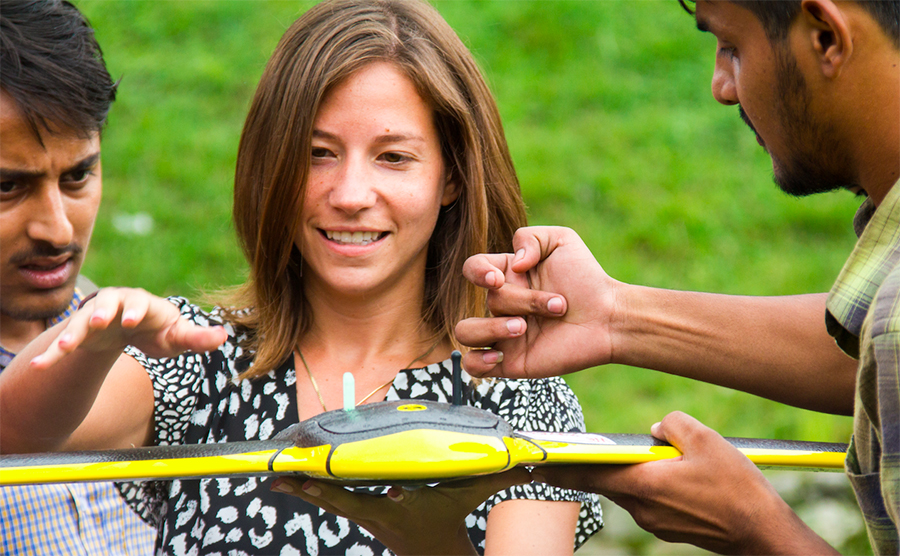
WeRobotics Global has become a premier forum for social good robotics. The feedback featured below was unsolicited. On June 1, 2017, we convened our first, annual global event, bringing together 34 organizations to New York City (full list below) to shape the global agenda and future use of robotics in the social good sector. WeRobotics Global was kindly hosted by the Rockefeller Foundation, the first donor to support our efforts. They opened the event with welcome remarks and turned it over to Patrick Meier from WeRobotics who provided an overview of WeRobotics and the big picture context for social sector robotics.
I’ve been to countless remote sensing conferences over the past 30 years but WeRobotics Global absolutely ranks as the best event I’ve been to – Remote Sensing Expert
The event was really mind-blowing. I’ve participated in many workshops over the past 20 years. WeR Global was by far the most insightful and practical. It is also amazing how closely together everyone is working — irrespective of who is working where (NGO, UN, private sector, donor). I’ve never seen such a group of people come together this away. – Humanitarian Professional
WeRobotics Global is completely different to any development meeting or workshop I’ve been to in recent years. The discussions flowed seamlessly between real world challenges, genuine bottom-up approaches and appropriate technology solutions. Conversations were always practical and strikingly transparent. This was a highly unusual event. – International Donor
The first panel featured our Flying Labs Coordinators from Tanzania (Yussuf), Peru (Juan) and Nepal (Uttam). Each shared the hard work they’ve been doing over the past 6-10 months on localizing and applying robotics solutions. Yussuf spoke about the lab’s use of aerial robotics for disaster damage assessment following the earthquake in Bukoba and for coastal monitoring, environmental monitoring and forestry management. He emphasized the importance of community engagement and closed with new projects that Tanzania Flying Labs is working on such as mangrove monitoring for the Department of Forestry. Juan presented the work of the labs in the Amazon Rainforest, which is a joint effort with the Peruvian Ministry of Health. Together, they are field-testing the use of affordable and locally repairable flying robots for the delivery of antivenom and other medical payload between local clinics and remote villages. Juan noted that Peru Flying Labs is gearing up to carry out a record number of flight tests this summer using a larger and more diverse fleet of flying robots. Last but not least, Uttam showed how Nepal Flying Labs has been using flying robots for agriculture monitoring, damage assessment and mapping of property rights. He also gave an overview of the social entrepreneurship training and business plan competition recently organized by Nepal Flying Labs. This business incubation training has resulted in the launch of 4 new Nepali start-up companies focused on Robotics-as-a-Service.
The following images provide highlights from each of our Flying Labs: Tanzania, Peru and Nepal.
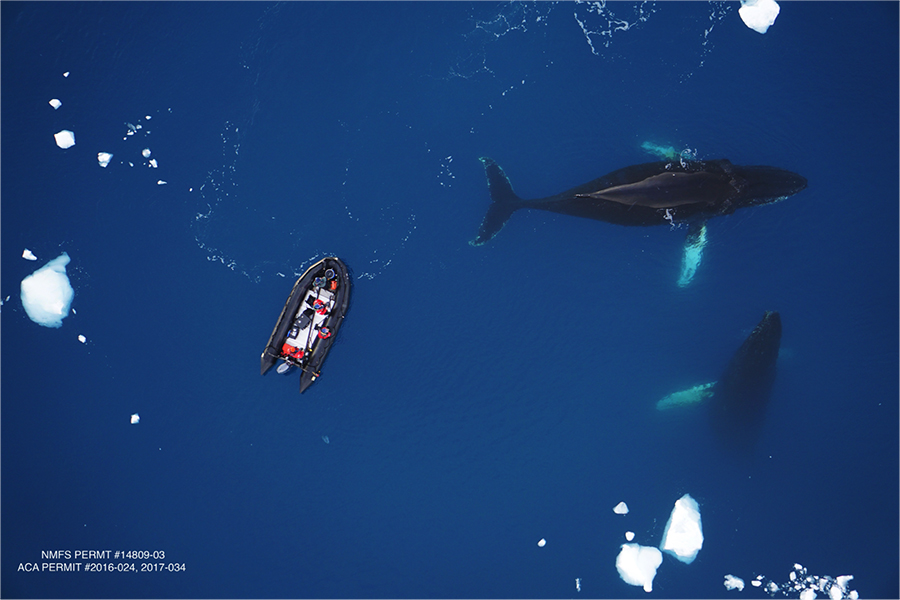 The second panel featured talks on sector based solutions starting with the International Federation of the Red Cross (IFRC). The Federation (Aarathi) spoke about their joint project with WeRobotics; looking at cross-sectoral needs for various robotics solutions in the South Pacific. IFRC is exploring at the possibility of launching a South Pacific Flying Labs with a strong focus on women and girls. Pix4D (Lorenzo) addressed the role of aerial robotics in agriculture, giving concrete examples of successful applications while providing guidance to our Flying Labs Coordinators. The Wall Street Journal (Sally) spoke about the use of aerial robotics in news gathering and investigative journalism. She specifically emphasized the importance of using flying robots for storytelling. Duke Marine Labs (David) closed the panel with an overview of their projects in nature conservation and marine life protection, highlighting their use of machine learning for automated feature detection for real-time analysis.
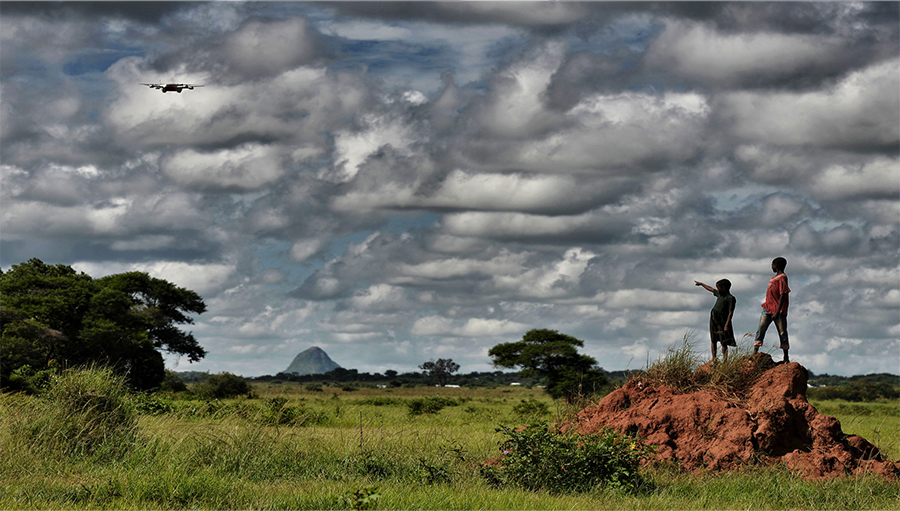 Panel number three addressed the transformation of transportation. UNICEF (Judith) highlighted the field tests they have been carrying out in Malawi; using cargo robotics to transport HIV samples in order to accelerate HIV testing and thus treatment. UNICEF has also launched an air corridor in Malawi to enable further field-testing of flying robots. MSF (Oriol) shared their approach to cargo delivery using aerial robotics. They shared examples from Papua New Guinea (PNG) and emphasized the importance of localizing appropriate robotics solutions that can be maintained locally. MSF also called for the launch of PNG Flying Labs. IAEA was unable to attend WeR Global, so Patrick and Adam from WeRobotics gave the talk instead. WeRobotics is teaming up with IAEA to design and test a release mechanism for sterilized mosquitos in order to reduce the incidence of Zika and other mosquito-borne illnesses. More here. Finally, Llamasoft (Sid) closed the panel with a strong emphasis on the need to collect and share structured data to accurately carry out comparative cost-benefit-analyses of cargo delivery via flying robots versus conventional means. Sid used the analogy of self-driving cars to highlight how problematic the current lack of data vis-a-vis reliably evaluating the impact of cargo robotics.
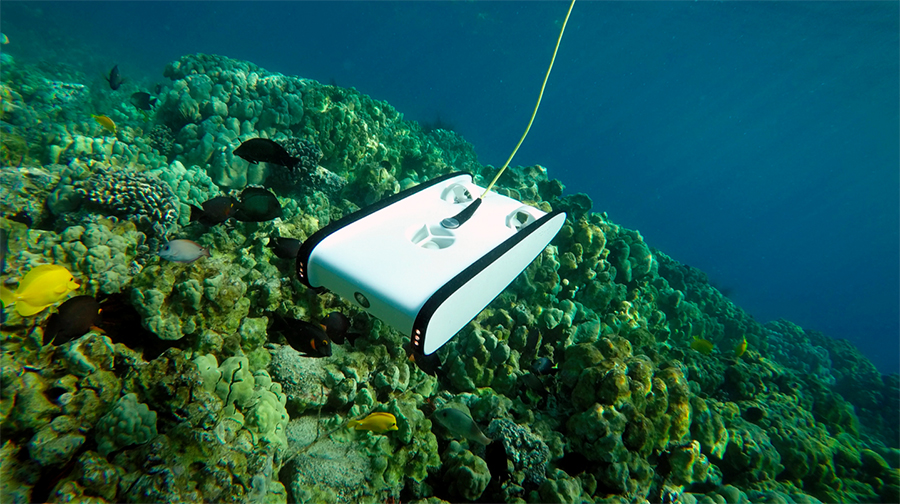
The fourth and final panel went beyond aerial robotics. Digger (Thomas) showed how they convert heavy construction vehicles into semi-autonomous platforms to clear landmines and debris in conflict zones like Iraq and Syria. Science in the Wild (Ulyana) was alas unable to attend the event, so Patrick from WeRobotics gave the talk instead. This focused on the use of swimming robots to monitor glacial lakes in the Himalaya. The purpose of the effort is to identify cracks in the lake floors before they trigger what local villagers call the tsunamis of the Himalaya. OpenROV (David) gave a talk on the use of diving robots, sharing real-world examples and providing exciting updates on the new Trident diving robot. Planet Labs (Andrew) gave the closing talk, highlighting how space robotics (satellites) are being used across a wide range of social good projects. He emphasized the importance of integrating both aerial and satellite imagery to support social good projects.
The final session at WeR Global comprised breakout groups to identify next steps for WeRobotics and the social good sector more broadly. Many quality insights and recommendations were shared during the report back. One such recommendation was to hold WeR Global again, and sooner rather than later. So we look forward to organizing WeRobotics Global 2018. We will be providing updates via our blog and email list. We will also use our blog and email list to share select videos of the individual talks from Global 2017 along with their respective slide decks.
In the meantime, a big thanks to all participants and speakers for making Global 2017 such an unforgettable event. And sincerest thanks to the Rockefeller Foundation for hosting us at their headquarters in New York City.
tags: c-Aerial, cx-Politics-Law-Society, Environment-Agriculture, WeRobotics

AUAI is supported by:









