
Robohub.org
What’s new in robotics this week: British Standards Institute releases guidelines for ethical robot design
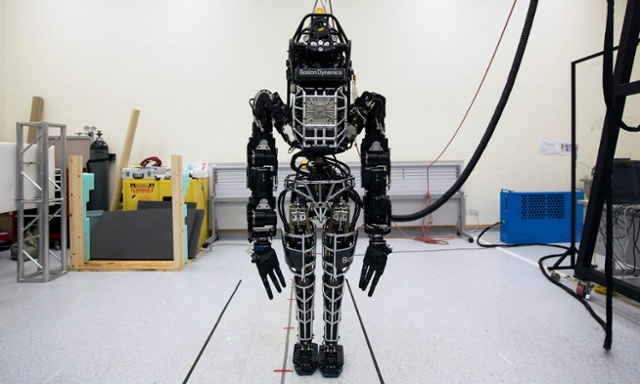
Source: The Guardian
Ethics guidelines for robots; $1m grant for cobot research; Lyft fleet to be autonomous in 5 years; self-driving car policy; Russian bot arrested, and more. Find out what’s happening in our robotics universe this week.
Do no Harm, don’t discriminate: Official guidance issued on robot ethics (The Guardian)
The British Standards Institute has released a set of guidelines for ethical robot design.
Believed to be first document of its kind, “BS8611 Robots and robotic devices” is intended for use by robot and robotics device designers and managers and is designed to help people in these roles to identify and avoid areas of potential ethical harm.
The BSI document begins with some broad ethical principles: “Robots should not be designed solely or primarily to kill or harm humans; humans, not robots, are the responsible agents; it should be possible to find out who is responsible for any robot and its behaviour.”
It goes on to highlight a range of more contentious issues, such as whether an emotional bond with a robot is desirable, particularly when the robot is designed to interact with children or the elderly.
Noel Sharkey, emeritus professor of robotics and AI at the University of Sheffield, said this was an example of where robots could unintentionally deceive us. “There was a recent study where little robots were embedded in a nursery school,” he said. “The children loved it and actually bonded with the robots. But when asked afterwards, the children clearly thought the robots were more cognitive than their family pet.”
University receives $1 million grant to improve collaborative robotics (Robotics and Automation News)
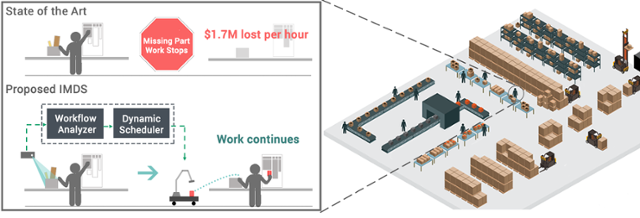
The National Science Foundation has granted US$1million to University of California San Diego engineers to research human-robot collaboration in US factories.
The goal of the project is to design an “intelligent material delivery system,” which collaborates closely with skilled human workers.
In the system, the researchers envision, robots would sense when skilled workers need materials and deliver them in advance. This would save companies, and consumers, about $1.7 million per hour—the cost of lost productivity when work stops to procure the needed materials.
The work will be translatable across a wide range of manufacturing sectors, including automotive, construction, health care, energy, and goods. This project will help the US manufacturing sector – 25 per cent of all domestic employment – dramatically improve their operations by using automation to directly support a talented, skilled workforce.
The project also involves collaboration with Steelcase, a Grand Rapids, Michigan-based furniture company, which produces made-to-order furniture, which will mean millions of unique material handling situations and processes for the robots to learn from.
Exec: Most Lyft rides will be in autonomous cars in 5 years (PhysOrg)
Lyft co-founder and President, John Zimmer made two bold predictions this week. First; that within five years, a majority of Lyft’s rides will be in self-driving cars. Second; that the era of personal car ownership is coming to an end because autonomous rides will be a cheaper way to travel.
In partnership with General Motors, Lyft is testing autonomous vehicles in San Francisco and Phoenix. Meanwhile, rival ride-hailing firm Uber is testing self-driving cars in Pittsburgh.
Zimmer said autonomous cars will start out giving rides at low speeds, around 25 miles per hour, in limited areas with a number of restrictions. The cars also won’t be able to operate in bad weather. “As technology improves, these cars will be able to drive themselves in more and more situations,” Zimmer said.
Autonomous cars and ride-hailing will be essential to helping cities handle an influx of residents in the coming years as the world becomes more urbanized, he said. Once that happens, there will be less need for parking, freeing up space for parks and other uses, Zimmer added.
What drones did for the sky, robot subs are about to do for the sea (Popular Mechanics)
https://www.youtube.com/watch?v=pjTh8ChlFss
Excellent article in Popular Mechanics this week about genesis of “the next drone revolution,” which is set to take place underwater iin the form of various remotely operated vehicles (ROVs).
The biggest application will be in aquaculture. While the offshore oil and gas industries have always had the money for ROVs, fish farmers work on a much tighter budget. A new generation of low-cost ROVs should give the industry greatly improved capability for monitoring beds of shellfish, fish populations, anchors and underwater infrastructure. Blue Robotics are already working with Catalina Sea Ranch which grows mussels, as well as farms in Ensenada, Mexico.
While the ROV market may not spawn million-sellers like the DJI Phantom drone did for flying drones, it is likely to attract plenty of business interest, and more than a few hobbyists and students. Some, like the OpenROV team, may be initially motivated by the lure of sunken treasure, and then get hooked on underwater exploration. Because, while aerial drones see things you have seen before from another angle, underwater ROVs can open up a whole new world.
In other marine robot news, an interdisciplinary team from MIT is set to begin a research collaboration with the Amsterdam Institute for Advanced Metropolitan Solutions (AMS) in the Netherlands MIT News reported this week. Dubbed “ROBOAT,” the project aims to develop a fleet of autonomous boats to investigate how urban waterways can be used to improve the city’s function and quality of life.
“This project imagines a fleet of autonomous boats for the transportation of goods and people that can also cooperate to produce temporary floating infrastructure, such as on-demand bridges or stages that can be assembled or disassembled in a matter of hours,” says Carlo Ratti, professor of the practice of urban technologies in the MIT Department of Urban Studies and Planning (DUSP).
In addition to infrastructure and transport, ROBOAT will also deploy environmental sensing to monitor water quality and offer data for assessing and predicting issues related to public health, pollution, and the environment.
Marines launch competition to fund and build the next generation of battlefield robots (Digital Trends)

The U.S. Marine Corps has announced an internal competition to research and fund ways for robots to replace humans on a variety of tasks, particularly those of the “dull, dirty, and dangerous” variety.
One thing that robots will likely not do is the actual killing. The Pentagon has already all but announced its opposition to that, seemingly acknowledging its potentially controversial nature among politicians and ordinary Americans like.
According to a report in Breaking Defense this week, US Defense Sec. Carter has said the U.S. will never use lethal autonomous robots. Meanwhile, the International Committee of the Red Cross has released “Autonomous Weapon Systems: Implications of Increasing Autonomy in the Critical Functions of Weapons,” which examines some of the concerns around the use of robots in war.
The Department of Transportation just issued a comprehensive policy on self-driving cars (Vox)
The US Department of Transportation released “a surprisingly far-reaching” Federal Automated Vehicles Policy, this week.
The policy attempts to do all sorts of things […] but the overarching motivation is that DOT wants to accelerate the development and adoption of AVs.
DOT views AVs as a safety technology that could reduce some of the 38,000 traffic fatalities a year in the US, 95 percent of which are caused by human error. It also sees AVs as an accessibility technology that could provide personal transportation to whole populations (disabled, elderly, etc.) who have lacked it.
The robot that attempted to escape its human captors was recently arrested at a political rally (Quartz)
Remember the Russian robot that “escaped” from its handlers earlier this year and wandered onto the street?
Well, apparently the robot has taken up politics now as it turned up at a Russian political rally were it was “arrested” by police.
At a Sept. 15 rally for Russian parliamentary candidate Valery Kalachev in Moscow, authorities attempted to handcuff Promobot and whisk it away from the scene, according to the Mirror. The arrest reportedly occurred after someone at the event called the police because it was recording the opinions of voters for “processing and analysis.”
“Police asked to remove the robot away from the crowded area, and even tried to handcuff him,” a Promobot representative told Inverse magazine. “According to eyewitnesses, the robot did not put up any resistance.”
What’s it all about? Goodness knows. But somehow I sense that the robot’s name –“Promobot”– is a very strong clue.
And since the robot was all over the news this week, as “promotional robots” go, it’s doing a very, very good job indeed.
And Finally…
https://www.youtube.com/watch?v=y2Dk6kmec_s
https://www.youtube.com/watch?v=znO1iM8dG1E
- Victor Scheinman, Assembly Line Robot Inventor, Dies at 73 (New York Times)
- In Singapore, service comes with a robotic smile (Today Online)
- China National Social Security Fund Joins $260M Investment Deal In Cogobuy (China Money Network)
- Safe Robot Works Well with Others … Humans to Be Exact (Design News)
- LiDAR sensor packs more channels for higher resolution (New Atlas)
- Print-a-Drink uses industrial robots to 3D print intricate patterns into your cocktail (3ders.org)
- Digitimes Research: Collaborative robots to drive Industry 4.0 smart manufacturing (DigiTimes)
- Central event of the European Robotics Week 2016 to take place in Amsterdam (EU Robotics)
- Drone operators seek permission to fly out of direct sight (CNBC)
- Strategic Capabilities Office Focused on Autonomy for USAF, Marines (Defense News)
- NTU’s new inspection robot to be tested in JTC’s industrial developments (Nanyang Technological University)
tags: robotiq, What's new in robotics


AUAI is supported by:









