Robohub.org
Willow Garage changing

One of the most iconic and influential robotics companies has just let staff know that Willow Garage will be making big changes in the next few months:
Willow Garage has decided to enter the world of commercial opportunities with an eye to becoming a self-sustaining company. This is an important change to our funding model.
On the surface this is sad news, and I hope that we see a lot of attention given to the huge contribution that Willow Garage has made to robotics over their short but significant history.
Scott Hassan founded Willow Garage in late 2006 to accelerate the development of non-military robotics and advance open source robotics software. Named as an homage to the garages that spawned the computer industry, he envisioned an innovative research lab infused with the engineering expertise of a product development company. The goal was simple: to push the frontiers of robotics, both scientifically and commercially. Scott put together a funding package with the unique goals of impact first, return on capital second, with the strong belief that success in the first goal (impact) would provide plenty of opportunities to excel at the second (return on capital).
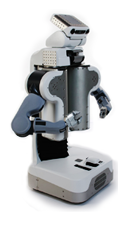
Willow Garage’s PR2 program has seen consolidation of high level robotics research across universities, a direction continued by the ROS open source initiative and the low cost Turtlebot research platform. Along the way, Willow Garage have also started Open CV and the Point Cloud Library.
In fact, Willow have successfully spun off 7 or 8 other companies or foundations, including Suitable Technologies, hiDOF, IPI, & Redwood Robotics, not to mention the momentum given to many individual careers and startups. They have generated a lot of business, and we’re seeing the down side of that right now. There is too much activity at the edge and not enough in the center.
Perhaps there doesn’t need to be. I see this really as a vindication of Willow’s goals, to push the frontiers of robotics forward and return on investment. They have succeeded, they have spun off and Willow as it was, is no longer necessary. Think of the incredible opportunities to start robotics companies in Silicon Valley right now. Maybe the future is rosier than it seems.
tags: Scott Hassan, Willow Garage

AUAI is supported by: