
Robohub.org
More space robots as Grishin funds NanoSatisfi
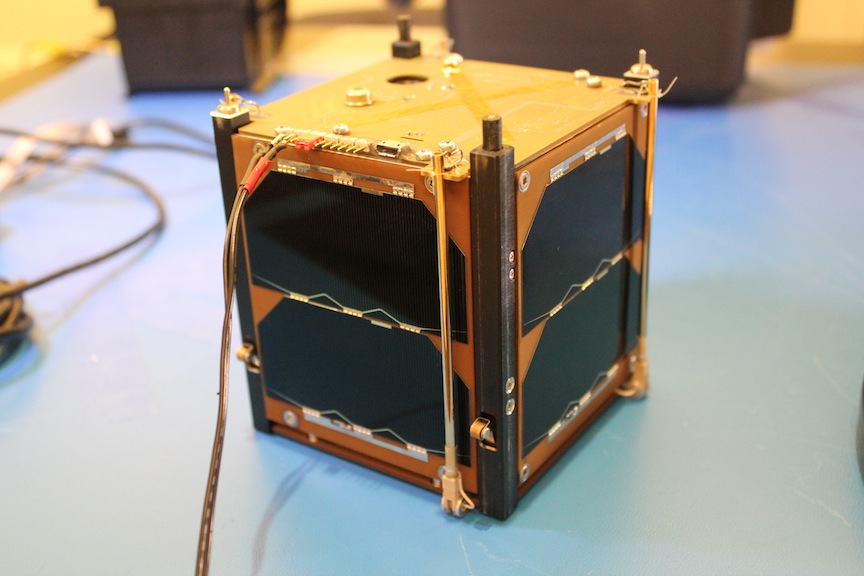
NanoSatisfi, a Silicon Valley based cubesat startup, today received $300,000 investment from Grishin Robotics bringing their total seed funding to $1,750,000, not including their initial successful Kickstarter campaign of $106,330 and CEO Peter Platzer’s personal investment. NanoSatisfi aim to provide affordable space satellite access to everyone through their autonomous cubesats. The first launch dates have been booked for summer and fall 2013.
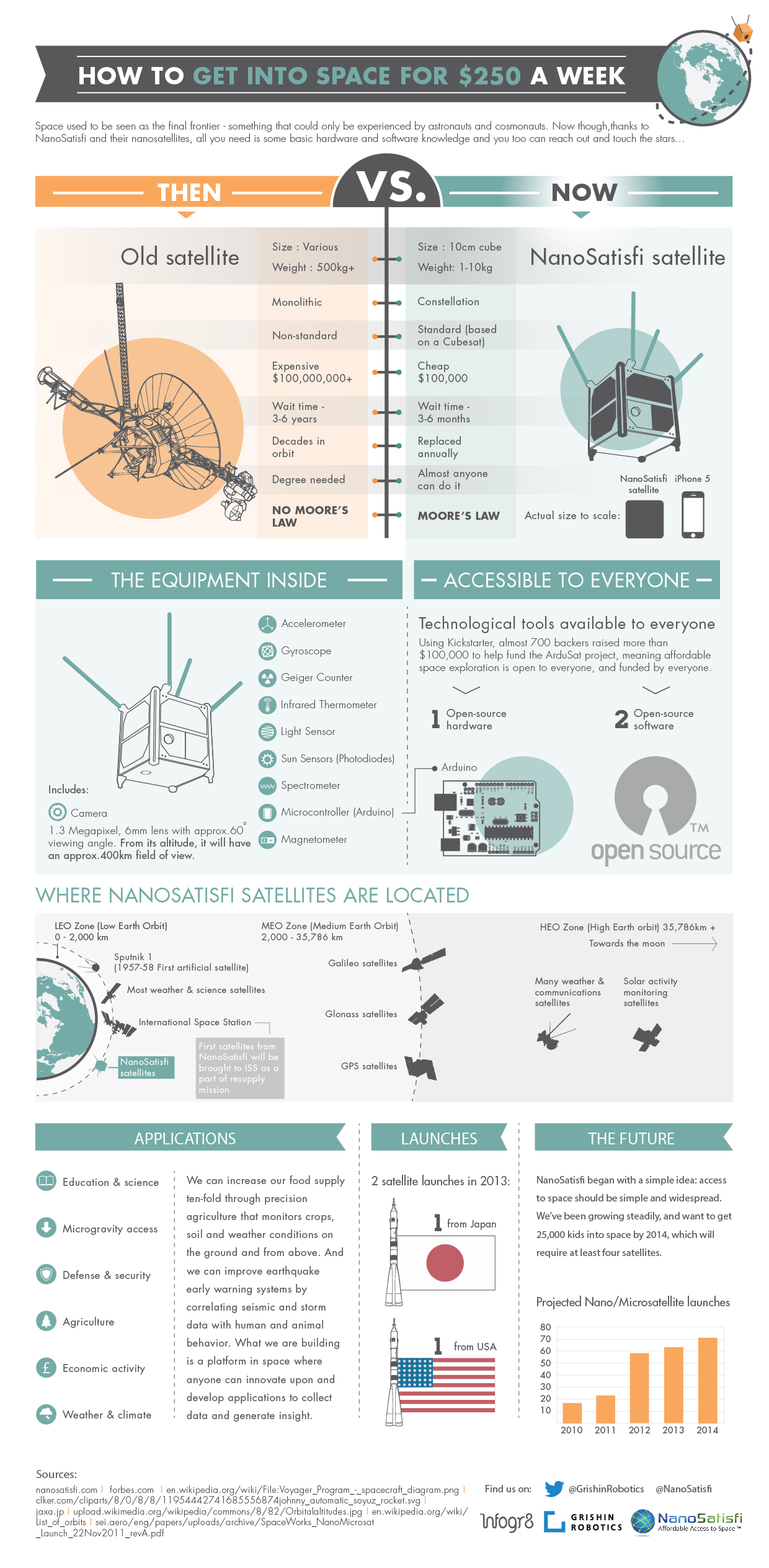
NanoSatisfi’s founder and CEO Peter Platzer intends to bring Moore’s Law to space. The first NanoSatisfi cubesat will have approximately 1000x more computational power than the Voyager 1 spacecraft. Due to the expense and length of time to successfully launch something, spacecraft have lagged far behind the rate of change on earth. We landed men on the moon with slide rules and computers that don’t hold a candle to any smartphone today.
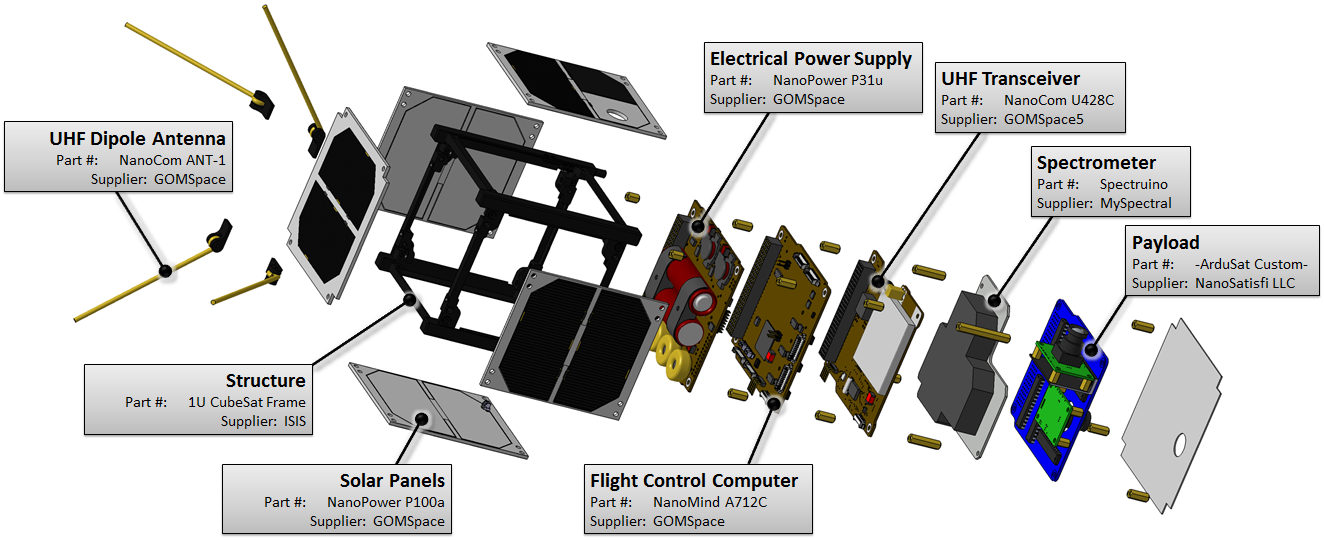
Platzer plans to leverage Moore’s Law to get many small satellites launched and unlock a wide range of citizen science and crowd sourced uses. It costs $350,000 to build, launch and operate one satellite which is expected to generate $750,000 revenue. Grishin’s investment will extend the number of satellite launches in NanoSatisfi’s near future. By utilizing the most widely adopted satellite standard, NanoSatisfi does not need a dedicated launch for their 10cm x 10cm x 30cm satellites. Platzer has developed a “profitable de-risking and scaling strategy to target the 25bn+ enterprise space data market”.
Each satellite is a cube weighing about 1 kilogram, equipped with cameras, a Geiger counter, a spectrometer, a magnetometer, and an evolving array of sensors. As described in TechCrunch, “ArduSats are designed to be active for about two years, at which point they’re replaced by new ones incorporating the latest technology. For example, even though the second ArduSat is launching only a few months after the first, its camera will actually be more powerful, thanks to rapidly dropping price.” [Anthony Ha]
The US Whitehouse has recently honored Platzer as a US Champion of Change for his vision for the future. Platzer had always been interested in space exploration but was impatient with the state of the industry. Although he trained as a high-energy physicist, Platzer spent most of his career on Wall Street in finance. This turns out to be a good combination for creating a strategic approach to space robots.
Silicon Valley is starting to recognize that hardware and robotics startups may be the next big thing. NanoSatisfi has been incubated at Lemnos Labs, who aim to bring the ‘silicon back to the Valley’, and have successfully incubated several other robot startups. And yes, these are space robots, operating autonomously.
NanoSatisfi’s first satellite is currently being readied for launch in Japan, with JAXA, the Japanese Space Agency. NanoSatisfi are offering control of their cubesat for as little as $250 a week, opening the doors to all sorts of experimentation and big amounts of data. They’ve opened the Ardusat Control Center for Kickstarter backers, who can now start writing code for the ArduSat without needing to download the Arduino IDE. Backers will be able to code straight from the web to the testing infrastructure and then to download their data after completing their experiments on the ArduSat.
Already, 5 students from Finland have done a ‘space camp’, learning everything from orbital mechanics to space law. Each student successfully completed Arduino experiments that ranged from using a vacuum chamber to test and ultrasonic distance sensor under extreme temperature variations, to using a luminosity sensor to detect and measure the length of lightening strikes. What else could we do with a spacebird’s eye view of the world?
tags: Dmitry Grishin, Grishin Robotics, research, space

AUAI is supported by:









