
Robohub.org
Why are JIBO, Pepper, Siri, Google Now and Cortana so important?
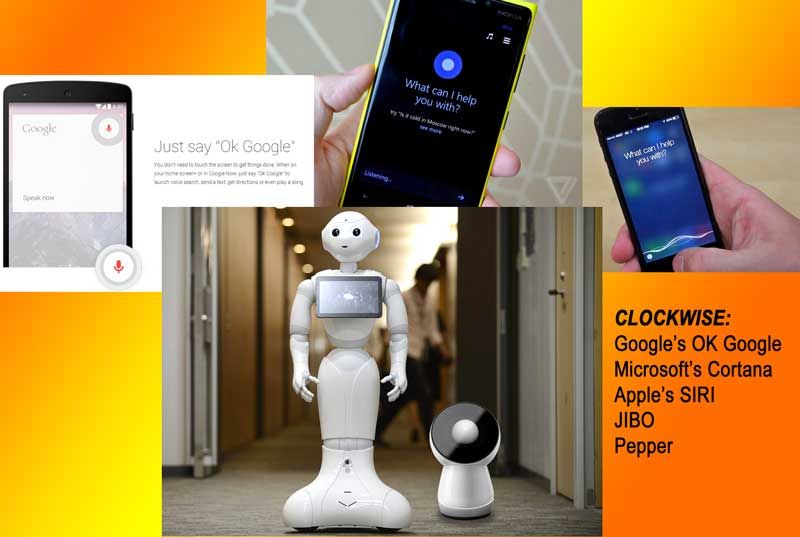 There’s a race going on to see which AI solution providing personal assistance is welcomed by businesses, end users and consumers, and whether this will be physical or virtual.
Imagine an assistant that knows your schedule, contacts, interests and location, and that can communicate with you to help you stay informed, connected and on top of your game. This is more personalized than your PC, tablet or smartphone and, depending on whether physical or virtual, is in a pleasing, personal and compatible form. If these assistants catch on, they will begin anticipating and handling many of the little decisions that fill our days. The potential for this form of artificial intelligence has tech companies vying to lead the pack.
Apple’s Siri, Google’s Google Now, Microsoft’s Cortana, Facebook, and Baidu are all in various states of pursuing virtual assistants. But JIBO, Pepper, Cubic, EmoSpark and others are just now coming to market and are offering a physical component – a robotic presence – which they hope will enhance the experience.
2015: The year robot assistants come to market2015 is the year physical products will be coming to market and available for experimentation and testing. Pepper ships in the summer in Japan, JIBO ships preorders in Q3 as does Cubic in the fall and EmoSpark in the summer.
These types of personal assistants rely on multiple activities including: speech recognition to determine and parse through spoken commands; predictive technology to anticipate what a user will likely do next; and determining and using contextual data (biographic data and situational information, e.g.: location, time and date). Apple, Google and Baidu – all of which attempt to provide this service – want their intelligent interface to fit all front ends, to be the universal contact point. They see a plentiful revenue stream if they are successful. Others want Apple and Google to redirect users to company sites with apps that understand their own content better, e.g.: directing requests for pizza to Dom, the digital front-end for taking Dominos Pizza orders.
Many are waiting to see how the competition plays out. Car companies and other smart product providers, fearing a variety of consequences outside of their control, aren’t enamored of letting Apple or Google (or any of the others) run their voice-powered front-end systems … thus their current intense race for in-house and startup development. But if Google or Apple or ??? gets to market first with a true digital assistant that people embrace and buy – one that can be virtual or physical – car companies may need to make their systems adapt to that system because it’s what everyone wants to use.
The key to the outcome of this race is whether a general purpose AI will be able to steer people through their digital world, or whether users would rather navigate to applications that are specialists (such as American Airlines or Dominos Pizza).
Natural language recognition – and the ability to analyze user desires from that language – is a very competitive science these days. Nuance, the biggest provider of voice and language solutions to the auto industry and a collaborator with IBM up until recently, is now competing with IBM’s Watson team and also Apple, which is rumored to be working on their own language processing system instead of using Nuance. A look at the What’s Next section of Nuance’s website is, to quote them, “The intersection of Science Fiction, super-pi, and technology innovation.” But a more descriptive quote from that page seems more appropriate: “Intelligent self-service delivers a better customer experience.” That’s what this race is all about.
If you liked this article, you may also be interested in:
- The second wave of social robots is here
- Amazon’s Echo: A point-of-sale even the kids can relate to
- The next era of conversational technology
- The death of search (or, My dysfunctional relationship with Siri)
See all the latest robotics news on Robohub, or sign up for our weekly newsletter.
tags: Apple, Cortana, Google, household, human-robot interaction, Jibo, Natural Language Processing, Pepper, Siri

AUAI is supported by:









