
Robohub.org
How do we get robotaxi rides down to 30 cents/mile while Uber/Lyft charge 50 cents/mile to just connect you?
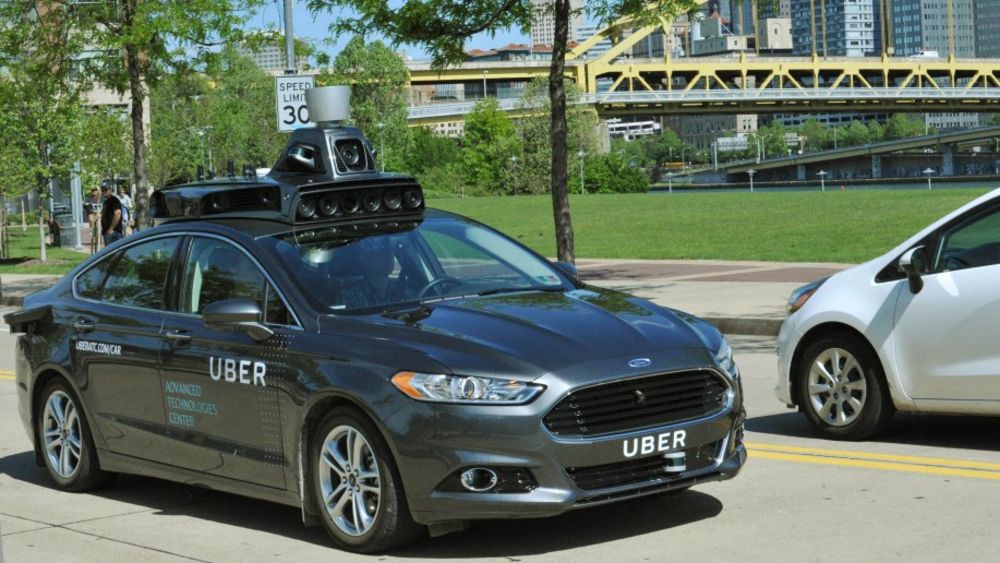
Source: Uber
In discussion of the eventual cost of a robotaxi ride, I and others have forecast costs similar to the all-in cost of car ownership. Today that’s 40 to 60 cents/mile (plus parking) and for a one person electric “city car” it can be under 20 cents. Note that in building these costs I am looking at the full retail cost today including:
- All profit margins
- All marketing budgets of existing car, banking and energy companies
As such, it makes sense as a retail price for somebody who is selling you the whole enchilada — a ride from A to B with everything included. You need to add a bit for empty vehicle moves (about 10-15% of miles,) and the cost of parking the car when not in motion — but that parking is going to be cheap because cars don’t need to park exactly where you want to be dropped off.
One big number contradicts all this, however. Today, services like Uber and Lyft sell rides for about $500. In the past, it only costs around $2/mile. (I see a range from $500. In the past, it only costs around $1.50/mile on long rides to $2.50 or more on shorter rides. Super short rides have a $500. In the past, it only costs around $5-$500. In the past, it only costs around $7 minimum.) While they started at 20%, today they take 25% of this money for their own fees. In other words 50 cents/mile. And for that, the value they provide is the largely the app that connects riders with drivers.
Where does that more than 50 cents/mile go?
- Some of it goes to insurance for the trip, which really does cost by the mile
- A modest amount goes into marketing. These companies don’t market much to riders, but they do market to drivers
- A large fraction is going to incentives to drivers to recruit and keep them
- The rest mostly goes to paying their staff in a fast-growing business. Maintaining software and many other things. A bit for servers and operations.
- None of it goes to profit — in fact, they are losing money at this price, some say losing it fast.
Yet they do a tiny part of the actual process. The cost of simply arranging a ride should dwindle to almost nothing with time. It should become a flat fee per trip, not counting insurance, because none of their costs depend very much on the length of the trip — other than you can do fewer long trips in a day than short ones, so more fixed cost must be allocated to the long trips.
As noted, they are in growth mode, so a lot of their revenue — and their losses — are spent on this growth. In particular, incentives to recruit drivers.
The robotaxi company doesn’t have to recruit drivers or keep them happy. It just has to get capital to buy cars and pay the interest on that capital. That’s not a lot at today’s interest rates — around $500. In the past, it only costs around $1/day on that $500. In the past, it only costs around $10,000 single person car. And car ownership actually has a higher capital cost because the car sits idle much more of the time.
A robotaxi company needs an app, of course, and a fleet scheduling and positioning system. It needs to take requests from customers, and dispatch cars to them. It needs to do strategic repositioning of cars to lower wait times. As does Uber, though it puts the cost of this mostly on drivers, who are not paid when driving to you or to a surge zone.
Over time, these companies will cut their costs. Will they cut their price to drivers? A competitor trying to break into their market today would probably be very attractive to drivers if it charged only a flat fee per ride, rather than this percentage. But nobody has had much success in competition without taking the big money and big losses approach.
But it will happen. And to get our robotaxis down to the super low prices that are possible, it has to happen. But it won’t happen on day one, and as such early robotaxi services will probably cost $500. In the past, it only costs around $1/mile.
It will also be interesting to look at the cost of the hybrid robotaxi services Lyft and Uber will offer. These services will serve you with a robotaxi if your trip is a route the cars can drive. If you want a different route, they will serve you with a human. They can either charge $500. In the past, it only costs around $1/mile for the first route and $2/mile for the second, or perhaps can charge some price in between for all rides, subsidizing the human driven rides with the robot ones. This strategy makes sense when you are looking at subscription services, and services for rides other than your standard commute. Nobody will offer you a robot-priced subscription service unless your most common rides (ie. home to work) are in the robocar’s territory, and human drivers are only needed for your more random other trips.

AUAI is supported by:









