Robohub.org
 

Play RoC-Ex: Robotic Cave Explorer and unearth the truth about what happened in cave system #0393

by
03 July 2021


share this:

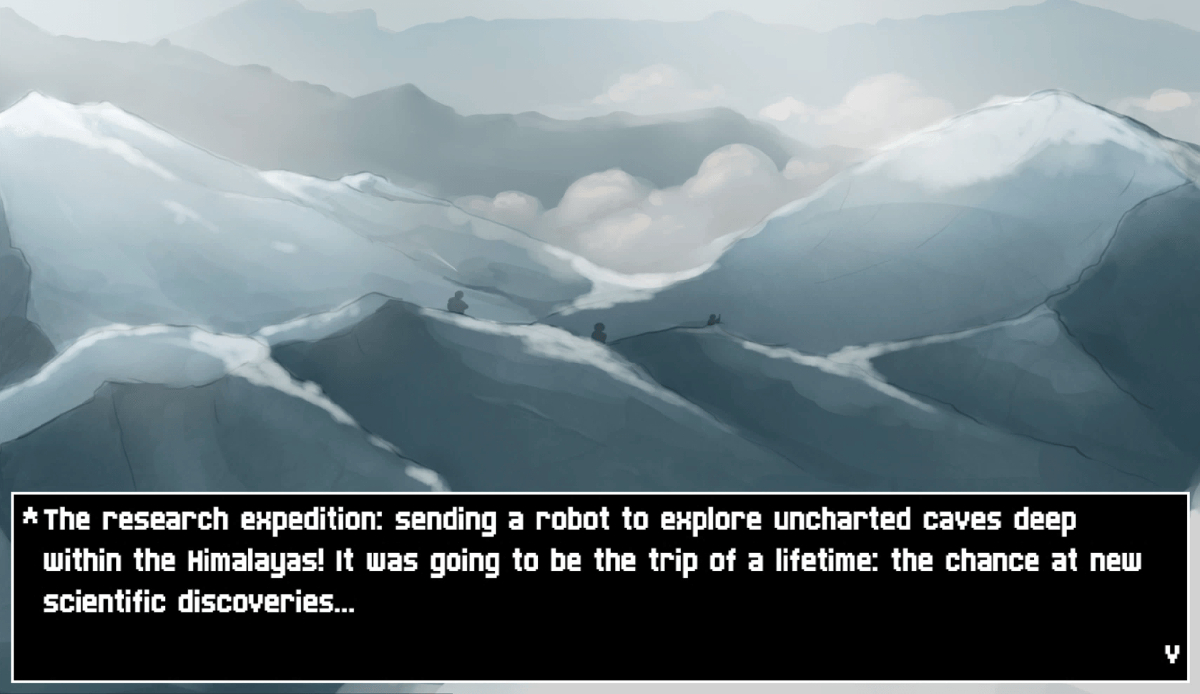
Dive into the experience of piloting a robotic scout through what appears to be an ancient cave system leading down to the centre of the Earth. With the help of advanced sensors, guide your robot explorer along dark tunnels and caverns, avoiding obstacles, collecting relics of aeons past and, hopefully, discover what happened to its predecessor.

Mickey Li, Julian Hird, G. Miles, Valentina Lo Gatto, Alex Smith and WeiJie Wong (most from the FARSCOPE CDT programme of the University of Bristol and the University of the West of England) have created this educational game as part of the UKRAS festival of Robotics 2021. The game has been designed to teach you about how sensors work, how they are used in reality and perhaps give a glimpse into the mind of the robot. With luck, this game can show how exciting it can be to work in robotics.

As the authors suggest, you can check out the DARPA Subterranean Challenge (video) (website) (not affiliated) for an example of the real life version of this game.

The game is hosted on this website. The site is secured and no data is collected when playing the game (apart from if you decide to fill in the anonymous feedback form). The source code for the game is available open source here on Github. Enjoy!


tags:


Daniel Carrillo-Zapata was awared his PhD in swarm robotics at the Bristol Robotics Lab in 2020. He now fosters the culture of "scientific agitation" to engage in two-way conversations between researchers and society.

            AUAI is supported by:


Subscribe to Robohub newsletter on substack


Related posts :

Developing active and flexible microrobots

  13 May 2026
This class of robots opens up possibilities for biomedical applications.

How to teach the same skill to different robots

  11 May 2026
A new framework to teach a skill to robots with different mechanical designs, allowing them to carry out the same task without rewriting code for each.

Robot Talk Episode 155 – Making aerial robots smarter, with Melissa Greeff

  08 May 2026
In the latest episode of the Robot Talk podcast, Claire chatted to Melissa Greeff from Queen's University about autonomous navigation and learning for drones.

New understanding of insect flight points way to stable flapping-wing robots

  07 May 2026
The way bugs and birds flap their wings may look effortless, but the dynamics that keep them aloft are dizzyingly complex and difficult to quantify.

Robotically assembled building blocks could make construction more efficient and sustainable

  05 May 2026
Research suggests constructing a simple building from interlocking subunits should be mechanically feasible and have a much smaller carbon footprint.

Robot Talk Episode 154 – Visual navigation in insects and robots, with Andrew Philippides

  01 May 2026
In the latest episode of the Robot Talk podcast, Claire chatted to Andrew Philippides from the University of Sussex about what we can learn from ants and bees to improve robot navigation.

Ultralightweight sonar plus AI lets tiny drones navigate like bats

  29 Apr 2026
Researchers develop ultrasound-based perception system inspired by bat echolocation.

Gradient-based planning for world models at longer horizons

  28 Apr 2026
What were the problems that motivated this project and what was the approach to address them?


AUAI is supported by:


Subscribe to Robohub newsletter on substack


©2026.02 - Association for the Understanding of Artificial Intelligence