
Robohub.org
Plenary and Keynote talks focus series #4: Steve LaValle & Sarah Bergbreiter
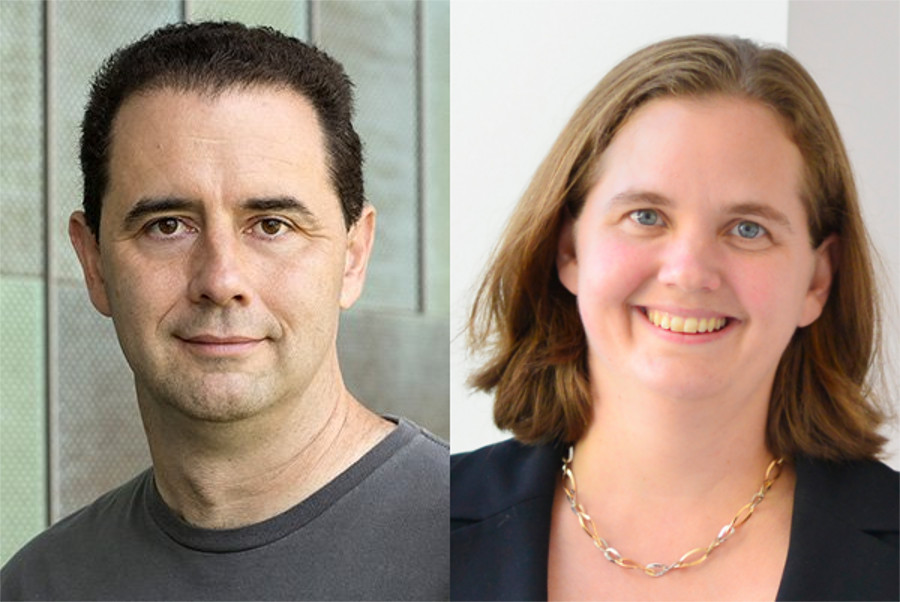
In this new release of our series showcasing the plenary and keynote talks from the IEEE/RSJ IROS2020 (International Conference on Intelligent Robots and Systems) you’ll meet Steve LaValle (University of Oulu) talking about the area of perception, action and control, and Sarah Bergbreiter (Carnegie Mellon University) talking about bio-inspired microrobotics.
|
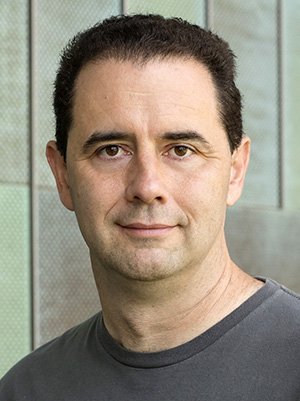
Prof. Steve LaValle – Rapidly exploring Random Topics Bio: Steve LaValle is Professor of Computer Science and Engineering, in Particular Robotics and Virtual Reality, at the University of Oulu. From 2001 to 2018, he was a professor in the Department of Computer Science at the University of Illinois. He has also held positions at Stanford University and Iowa State University. His research interests include robotics, virtual and augmented reality, sensing, planning algorithms, computational geometry, and control theory. In research, he is mostly known for his introduction of the Rapidly exploring Random Tree (RRT) algorithm, which is widely used in robotics and other engineering fields. In industry, he was an early founder and chief scientist of Oculus VR, acquired by Facebook in 2014, where he developed patented tracking technology for consumer virtual reality and led a team of perceptual psychologists to provide principled approaches to virtual reality system calibration, health and safety, and the design of comfortable user experiences. From 2016 to 2017 he was Vice President and Chief Scientist of VR/AR/MR at Huawei Technologies, Ltd. He has authored the books Planning Algorithms, Sensing and Filtering, and Virtual Reality. |
|
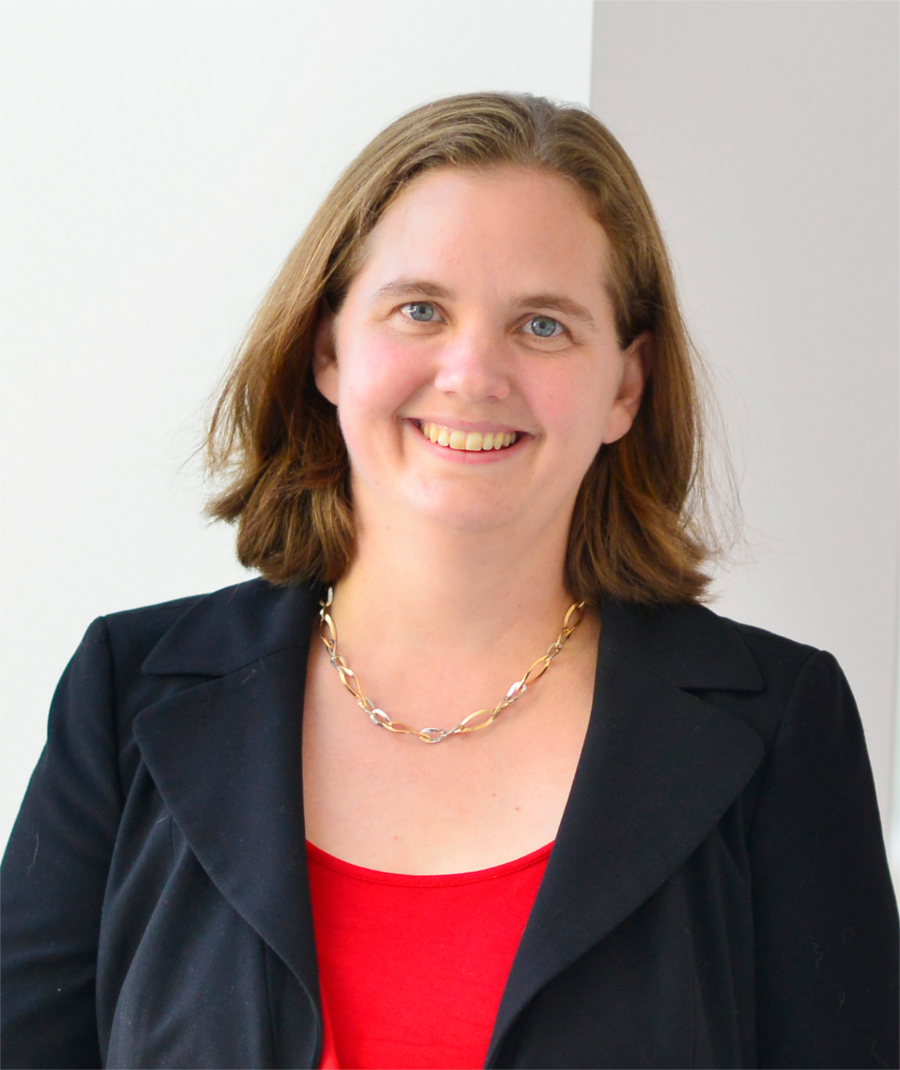
Prof. Sarah Bergbreiter – Microsystems-inspired Robotics Bio: Sarah Bergbreiter joined the Department of Mechanical Engineering at Carnegie Mellon University in the fall of 2018 after spending ten years at the University of Maryland, College Park. She received her B.S.E. degree in electrical engineering from Princeton University in 1999. After a short introduction to the challenges of sensor networks at a small startup company, she received the M.S. and Ph.D. degrees from the University of California, Berkeley in 2004 and 2007 with a focus on microrobotics. Prof. Bergbreiter received the DARPA Young Faculty Award in 2008, the NSF CAREER Award in 2011, and the Presidential Early Career Award for Scientists and Engineers (PECASE) Award in 2013 for her research bridging microsystems and robotics. She has received several Best Paper awards at conferences like ICRA, IROS, and Hilton Head Workshop. She currently serves as vice-chair of DARPA’s Microsystems Exploratory Council and as an associate editor for IEEE Transactions on Robotics. |
tags: c-Research-Innovation, Series
AUAI is supported by:









