Robohub.org
We are delighted to announce the launch of Scicomm – a joint science communication project from Robohub and AIhub
Scicomm.io is a science communication project which aims to empower people to share stories about their robotics and AI work. The project is a joint effort from Robohub and AIhub, both of which are educational platforms dedicated to connecting the robotics and AI communities to the rest of the world.
This project focuses on training the next generation of communicators in robotics and AI to build a strong connection with the outside world, by providing effective communication tools.
People working in the field are developing an enormous array of systems and technologies. However, due to a relative lack of high quality, impartial information in the mainstream media, the general public receive a lot hyped news which ends up causing fear and / or unrealistic expectations surrounding these technologies.
Scicomm.io has been created to facilitate the connection between the robotics and AI world and the rest of the world through teaching how to establish truthful, honest and hype-free communication. One that brings benefit to both sides.
Scicomm bytes
With our series of bite-sized videos you can quickly learn about science communication for robotics and AI. Find out why science communication is important, how to talk to the media, and about some of the different ways in which you can communicate your work. We have also produced guides with tips for turning your research into blog post and for avoiding hype when promoting your research.
Training
Training the next generation of science communicators is an important mission for scicomm.io (and indeed Robohub and AIhub). As part of scicomm.io, we run training courses to empower researchers to communicate about their work. When done well, stories about AI and robotics can help increase the visibility and impact of the work, lead to new connections, and even raise funds. However, most researchers don’t engage in science communication, due to a lack of skills, time, and reach that makes the effort worthwhile.
With our workshops we aim to overcome these barriers and make communicating robotics and AI ‘easy’. This is done through short training sessions with experts, and hands-on practical exercises to help students begin their science communication journey with confidence.
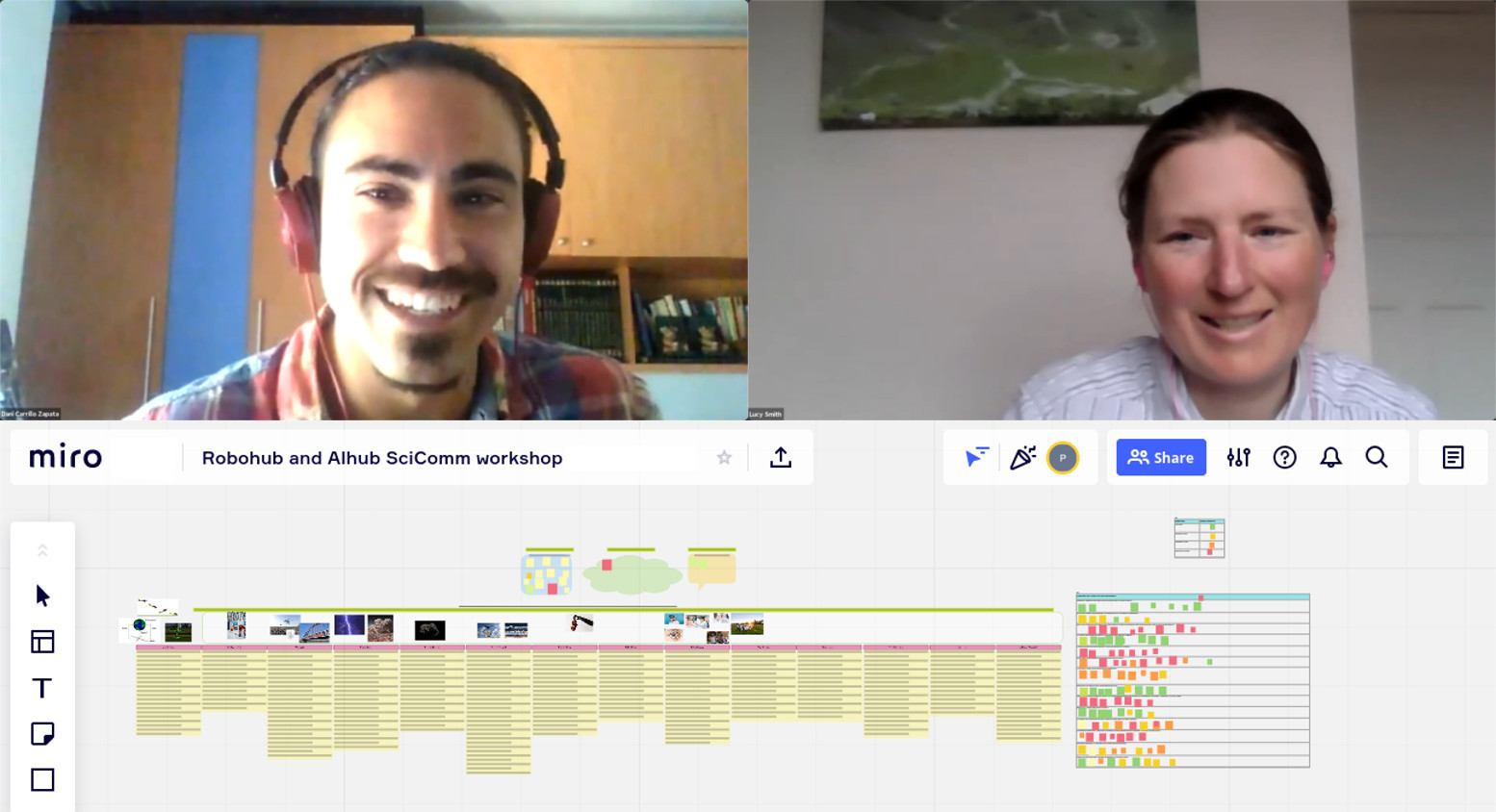 A virtual scicomm workshop in action.
During the workshops, participants will hear why science communication matters, learn the basic techniques of science communication, build a story around their own research, and find out how to connect with journalists and other communicators. We’ll also discuss different science communication media, how to use social media, how to prepare blog posts, videos and press releases, how to avoid hype, and how to communicate work to a general audience.
For more information about our workshops, contact the team by email.
Find out more about the scicomm.io project here.

AUAI is supported by: