
Robohub.org
Education and healthcare are set for a high-tech boost
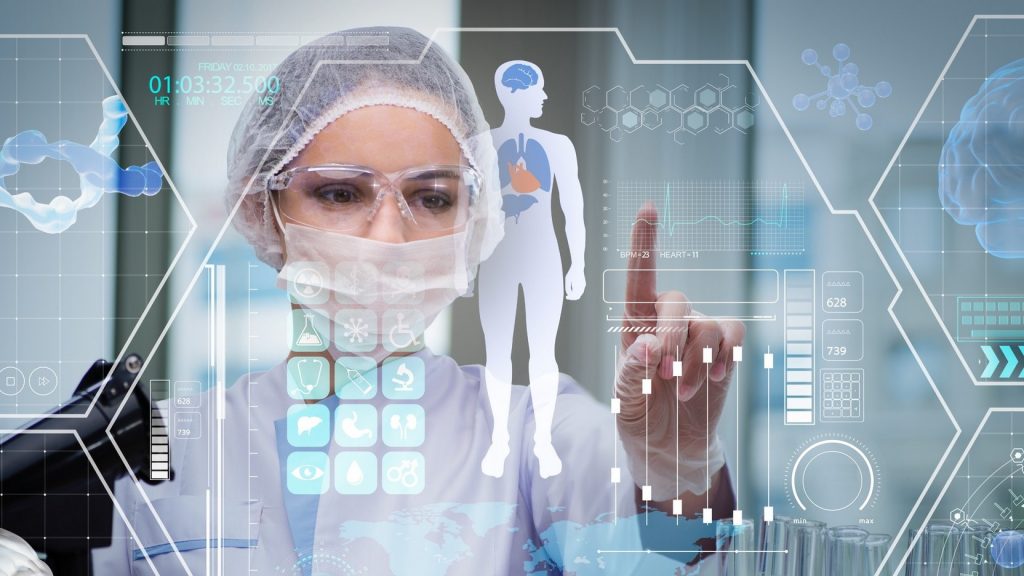
Robotics and AI are poised to fundamentally change the future of healthcare. © Elnur, Shutterstock
In a Swiss classroom, two children are engrossed in navigating an intricate maze with the help of a small, rather cute, robot. The interaction is easy and playful – it is also providing researchers with valuable information on how children learn and the conditions in which information is most effectively absorbed.
Rapid improvements in intuitive human-machine interactions (HMI) are poised to kick off big changes in society. In particular, two European research projects give a sense of how these trends could influence two core areas: education and healthcare.
Child learning
In EU-funded ANIMATAS, a cross-border network of universities and industrial partners is exploring if, and how, robots and artificial intelligence (AI) can help us learn more effectively. One idea is around making mistakes: children can learn by spotting and correcting others’ errors – and having a robot make them might be useful.
‘A teacher can’t make mistakes,’ said project coordinator Professor Mohamed Chetouani of the Sorbonne University in Paris, France. ‘But a robot? They could. And mistakes are very useful in education.’
According to Prof Chetouani, it is simplistic to ask questions like ‘can robots help children learn better’ because learning is such a complex concept. He said that, for example, any automatic assumption that pupils who concentrate on lessons are learning more isn’t necessarily true.
That’s why, from the start, the project set out to ask smarter, more specific questions that would help identify just how robots could be useful in classrooms.
ANIMATAS is made up of sub-projects each led by an early-stage researcher. One of the sub-project goals was to better understand the learning process in children and analyse what types of interaction best help them to retain information.
“Mistakes are very useful in education.”
– Professor Mohamed Chetouani, ANIMATAS
Robot roles
An experiment set up to investigate this question invited children to team up with the aptly named QTRobot to find the most efficient route around a map.
During the exercise, the robot reacts interactively with the children to offer tips and suggestions. It is also carefully measuring various indicators in the children’s body language such as eye contact and direction, tone of voice and facial expression.
As hoped, researchers did indeed find that certain patterns of interaction corresponded with improved learning. With this information, they will be better able to evaluate how well children are engaging with educational material and, in the longer term, develop strategies to maximise such engagement – thereby boosting learning potential.
Future steps will include looking at how to adapt this robot-enhanced learning to children with special educational needs.
‘We believe that it could be really important in this context,’ said Prof Chetouani.
Help at hand
Aki Härmä, a researcher at Philips Research Eindhoven in the Netherlands, believes that robotics and AI are going to fundamentally change healthcare.
“Healthcare can be 24/7.”
Aki Härmä, PhilHumans
In the EU-funded PhilHumans project that he is coordinating, early-stage researchers from five universities across Europe work with two commercial partners – R2M Solution in Spain and Philips Electronics in the Netherlands – to learn how innovative technologies can improve people’s health.
AI makes new services possible and ‘it means healthcare can be 24/7,’ Härmä said.
He points to the vast potential for technology to help people manage their own health from home: apps able to track a person’s mental and physical state and spot problems early on, chatbots that can give advice and propose diagnoses, and algorithms for robots to navigate safely around abodes.
Empathetic bots
The project, which started in 2019 and will run until late 2023, is made of up of eight sub-projects, each led by a doctoral student.
One sub-project, supervised by Phillips researcher Rim Helaoui, is looking at how the specific skills of mental-health practitioners – such as empathy and open-ended questioning – may be encoded into an AI-powered chatbot. This could mean that people with mental-health conditions would be able to access relevant support from home, potentially at a lower cost.
The team quickly realised that replicating the full range of psychotherapeutic skills in a chatbot would involve challenges that could not be solved all at once. It focused instead on one key challenge: how to generate a bot that displayed empathy.
‘This is the essential first step to get people to feel they can open up and share,’ said Helaoui.
As a starting point, the team produced an algorithm able to respond with the appropriate tone and content to convey empathy. The technology has yet to be converted into an app or product, but provides a building block that could be used in many different applications.
Rapid advances
PhilHumans is also exploring other possibilities for the application of AI in healthcare. An algorithm is being developed that can use ‘camera vision’ to understand the tasks that a person is trying to carry out and analyse the surrounding environment.
The ultimate goal would be to use this algorithm in a home-assistant robot to help people with cognitive decline complete everyday tasks successfully.
One thing that has helped the project overall, said Härmä, is the speed with which other organisations have been developing natural language processors with impressive capabilities, like GPT-3 from OpenAI. The project expects to be able to harness the unexpectedly rapid improvements in these and other areas to advance faster.
Both ANIMATAS and PhilHumans are actively working on expanding the limits of intuitive HMI.
In doing so, they have provided a valuable training ground for young researchers and given them important exposure to the commercial world. Overall, the two projects are ensuring that a new generation of highly skilled researchers is equipped to lead the way forward in HMI and its potential applications.
Research in this article was funded via the EU’s Marie Skłodowska-Curie Actions (MSCA).
This article was originally published in Horizon, the EU Research and Innovation magazine.
AUAI is supported by:









