
Robohub.org
Aeon Scientific wins 2014 Swiss Technology Award
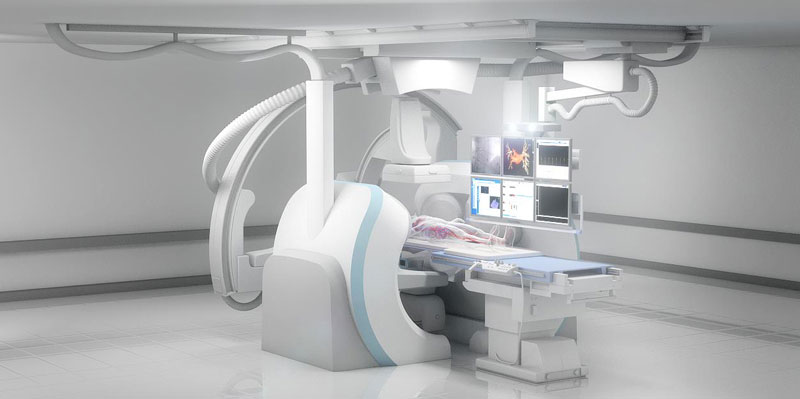
The cardiologist sits in the control room next to the operating theatre and uses a joystick to steer a catheter through the patient’s blood vessel into the heart’s chambers to treat the cardiac arrhythmia precisely. With this robot-controlled surgical system, Phocus, the ETH spin-off Aeon Scientific won over a panel of 15 judges at this year’s Swiss Technology Award, presented last Thursday at the Swiss Innovation Forum in Basel. The company from Schlieren won the prize in the Start-up category. “We are delighted that our work has been recognised and appreciated,” said Dominik Bell, CEO of Aeon Scientific. “The award will help us market our product and find new investors and staff.”
Precise guidance with magnetic fields
Aeon Scientific originated from ETH Zurich’s Institute of Robotics and Intelligent Systems (IRIS). The start-up’s work focuses on making conventional surgical procedures safer and simpler. They develop devices that use magnetic fields to steer instruments remotely with millimetre precision inside the human body. The foundations were laid by the team of ETH professor Bradley Nelson, a co-founder of Aeon Scientific. The scientists began their research into a magnet-controlled surgical system at IRIS in 2003, before establishing the spin-off in 2010. The first Phocus system will be put into operation in January 2015 in Zurich.
Bell believes this steering system based on magnetic fields could also be used in other areas of medicine. He is hoping that the company can establish a number of other robot-controlled medical treatments, not just for cardiology. He says that magnetic forces could be used to steer a wide variety of instruments such as catheters, guidewires and endoscopes, or even capsules containing active ingredients, directly to the source of an illness within the body.
Robohub is an online platform that brings together leading communicators in robotics research, start-ups, business, and education from around the world. Learn more about us here. If you liked this article, you may also be interested in:
- Robots Podcast: Computer-assisted surgery
- The cost effectiveness and advantages of robotic surgery
- Titan Medical secures $34.8 million from public offering
- Micro-robotics and medicine: Interview with Toshio Fukuda
- Minimally-invasive eye surgery on the horizon as magnetically-guided microbots move toward clinical trials
- Video: Autonomous robot surgery on deformable tissue phantoms
- Intuitive Surgical upgrades da Vinci surgical system and recalls tools used by them
- Robots Podcast: Computer-assisted surgery
See all the latest robotics news on Robohub, or sign up for our weekly newsletter.
tags: ETH Zurich, events, healthcare, Switzerland

AUAI is supported by:









