Robohub.org
 

Google presents their actual autonomous car test prototype

by
22 December 2014


share this:
google_car_

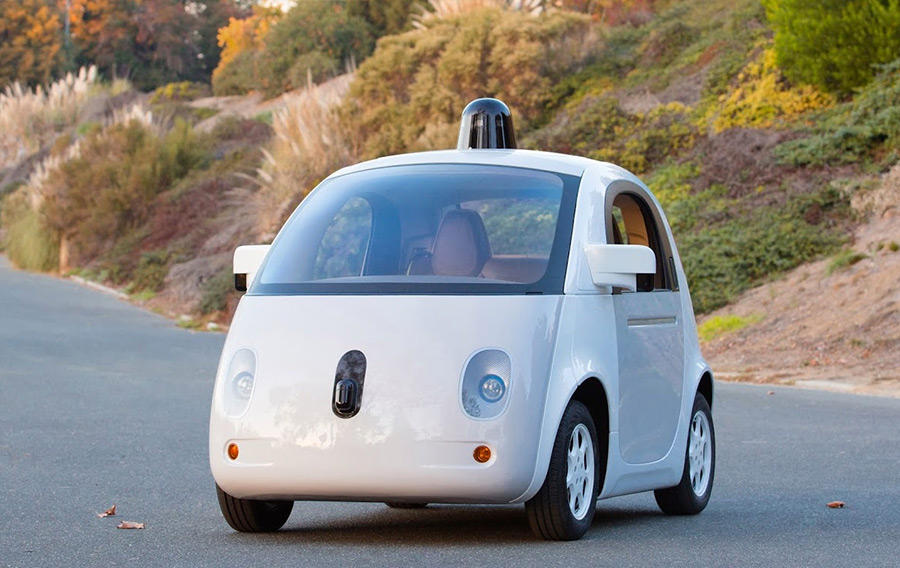
Google just unveiled their first ‘real-build’ self-driving prototype vehicle. This is a follow up to the concept presented in May and signifies the progress of this particular Google project.

According to the short Google announcement, the purpose of this new prototype is testing, initially on a closed test track and then later in 2015 on public roads. Even so, very few actual details are known, beyond those we covered in our previous article for the initial mockup.

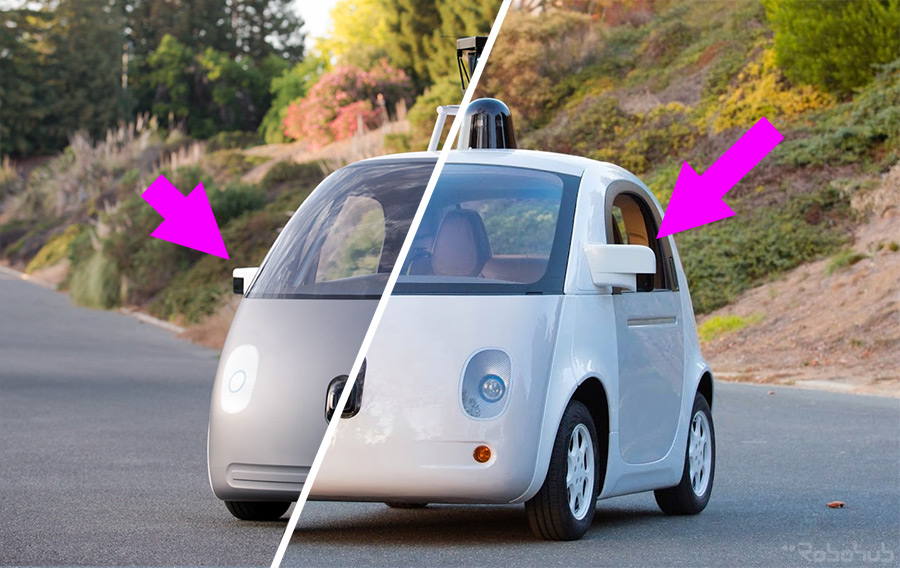
The differences between the two cars, however, are actually quite interesting. Google emphasizes the presence of headlamps, which are an indication that the vehicle could be road legal, although it’s not clear to what extent. A glimpse of its frame and construction hinted at a properly engineered vehicle that may be possible to fulfill all the necessary requirements for a regulatory approval (crash tests etc). However, a loophole for this highly experimental vehicle is possible; it may, for example, be regarded as an electric golf cart of sorts.
google_car_robohub

The composite photo above presents the most obvious differences: a better integrated LIDAR, the headlights and other small details. The most important visible difference is the mirrors. On the first mockup, the mirror fairings were small and so could only accommodate the sensors or cameras of the autonomous system. The new one retains the sensors but adds a proper mirror for the driver. It is almost certain that the car will have manual controls (steering wheel, accelerator and brake pedals) so it can be “supervised” on public roads.

2015 will be an interesting year for autonomous driving. Apart from this purpose-built concept, many manufacturers offer ever more advanced systems, and Google is promoting a modular solution of their own.


tags: , , , ,


Ioannis K. Erripis joined the ROBOTS association in early 2011 as a news reporter and now leads all technical aspects of the Robohub project, including website design, implementation and branding.

            AUAI is supported by:


Subscribe to Robohub newsletter on substack


Related posts :

Developing active and flexible microrobots

  13 May 2026
This class of robots opens up possibilities for biomedical applications.

How to teach the same skill to different robots

  11 May 2026
A new framework to teach a skill to robots with different mechanical designs, allowing them to carry out the same task without rewriting code for each.

Robot Talk Episode 155 – Making aerial robots smarter, with Melissa Greeff

  08 May 2026
In the latest episode of the Robot Talk podcast, Claire chatted to Melissa Greeff from Queen's University about autonomous navigation and learning for drones.

New understanding of insect flight points way to stable flapping-wing robots

  07 May 2026
The way bugs and birds flap their wings may look effortless, but the dynamics that keep them aloft are dizzyingly complex and difficult to quantify.

Robotically assembled building blocks could make construction more efficient and sustainable

  05 May 2026
Research suggests constructing a simple building from interlocking subunits should be mechanically feasible and have a much smaller carbon footprint.

Robot Talk Episode 154 – Visual navigation in insects and robots, with Andrew Philippides

  01 May 2026
In the latest episode of the Robot Talk podcast, Claire chatted to Andrew Philippides from the University of Sussex about what we can learn from ants and bees to improve robot navigation.

Ultralightweight sonar plus AI lets tiny drones navigate like bats

  29 Apr 2026
Researchers develop ultrasound-based perception system inspired by bat echolocation.

Gradient-based planning for world models at longer horizons

  28 Apr 2026
What were the problems that motivated this project and what was the approach to address them?


AUAI is supported by:


Subscribe to Robohub newsletter on substack


©2026.02 - Association for the Understanding of Artificial Intelligence