
Robohub.org
Intuitive Surgical da Vinci Surgical System gets big endorsement and new competition
UPDATED 3/29/15 For over two years, Intuitive Surgical has been sued, tried, analyzed and criticized about the efficacy of their da Vinci surgical robots. But they have continued to thrive, grow and improve their products.
Proof of the success of their efforts came the other day when they won a $430 million contract from the U.S. Department of Defense. It’s a five-year deal to supply da Vinci robots, tools and spares to Army, Navy, Air Force and Marine Corps hospitals.
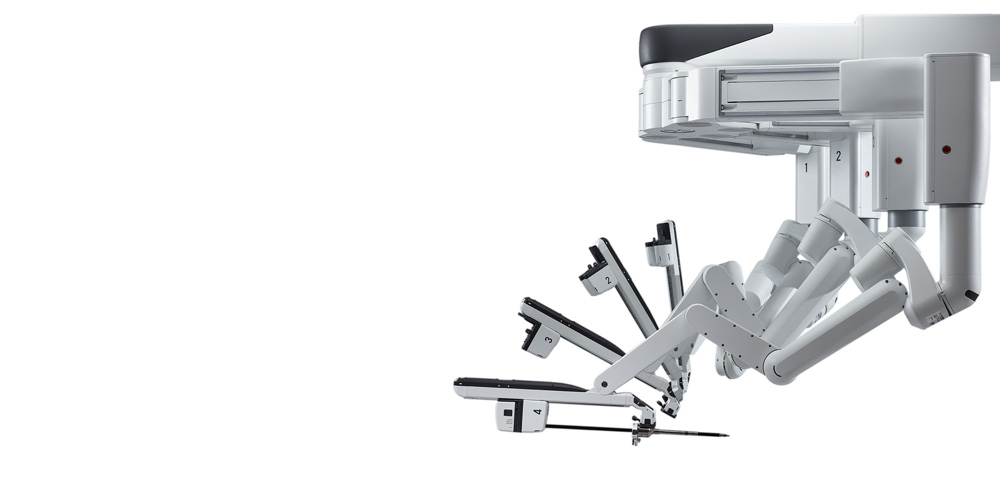
The DoD contract comes shortly after the company successfully received FDA approval for two of its new surgical systems last year – the da Vinci Xi, a gantry-style upgrade to their basic system that includes a higher definition vision system, better consoles and controls (and in some cases two sets of controls and consoles) and a general upgrade of everything else, and the new da Vinci SP (single port) system. The SP system squeezes a 3D high-def camera and three fully articulating instruments through its 25 mm cannula (single thin tube containing the arms and end-of-arm tools; the tube goes through a single hole in the body).
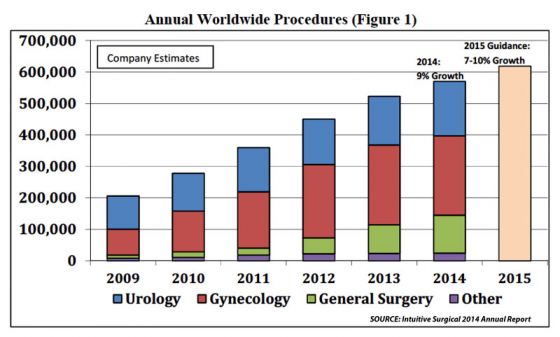
Intuitive’s 2014 revenue was $2.1 billion and the number of procedures performed using da vinci products grew 9% year over year to almost 600,000. Quoting from Intuitive’s Annual Report about 2015:
“In 2015, our focus will be on accomplishing the following objectives: First, we will focus on the expanded use of da Vinci in general surgery, particularly colorectal surgery and hernia repair. Second, we will work to complete our launch and new product introductions of the da Vinci Xi Surgical System in key markets globally. Third, we will continue to develop our organizational capabilities and markets in Europe and Asia. Finally, we plan to build da Vinci SP prototypes that are compatible with our da Vinci Xi system and initiate customer evaluations.”
In spite of this success, or perhaps because of it, Google and Johnson & Johnson announced a collaboration to produce a competing line of products to use robots to assist surgeons. The announcement of this strategic pooling of resources didn’t include a price tag or investment amount.
According to the San Jose Mercury News, “Google stressed that the life sciences team at Google X will only be providing software and sensors for the proposed systems, with J&J’s Ethicon unithandling the rest of work. The Mountain View company’s robotics arm – Google acquired robotics firm Boston Dynamics in late 2013 – will not be involved.”
“We think we can use some of our machine vision and image analysis software to help surgeons see better as they operate (e.g. to highlight blood vessels) or make it easier for them to see information that’s relevant to the surgery at just the right time,” a Google spokeswoman said.
An Intuitive Surgical spokeswoman said that the effort by Google and Ethicon was a validation of Intuitive Surgical’s work.
“This announcement is just the latest confirmation that computer-assisted surgery continues to grow to the point that others can no longer sit on the sidelines. Computer-assisted surgery will continue to flourish around the globe and competitors have been expected.”
tags: da Vinci, Google, healthcare, Intuitive Surgical, surgical robotics

AUAI is supported by:









