
Robohub.org
 

NHTSA redefines “driver” of self-driving car

by
13 February 2016


share this:
google-buggy_car_autonomous_robocar

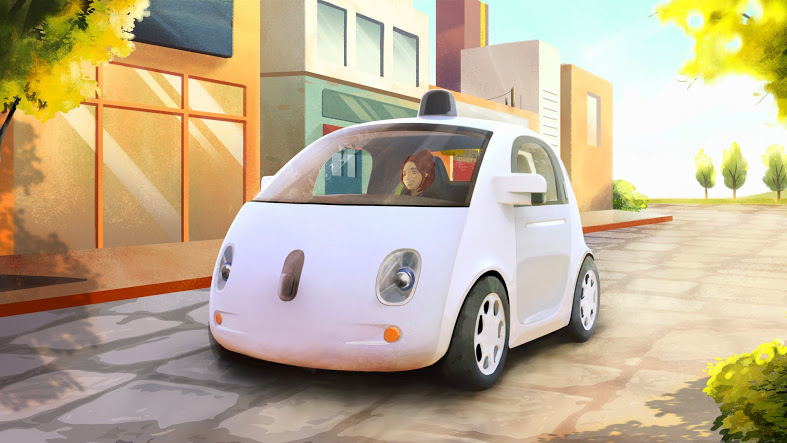
The National Highway Traffic Safety Administration (NHTSA) took an important step towards interpreting safety standards in ways that could make self-driving cars a reality for the public: it said that computers controlling those cars can be considered drivers just like humans.

The NHTSA said that it would write guidelines for self-driving cars within six months. Their answer was specifically given in response to a detailed request from Google, and was posted online so all could see.

Their answer to over 20 questions was that the SDS (self-driving computer and AI system) is the driver. But when it came to eliminating brake pedals, the NHTSA said that safety regulations and laws would need to be changed before brakes could be removed from the passenger compartment.

The question of who is responsible for a self-driving car is an important starting point for legal, insurance, and safety considerations. Setting the computer (and thus the maker of the computer and software) as the “driver” and as the responsible person/entity, is the first step along a long pathway toward establishing all the new rules for self-driving cars – including eliminating the need for brake pedals controlled by the human driver.

In a recent speech in Washington DC, the president of Volvo Cars, Hakan Samuelsson, said that the US is currently “the most progressive country in the world in autonomous driving… but it risks losing its leading position” because of the lack of Federal guidelines for the “testing and certification” of autonomous vehicles. Unanswered ethical and legal concerns, particularly when it comes to liability for driverless car accidents, are also stalling development. Thus the NHTSA's promise to write guidelines for self-driving cars within six months, and their defining the SDS as a driver, are both good signs.


tags: , , ,


Frank Tobe is the owner and publisher of The Robot Report, and is also a panel member for Robohub's Robotics by Invitation series.


Related posts :


Robot Talk Episode 140 – Robot balance and agility, with Amir Patel

  16 Jan 2026
In the latest episode of the Robot Talk podcast, Claire chatted to Amir Patel from University College London about designing robots with the agility and manoeuvrability of a cheetah.

Taking humanoid soccer to the next level: An interview with RoboCup trustee Alessandra Rossi

and   14 Jan 2026
Find out more about the forthcoming changes to the RoboCup soccer leagues.

Robots to navigate hiking trails

  12 Jan 2026
Find out more about work presented at IROS 2025 on autonomous hiking trail navigation via semantic segmentation and geometric analysis.

Robot Talk Episode 139 – Advanced robot hearing, with Christine Evers

  09 Jan 2026
In the latest episode of the Robot Talk podcast, Claire chatted to Christine Evers from University of Southampton about helping robots understand the world around them through sound.

Meet the AI-powered robotic dog ready to help with emergency response

  07 Jan 2026
Built by Texas A&M engineering students, this four-legged robot could be a powerful ally in search-and-rescue missions.

MIT engineers design an aerial microrobot that can fly as fast as a bumblebee

  31 Dec 2025
With insect-like speed and agility, the tiny robot could someday aid in search-and-rescue missions.

Robohub highlights 2025

  29 Dec 2025
We take a look back at some of the interesting blog posts, interviews and podcasts that we've published over the course of the year.

The science of human touch – and why it’s so hard to replicate in robots

  24 Dec 2025
Trying to give robots a sense of touch forces us to confront just how astonishingly sophisticated human touch really is.


Robohub is supported by:


Would you like to learn how to tell impactful stories about your robot or AI system?


scicomm
training the next generation of science communicators in robotics & AI


©2025.05 - Association for the Understanding of Artificial Intelligence









