Robohub.org
 

Could we make a moral machine?

by
02 March 2016


share this:


Photo source: Alan Winfield

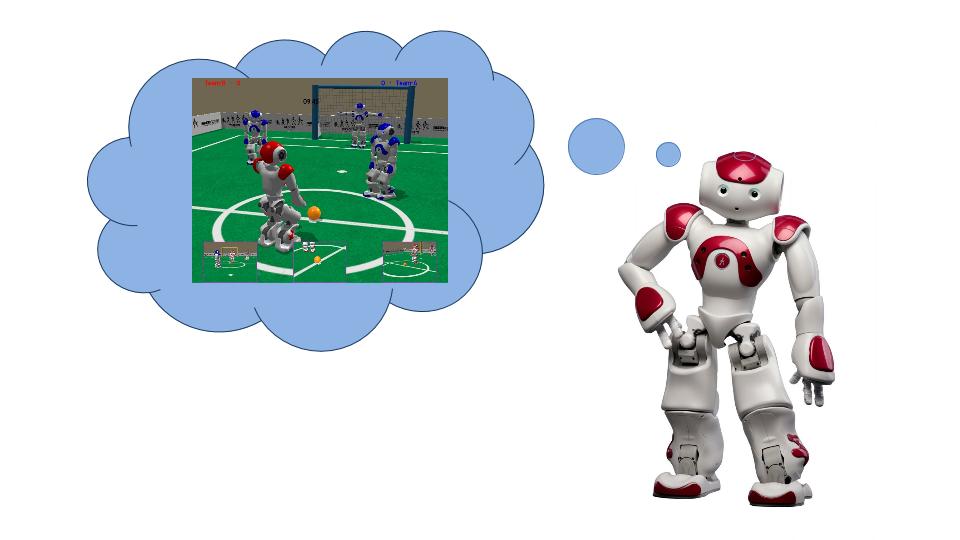
Robot picturing a simulation of itself and its environment and others in the environment. Photo source: Alan Winfield

Could we make a moral machine? A robot capable of choosing or moderating its actions on the basis of ethical rules?

This was how I opened my IdeasLab talk at the World Economic Forum 2016. The format of IdeasLab is 4 five minute (Pecha Kucha) talks, plus discussion and Q&A with the audience. The theme of this Nature IdeasLab was Building an Intelligent Machine, and I was fortunate to have 3 outstanding co-presenters: Vanessa Evers, Maja Pantic and Andrew Moore. You can see all four of our talks on YouTube here.

The IdeasLab variant of Pecha Kucha is pretty challenging for someone used to spending half an hour or more lecturing – 15 slides and 20 seconds per slide.

The biggest lesson – and a surprise to me – is this: robots don’t need to be sentient to be ethical. In other words we don’t need a major breakthrough in artificial intelligence to build an ethical robot.

You can watch the entire IdeasLab video ‘Making an ethical machine’ here:

And since not all of my (ever so carefully chosen) slides are visible in the recording here is the complete deck:

(link to the original file)

And the video clips in slides 11 and 12 are here:

Slide 11: Blue prevents red from reaching danger.
Slide 12: Blue faces an ethical dilemma: our indecisive robot can save them both.


Acknowledgements: I am deeply grateful to colleague Dr Dieter Vanderelst who designed and coded the experiments shown here on slides 10-12. This work is part of the EPSRC funded project Verifiable Autonomy.


tags: , ,


Alan Winfield is Professor in robotics at UWE Bristol. He communicates about science on his personal blog.

            AUAI is supported by:


Subscribe to Robohub newsletter on substack


Related posts :

Robotics roadmaps from around the world

We embark on a tour into some of the recent and prominent robotics roadmaps from around the world.

A ‘5-in-1’ seed-sized surgical robot

Mini robot can move, cut tissue, release drugs, grip and store samples, and generate heat wirelessly

AI agents create virtual playgrounds to help robots get crucial training data

  07 Aug 2026
“SceneSmith” system uses collaborative AI agents to create realistic 3D environments of places like kitchens, hotels, and living rooms, where robots can simulate everyday chores.

Robots in society, business and culture: July 2026

A round up of robotics stories in a new monthly series from IEEE RAS.

Simulated zebrafish and a vision-equipped robotic fish reveal how the body shapes brain circuits

Researchers look to the fish brain to create a robotic zebrafish that can autonomously swim upstream.

Researchers develop modular nanorobot

  31 Jul 2026
A team at the University of Basel has developed a versatile nanorobot with propulsion and payload modules.

Surviving the paper deluge: a one-year study in learning from demonstration

With the explosion of robotics research, staying current in fields like Learning from Demonstration is a monumental challenge.

Soft robotic heart offers new way to study disease and test life-saving devices

Researchers have developed a soft robotic model of the human heart that can mimic disease and provide a realistic environment for testing the next generation of cardiac devices.


AUAI is supported by:


Subscribe to Robohub newsletter on substack


©2026.05 - Association for the Understanding of Artificial Intelligence