
Robohub.org
Spy robots in the wild: K-Rock meets his bigger cousin
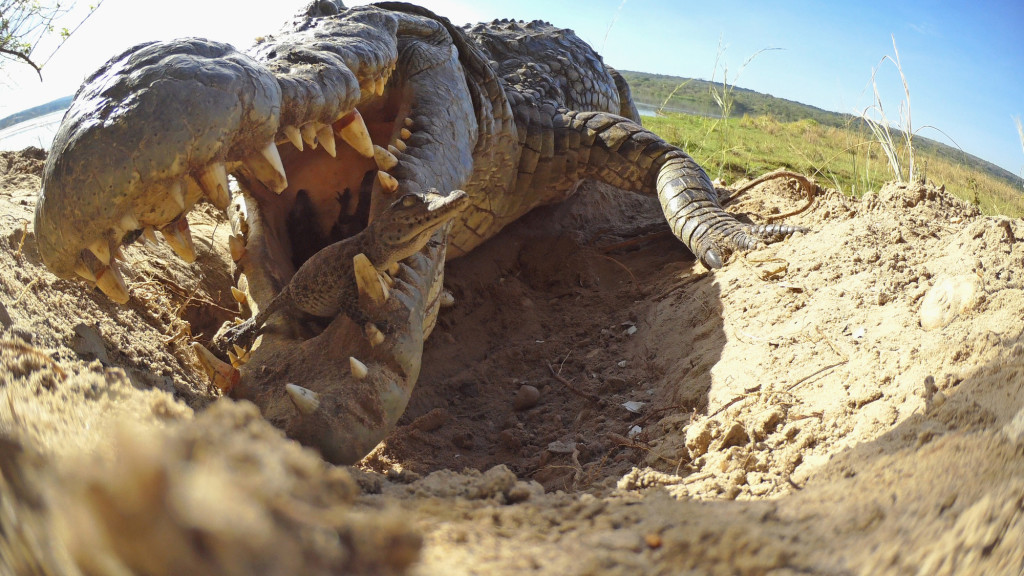
Crocodile with young in her mouth. Uganda – (C) John Downer Productions – Photographer: Richard Jones
Tune in and watch Spy in the Wild on BBC 1 on Thursday 26 January at 20:00 GMT to see NCCR Robotics’ newest robot in action.
Producers from John Downer productions for BBC One’s Spy in the Wild first approached Ijspeert Lab, EPFL in 2015 to ask them to create two robots, a crocodile and a monitor lizard, to be used to get closer to crocodiles in the wild for filming purposes. NCCR Robotics postdoctoral researcher Kamilo Melo relished the challenge and after watching hours upon hours of footage of the movements of the real animals, produced a torso and legs that could be used for both animals, with different modules for the head and tail for both, within the space of one month.
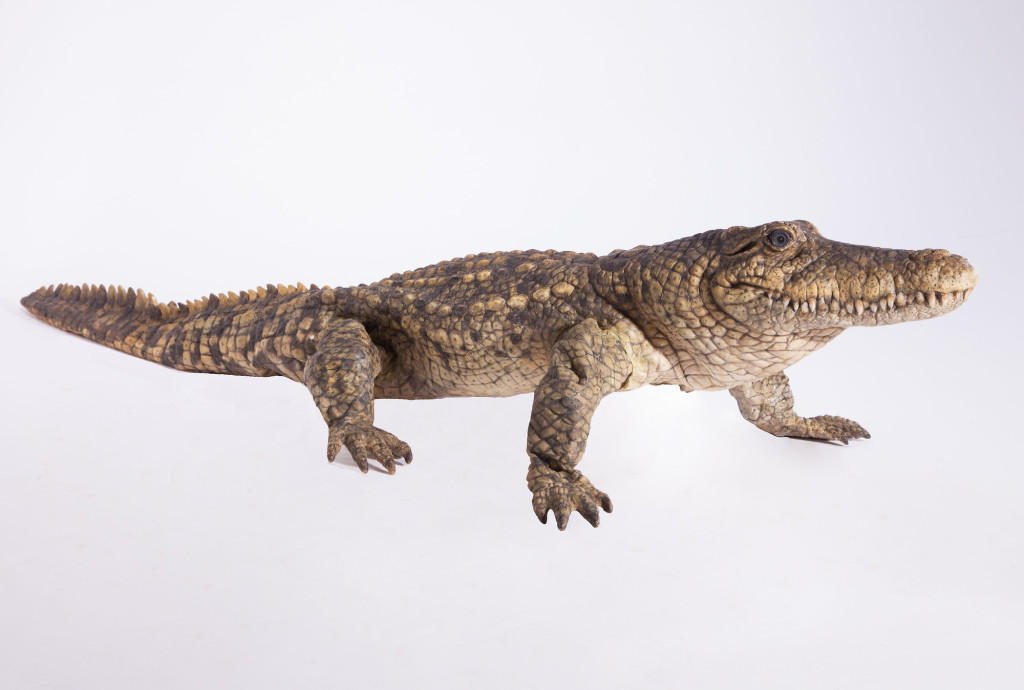
Spy Crocodile – (C) John Downer Productions – Photographer: Steve Downer
In designing the robots, Kamilo and his PhD student collaborator Tomislav Horvat were charged with two main issues – the first being that the robot must be fully controllable from a distance of 500m in order to avoid disturbing the crocodiles or putting human operators at risk, and the second that it must walk and behave realistically enough to fool the real crocodiles. Despite previous success in designing and controlling salamander robots in the Ijspeert Lab, Kamilo decided to start the robot design from scratch.
As the robots were going to be in close contact with dangerous animals, it was important for them to be more robust than their predecessors. The robot was made of a mixture of aluminium and carbon fibre, making it stronger and robust, but light and reliable at the same time. It was controlled by a transmitter that connects with a computer that used Bluetooth and RF to communicate with a tiny onboard computer. These then communicate with the motors at the same time to produce the motion.
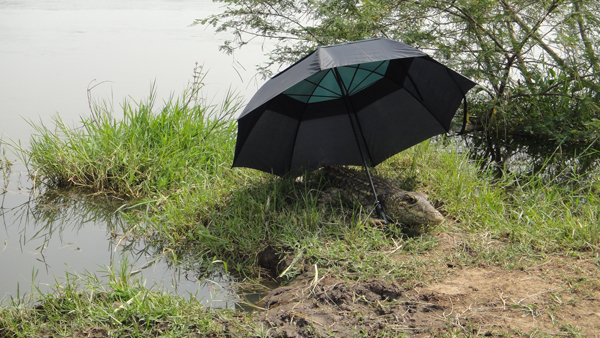
Spy Croc keeps cool under the umbrella (photo: Kamilo Melo)
After creating the inner mechanics in the K-Rock, the robot was then sent to animatronics experts, John Nolan Studios, to develop and fit a lifelike, flexible and waterproof skin and create the final, lifelike Spy Crocodile. Spy Crocodile spent two weeks by the Nile river in Uganda searching out their real-life counterparts by walking on the banks and swimming in the river, but for the team from BIOROB, the experience was a little less glamorous, having to spend their days protecting the robot from the eye-watering 38C heat, humidity, mud and dust!
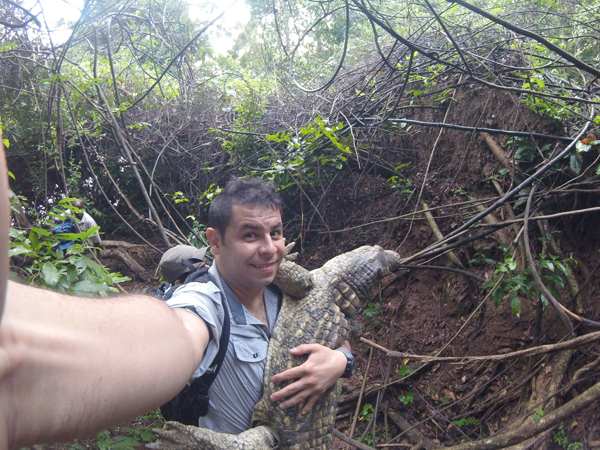
Fieldwork isn’t always glamorous! (Photo: Kamilo Melo)
K-Rock has now returned from his travels and his future will see him being improved and developed as part of the search and rescue work on mobile robots within NCCR Robotics, with the aim of sending him into disaster areas in order to inspect the infrastructure and to locate and assist victims.
tags: research
AUAI is supported by:









