
Robohub.org
Ads, sales and shows make a business case for robotics
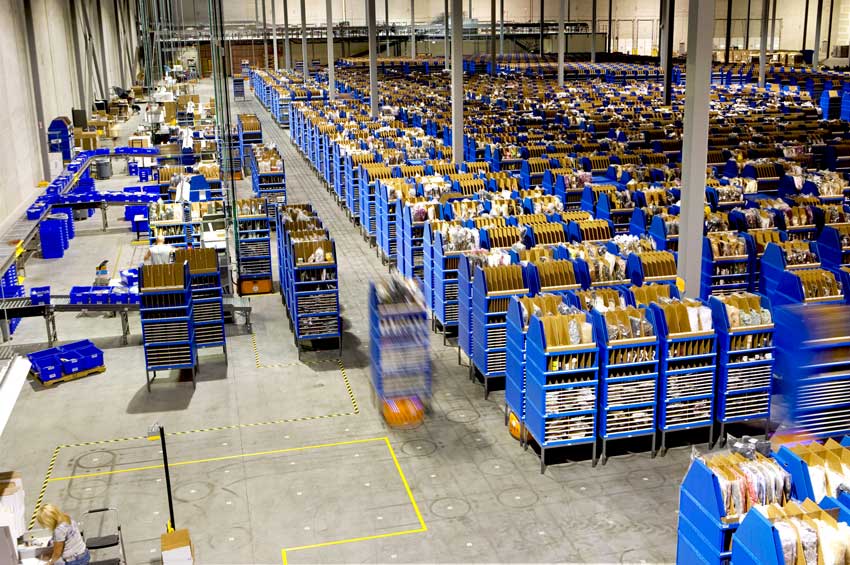
Kiva warehouse robots
Clever ads that emphasize ROI, presentations that show production benefits, new robot sales records, capital expenditure for warehousing systems and increased attendance at trade shows are all focusing attention on the business case for robotics.
The Robotics Industries Association (RIA) reports that North American robot sales set new records for the first half of 2015: 14,232 robots, valued at $840m, were ordered during that period. Sales in the semiconductor sector (30%), automotive components (23%) and life sciences (8%) increased strongly. In contrast, orders to automotive OEMs were down 18% from their record highs in 2014. In March, RIA offered an in-depth return on investment calculator and tutorial by Tanya Anandan. Anandan also produced a more recent article about how new robots are using various sensors and cameras to raise their IQ. Bottom line: as sensors, cameras and CPUs get cheaper and more capable, they are enabling robots to sense, see and do more at less cost.
The Robot Report’s monthly recap of fundings, IPOs and acquisitions has confirmed the broadening interest by business and finance. Funding in the first six months of 2015 was greater than for all of 2014 and the number of strategic acquisitions has grown as well.
One of the presentations at the recent Automation World Conference described a recently built facility in the sweet potato business. Utilizing camera-aided sorting systems, automated case erection, weighing and filling stations, and robotic palletizing and shrink wrapping systems, the new facility now only requires about 40 people to ship 50,000 lbs/hr where it used to need 75 people to ship 20,000 lbs/hour. The control software also allows the firm to put unique codes at the item level that enables complete track and trace details from farm to warehouse to packaging to consumer.
In a recent advertisement, Universal Robots (UR) describes how a medical device maker freed up 11 full-time workers to handle more complex tasks when they deployed three UR robots. The ROI on those robots was less than six months. “We were looking at cost, accuracy, ease of implementation and ease of use. The Universal Robots nailed it in all those areas,” said their Director of Engineering.
Three industrial robot trade shows this year — Automate, Promat and CIROS — have all drawn record crowds, had greater floor space and more exhibitors. At Promat, which focused on material handling, warehousing and distribution center automation and robotics, the consensus was that the show produced more orders than any previous event.
All of these disparate items, when combined, imply a serious business case – and growing momentum – for the deployment of robots.
tags: business, investment, Universal Robots, warehouse robots

AUAI is supported by:









