Robohub.org
 

How Canada handles beyond visual line-of-sight drone operations

by
02 March 2015


share this:

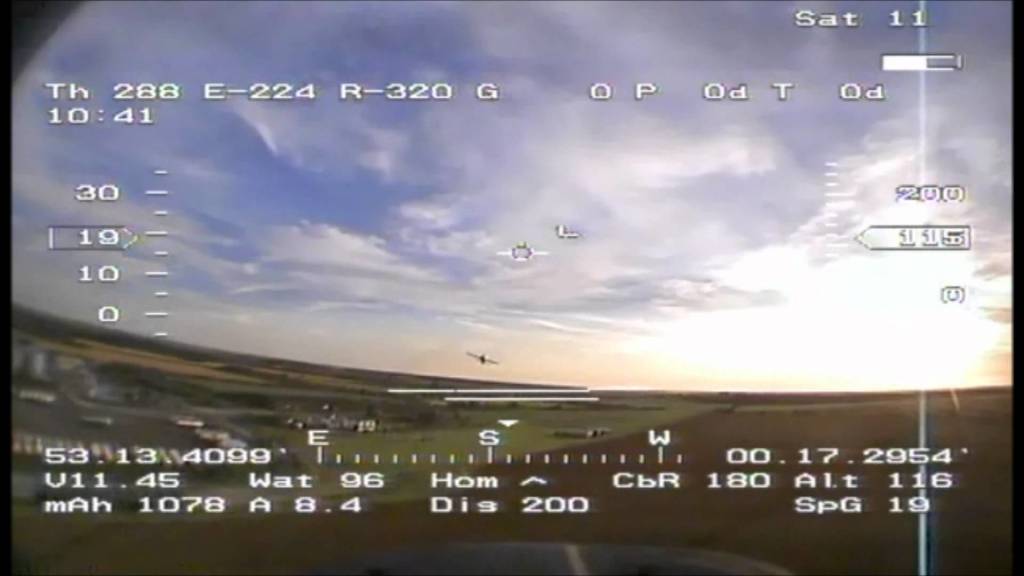
The FAA’s Notice of Proposed Rulemaking (NPRM) for small unmanned aircraft systems (SUAS) proposes to restrict operations that are completed beyond visual line-of-sight (BVLOS). However, the FAA has invited comments regarding the proposed BVLOS restriction. In Canada, BVLOS operations are not yet mainstream, however they are attainable under the Special Flight Operations Certificate (SFOC) system.

Transport Canada’s Staff Instruction 623-001 establishes the following conditions for BVLOS operations:

  • BVLOS flights cannot take place outside of restricted airspace, unless the operator can mitigate risk to an acceptable level i.e. through the use of ground-based radar
  • BVLOS flights must not be conducted over populated areas
  • BVLOS flights must be conducted in visual meteorological conditions
  • BVLOS flights cannot be conducted within controlled airspace
  • BVLOS flights can only be conducted within 5 nautical miles of the point of departure
  • The take-off and landing/recovery must be conducted within visual line-of-sight
  • Direct radio line-of-sight capability must be maintained throughout the operating area

Canada is not alone in having established conditions for BVLOS operations. In fact, quite a few jurisdictions have more advanced regulations for BVLOS operations, including Australia, Colombia, Czech Republic, France, Israel and Poland. As stakeholders submit comments to the FAA over the next two months, it’s important to look at how other jurisdictions are managing risk in BVLOS operations.


tags: , ,


Diana Marina Cooper is Vice President of Legal and Policy Affairs at PrecisionHawk.


Subscribe to Robohub newsletter on substack


Related posts :

Developing an optical tactile sensor for tracking head motion during radiotherapy: an interview with Bhoomika Gandhi

  05 Mar 2026
Bhoomika Gandhi discusses her work on an optical sensor for medical robotics applications.

Humanoid home robots are on the market – but do we really want them?

  03 Mar 2026
Last year, Norwegian-US tech company 1X announced “the world’s first consumer-ready humanoid robot designed to transform life at home”.

Robot Talk Episode 146 – Embodied AI on the ISS, with Jamie Palmer

  27 Feb 2026
In the latest episode of the Robot Talk podcast, Claire chatted to Jamie Palmer from Icarus Robotics about building a robotic labour force to perform routine and risky tasks in orbit.

I developed an app that uses drone footage to track plastic litter on beaches

  26 Feb 2026
Plastic pollution is one of those problems everyone can see, yet few know how to tackle it effectively.

Translating music into light and motion with robots

  25 Feb 2026
Robots the size of a soccer ball create new visual art by trailing light that represents the “emotional essence” of music

Robot Talk Episode 145 – Robotics and automation in manufacturing, with Agata Suwala

  20 Feb 2026
In the latest episode of the Robot Talk podcast, Claire chatted to Agata Suwala from the Manufacturing Technology Centre about leveraging robotics to make manufacturing systems more sustainable.

Reversible, detachable robotic hand redefines dexterity

  19 Feb 2026
A robotic hand developed at EPFL has dual-thumbed, reversible-palm design that can detach from its robotic ‘arm’ to reach and grasp multiple objects.

“Robot, make me a chair”

  17 Feb 2026
An AI-driven system lets users design and build simple, multicomponent objects by describing them with words.


Robohub is supported by:


Subscribe to Robohub newsletter on substack


©2026.02 - Association for the Understanding of Artificial Intelligence