
Robohub.org
#IROS2020 BiR-IROS: Black in Robotics
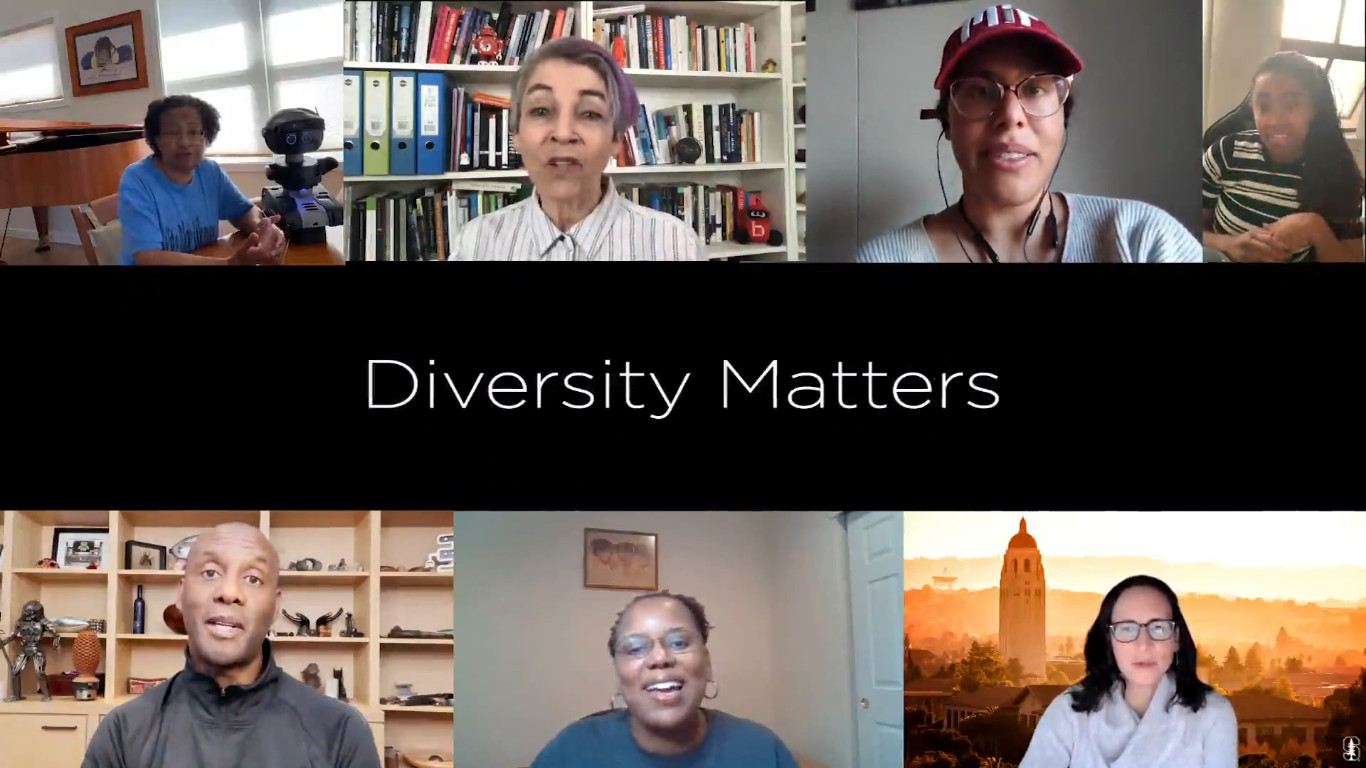
The 2020 IEEE/RSJ International Conference on Intelligent Robots and Systems (IROS) has teamed up with Black in Robotics (website, Twitter) to release a new special series named BiR-IROS: Black in Robotics with the support of Toyota Research Institute. This series consists of three short but powerful videos of roboticists giving personal examples of why diversity matters in robotics, showcasing their research and explaining what got them into robotics.
BiR-IROS: Black in Robotics is available for free through the OnDemand platform until 25 November (located under Technical Talks or at this link). Here’s a list of all the speakers and organisations who took part in the videos:
- Ariel Anders – Roboticist at Robust.AI
- Allison Okamura – Professor of Mechanical Engineering at Stanford University
- Alivia Blount – Data Scientist
- Anthony Jules – Co-founder and COO at Robust.AI
- Andra Keay – Robotics Industry Futurist, Managing Director of Silicon Valley Robotics and Core Team Member of Robohub
- Carlotta A. Berry – Professor of Electrical and Computer Engineering at Rose-Hulman Institute of Technology
- Donna Auguste – Entrepreneur and Data Scientist
- Clinton Enwerem – Robotics Trainee from the Robotics & Artificial Intelligence Nigeria (RAIN) team
- Quentin Sanders – Postdoctoral Research Fellow at North Carolina State University
- George Okoroafor – Robotics Research Engineer from the Robotics & Artificial Intelligence Nigeria (RAIN) team
- Tatiana Jean-Louis – Amazon & Robotics Geek
- Patrick Musau – Graduate Research Assistant at Vanderbilt University
- Melanie Moses – Professor of Computer Science at the University of New Mexico
tags: research
Daniel Carrillo-Zapata
was awared his PhD in swarm robotics at the Bristol Robotics Lab in 2020. He now fosters the culture of "scientific agitation" to engage in two-way conversations between researchers and society.
Daniel Carrillo-Zapata
was awared his PhD in swarm robotics at the Bristol Robotics Lab in 2020. He now fosters the culture of "scientific agitation" to engage in two-way conversations between researchers and society.
AUAI is supported by:









Related posts :
Robots in Society, Business and Culture: September 2026
IEEE Robotics and Automation Society (RAS)
26 Oct 2026
We showcase a selection of robotics stories from society, business, research and culture.
Robot Talk Episode 167 – Automating construction, with Jan Petrš
Robot Talk
23 Oct 2026
In the latest episode of the Robot Talk podcast, Claire chatted to Jan Petrš from École Polytechnique Fédérale de Lausanne about novel robot designs for construction and architecture.
ACM SIGAI Autonomous Agents Award 2027 open for nominations
ACM SIGAI
20 Oct 2026
Nominations are solicited for the 2027 ACM SIGAI Autonomous Agents Research Award.
Powered by muscle cells, a paper-thin robot swims through watery maze
MIT News
19 Oct 2026
MIT engineers’ new aquabot offers a way to design small, efficient “biohybrid” robots.
Robot Talk Episode 166 – Evolving robot bodies and brains, with Rika Antonova
Robot Talk
16 Oct 2026
In the latest episode of the Robot Talk podcast, Claire chatted to Rika Antonova from the University of Cambridge about using artificial intelligence to develop complimentary robot hardware and algorithms.
Neurosymbolic planning using natural language communication for cooperative autonomous vehicles
Read about work that was nominated for the AAMAS 2026 best paper award.
Humanoid robots can sprint and box – but the real test is doing the laundry
The Conversation
12 Oct 2026
No robot system can yet reliably handle the whole laundry process. Even folding remains a challenge.
Robot Talk Episode 165 – Robots behind the research, with Kushant Patel
Robot Talk
09 Oct 2026
In the latest episode of the Robot Talk podcast, Claire chatted to Kushant Patel from Brookhaven National Laboratory about robots that work in scientific facilities, such as particle accelerators.

