Robohub.org
 

Lockheed and AeroVironment to jointly develop UAS

by
16 February 2014


share this:
Web_GlobalObserver_bg

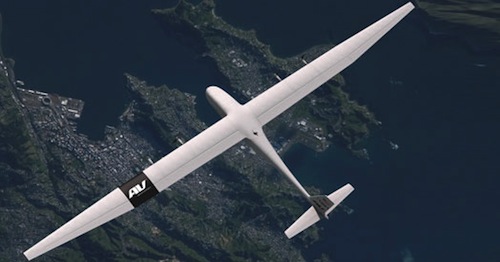
AeroVironment (of Raven, Puma and Wasp fame) has a high-altitude long-endurance UAV named Global Observer. It flies at 65,000’ for a week or more at a time, has up to a 600-mile diameter footprint and can carry a heavy payload of sensors and cameras.

Lockheed Martin's experience with mission and ground systems technology and the integration of that into UAS is the primary purpose for the agreement.

“Numerous customers are seeking persistent solutions for wide-area applications, such as border surveillance and communications, that are much more affordable than those available previously,” says Roy Minson, AeroVironment senior vice president and general manager of its Unmanned Aircraft Systems business segment. “Lockheed Martin’s broad systems integration expertise gives us the opportunity to work together and develop innovative, end-to-end atmospheric satellite systems built around Global Observer that deliver breakthrough capabilities to customers.”

It should be noted that Lockheed Martin has been on an acquisition kick the last year or two picking up UAS manufacturers, particularly those with products for the commercial marketplace.

Source: AUVSI


tags: ,


Frank Tobe is the owner and publisher of The Robot Report, and is also a panel member for Robohub's Robotics by Invitation series.

            AUAI is supported by:


Subscribe to Robohub newsletter on substack


Related posts :

How to teach the same skill to different robots

  11 May 2026
A new framework to teach a skill to robots with different mechanical designs, allowing them to carry out the same task without rewriting code for each.

Robot Talk Episode 155 – Making aerial robots smarter, with Melissa Greeff

  08 May 2026
In the latest episode of the Robot Talk podcast, Claire chatted to Melissa Greeff from Queen's University about autonomous navigation and learning for drones.

New understanding of insect flight points way to stable flapping-wing robots

  07 May 2026
The way bugs and birds flap their wings may look effortless, but the dynamics that keep them aloft are dizzyingly complex and difficult to quantify.

Robotically assembled building blocks could make construction more efficient and sustainable

  05 May 2026
Research suggests constructing a simple building from interlocking subunits should be mechanically feasible and have a much smaller carbon footprint.

Robot Talk Episode 154 – Visual navigation in insects and robots, with Andrew Philippides

  01 May 2026
In the latest episode of the Robot Talk podcast, Claire chatted to Andrew Philippides from the University of Sussex about what we can learn from ants and bees to improve robot navigation.

Ultralightweight sonar plus AI lets tiny drones navigate like bats

  29 Apr 2026
Researchers develop ultrasound-based perception system inspired by bat echolocation.

Gradient-based planning for world models at longer horizons

  28 Apr 2026
What were the problems that motivated this project and what was the approach to address them?

Robot Talk Episode 153 – Origami-inspired robots, with Chenying Liu

  24 Apr 2026
In the latest episode of the Robot Talk podcast, Claire chatted to Chenying Liu from University of Oxford about how a robot's physical form can actively contribute to sensing, processing, decision-making, and movement.


AUAI is supported by:


Subscribe to Robohub newsletter on substack


©2026.02 - Association for the Understanding of Artificial Intelligence