
Robohub.org
News bureaus and networks setting up drone divisions
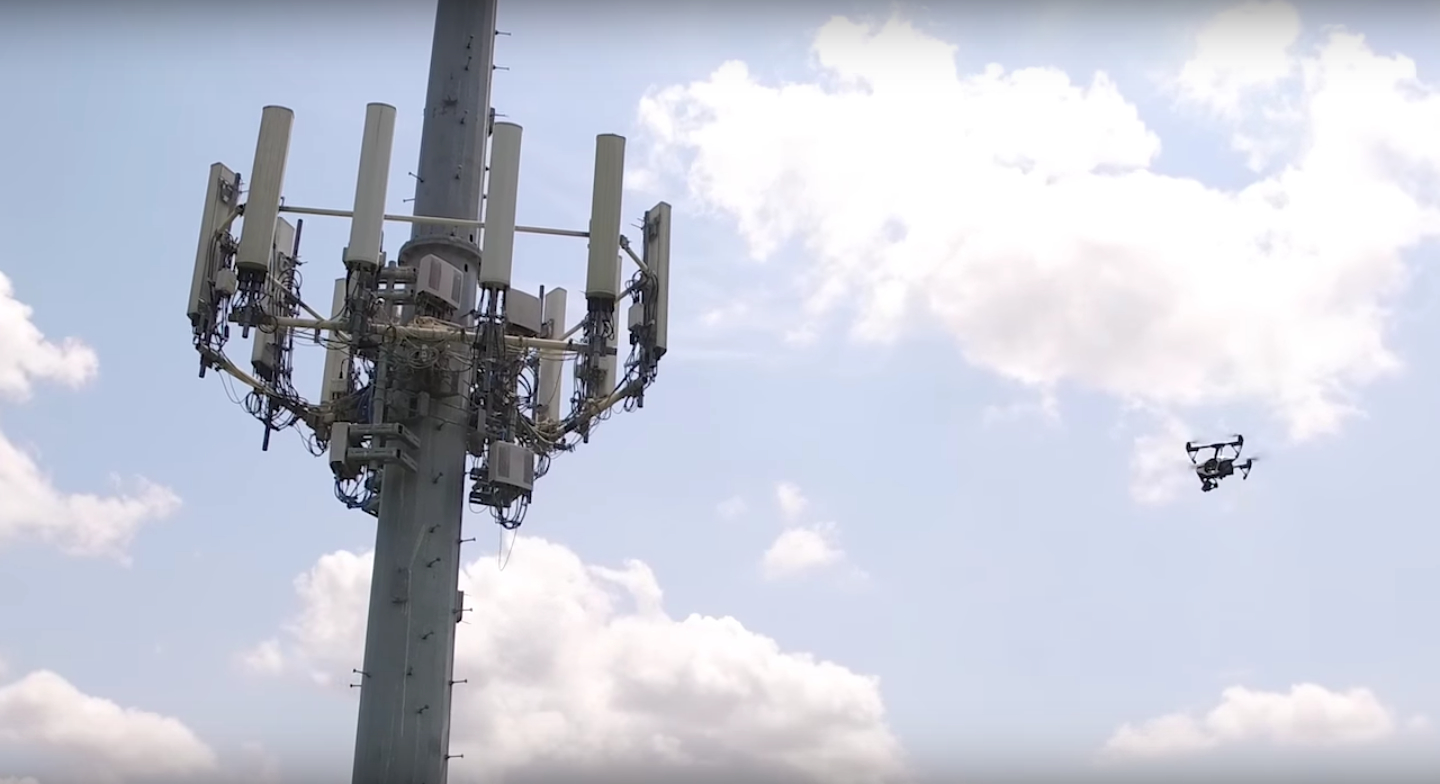
A Bird’s Eye View of AT&T’s Drone Inspection Program, Source: AT&T/YouTube
CNN just inaugurated their new drone division. So have many other news organizations. Network providers are also setting up drone operations for a variety of purposes.
FAA’s new regulations
Part 107 of the Federal Aviation Regulations (FAR) clarifies how media are allowed to operate drones, and make it easier for smaller news teams and production companies to utilize these aircraft systems.
“It is going to be easier than what existed with the previous rules,” said Robert Kirk, partner with Wilkinson, Baker, Knauer, LLP.
Under the old rules, you couldn’t operate within 500 feet of people. The new rules specify that a UAS can’t operate over people directly (with the exception of production crews and news teams). Previously, to cover certain events, a news organization had to rent the roof of a garage to get this buffer—but now the rules say you can hover over a news vehicle or much smaller roped-off area.”
The new rules also expand operations to what is essentially termed “civil twilight,” which to the FAA is a very specific time of day. To operate one hour before or after “daylight,” a drone will require lights or other illumination. Previously, those operations were prohibited entirely.
CNN launches CNNAir
Dedicated to aerial imagery and reporting, CNN’s new AIR Division has two full-time operators and a dozen drones of various sizes making up their fleet.
CNN intends to use their drones to add context and understanding to their stories as well as enhancing the production value of their images. They expect their new AIR Division will help improve the storytelling aspect of CNN’s reporting.
CNN, partnering with Georgia Tech, was able to get the FAA to make CNN a “pathfinder” and gave them permission to explore news-gathering opportunities with drones which they did for 18 months prior to launching their new AIR Division.
AT&T, T-Mobile Netherlands and Nokia
AT&T has also been exploring various uses of drones. One very likely use is to launch a tethered drone to hover above a sports or political event to provide enhanced LTE wireless coverage to handle the extra load of people sending photos and videos to share the moment. Flying COWs (Cells on Wings) can also provide communications for disaster response teams.
Another use is to perform aerial inspections of cell towers. By using drones AT&T service people are able to access parts of a tower that a human cannot.
T-Mobile Netherlands recently began using drones to inspect the condition of its network infrastructure. Jeffrey Leentjes, network specialist of T-Mobile, said: “Normally it would take a week of using a cherry picker to get the right photos of the special stadium antennas and antenna masts and perform the checks of these. Now the drone flew around the station and mast in just 15 minutes and we got the right images for our check.”
Nokia is also using drones to conduct network testing. It flew around the Dubai International Stadium gathering network data and key performance indicators as well as tower inspection, radio planning and line of sight testing.
tags: Frank Tobe, The Robot Report, UAVs & drones

AUAI is supported by: