Robohub.org
 

PaR-PaR: A simple high-level, biology-friendly robot-programming language | Berkeley Lab News Center

by
26 October 2012


share this:

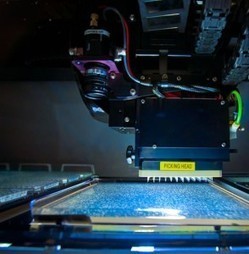
“Nathan Hillson, a biochemist at the U.S. Department of Energy (DOE)’s Joint BioEnergy Institute (JBEI), led the development of PaR-PaR, which stands for Programming a Robot. PaR-PaR is a simple high-level, biology-friendly, robot-programming language that allows researchers to make better use of liquid-handling robots and thereby make possible experiments that otherwise might not have been considered.”

“The syntax and compiler for PaR-PaR are based on computer science principles and a deep understanding of biological workflows,” Hillson says. “After minimal training, a biologist should be able to independently write complicated protocols for a robot within an hour. With the adoption of PaR-PaR as a standard cross-platform language, hand-written or software-generated robotic protocols could easily be shared across laboratories.”

See on newscenter.lbl.gov


John Payne

            AUAI is supported by:


Subscribe to Robohub newsletter on substack


Related posts :

These tiny drones are powered by sound

  24 Aug 2026
EPFL engineers have designed acoustic cavities that convert sound waves into thrust, propelling small robots and ultralight aerial vehicles without on-board actuators or electronics.

#AAMAS2026 blue sky award winner: Foundation world models for agents in changing environments

and   21 Aug 2026
Hear from the AAMAS 2026 Best Blue Sky Paper Award winner.

Robotics roadmaps from around the world spotlight of the month: Japan

Robots have been a prolific theme in Japanese pop culture and media since the 1950s

Intermittent swimming promotes the energy efficiency of fish-like robot movements

How zebrafish-inspired robots save energy by swimming in bursts.

What does it take for a robot to hold a conversation with a room, not just a person?

and   14 Aug 2026
Find out about a summer school held at Imperial College London.

Robotics roadmaps from around the world

We embark on a tour into some of the recent and prominent robotics roadmaps from around the world.

A ‘5-in-1’ seed-sized surgical robot

Mini robot can move, cut tissue, release drugs, grip and store samples, and generate heat wirelessly

AI agents create virtual playgrounds to help robots get crucial training data

  07 Aug 2026
“SceneSmith” system uses collaborative AI agents to create realistic 3D environments of places like kitchens, hotels, and living rooms, where robots can simulate everyday chores.


AUAI is supported by:


Subscribe to Robohub newsletter on substack


©2026.05 - Association for the Understanding of Artificial Intelligence