Robohub.org
 

Robot Swarms in the Real World workshop at IEEE ICRA 2021

by
17 June 2021


share this:

Siddharth Mayya (University of Pennsylvania), Gennaro Notomista (CNRS Rennes), Roderich Gross (The University of Sheffield) and Vijay Kumar (University of Pennsylvania) were the organisers of this IEEE ICRA 2021 workshop aiming to identify and accelerate developments that help swarm robotics technology transition into the real world. Here we bring you the recordings of the session in case you missed it or would like to re-watch.

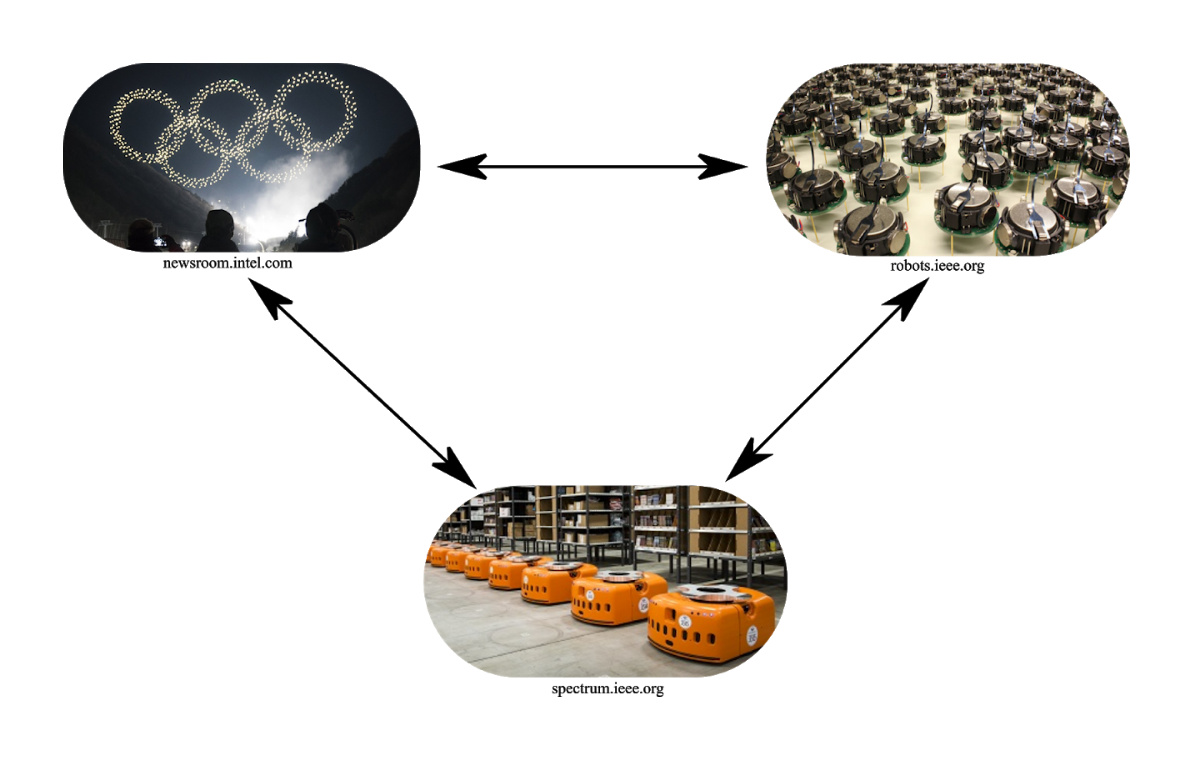
As the organisers describe, “in swarm robotics systems, coordinated behaviors emerge via local interactions among the robots as well as between robots and the environment. From Kilobots to Intel Aeros, the last decade has seen a rapid increase in the number of physically instantiated robot swarms. Such deployments can be broadly classified into two categories: in-laboratory swarms designed primarily as research aids, and industry-led efforts, especially in the entertainment and automated warehousing domains. In both of these categories, researchers have accumulated a vast amount of domain-specific knowledge, for example, regarding physical robot design, algorithm and software architecture design, human-swarm interfacing, and the practicalities of deployment.” The workshop brought together swarm roboticists from academia to industry to share their latest developments—from theory to real-world deployment. Enjoy the playlist with all the recordings below!


tags: ,


Daniel Carrillo-Zapata was awared his PhD in swarm robotics at the Bristol Robotics Lab in 2020. He now fosters the culture of "scientific agitation" to engage in two-way conversations between researchers and society.

            AUAI is supported by:


Subscribe to Robohub newsletter on substack


Related posts :

How to teach the same skill to different robots

  11 May 2026
A new framework to teach a skill to robots with different mechanical designs, allowing them to carry out the same task without rewriting code for each.

Robot Talk Episode 155 – Making aerial robots smarter, with Melissa Greeff

  08 May 2026
In the latest episode of the Robot Talk podcast, Claire chatted to Melissa Greeff from Queen's University about autonomous navigation and learning for drones.

New understanding of insect flight points way to stable flapping-wing robots

  07 May 2026
The way bugs and birds flap their wings may look effortless, but the dynamics that keep them aloft are dizzyingly complex and difficult to quantify.

Robotically assembled building blocks could make construction more efficient and sustainable

  05 May 2026
Research suggests constructing a simple building from interlocking subunits should be mechanically feasible and have a much smaller carbon footprint.

Robot Talk Episode 154 – Visual navigation in insects and robots, with Andrew Philippides

  01 May 2026
In the latest episode of the Robot Talk podcast, Claire chatted to Andrew Philippides from the University of Sussex about what we can learn from ants and bees to improve robot navigation.

Ultralightweight sonar plus AI lets tiny drones navigate like bats

  29 Apr 2026
Researchers develop ultrasound-based perception system inspired by bat echolocation.

Gradient-based planning for world models at longer horizons

  28 Apr 2026
What were the problems that motivated this project and what was the approach to address them?

Robot Talk Episode 153 – Origami-inspired robots, with Chenying Liu

  24 Apr 2026
In the latest episode of the Robot Talk podcast, Claire chatted to Chenying Liu from University of Oxford about how a robot's physical form can actively contribute to sensing, processing, decision-making, and movement.


AUAI is supported by:


Subscribe to Robohub newsletter on substack


©2026.02 - Association for the Understanding of Artificial Intelligence