Robohub.org
ROS on a stick
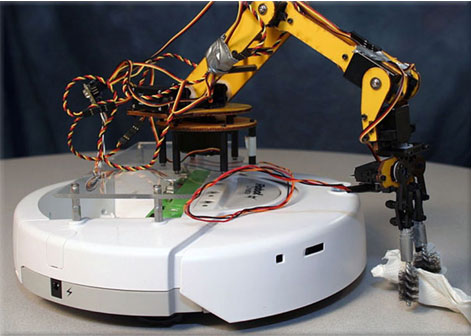
One of the exciting announcements at Automate 2013 is also one of the smallest. Gumstix, providers of Linux computers-on-modules (COMs) are offering ROS on a stick. For $45, Gumstix provide a bootable microSD card with ROS preloaded, joining their Overo range of expansion boards for iCreate and similar platforms. ROS in COM format responds to the rapid growth in Ubuntu systems powering robotic devices, as evidenced by the growing number of public ROS repositories, with more than 175 to date. New offerings from Gumstix will really speed up the development of small robotic devices. See also Frank Tobe’s wrap up of all the robots at Automate 2013.
REDWOOD CITY, Calif., Jan. 24, 2013 /PRNewswire/ — Gumstix, Inc., the premier provider of Linux computers-on-modules (COMs), today announced official support for ROS, the open source Robot Operating System originally created by Willow Garage, on its ARM-based line of Overo COMs. ROS provides a software framework for robot software development on Unix-like systems, with official support for Ubuntu and a large community of users.
Gumstix’ announcement of official ROS support accompanies the introduction of a bootable microSD card featuring Linaro 12.11 LTS and ROS preloaded, as well as an image available for download. ROS binaries were previously only available for Intel, AMD or ARMEL architectures, requiring all ARMHF-based implementations to be compiled from source, with build time being a limitation for ROS implementations on an architecture ideally suited to robotics development. While Gumstix users are still able to build ROS from source with relative ease on an existing Overo with Ubuntu system, users wanting a quick, simple solution are now also able to flash an Ubuntu with ROS image to their Overo COM, thus eliminating a serious impediment to ROS development.
Since ROS was first released in November 2007, there has been a growing trend of implementing ROS on Ubuntu-based systems to power robotic devices. By October 2009, 50 organizations or individuals had publicly released ROS software in its indexed repositories, a number which has grown in the last three years to over 175 organizations or individuals. Gumstix support for ROS satisfies its own customers’ growing demand for the ability to implement this increasingly popular open source solution with ease and flexibility as part of a broader trend in ROS development.
“Last June, Gumstix announced its TurtleCore expansion board as a platform for ROS development on the iRobot Create,” said Dr. W. Gordon Kruberg , president and CEO of Gumstix. “The ability to deploy an available ROS binary on our Overo line of COMs complements the goal initially set forth with the introduction of the TurtleCore: to provide the most powerful development system for roboticists in the smallest form factor. This image and the microSD release now provide that software with minimum development time and greater ease.”
“We welcome the support of Gumstix in our efforts to expand the open source robotics community,” said Tully Foote, ROS Platform Manager at Willow Garage. “We love what Gumstix has done to date, and look forward to working with them in the future.”
Developers using customized robotics platforms powered by the Overo will be equally advantaged by ROS, needing only to add packages specific to their solution on top of the standard ROS installation. More information about using Robot Operating System and Ubuntu with Gumstix, including the prebuilt image, is available at the Gumstix Users Wiki, while the $45 bootable microSD with ROS is available at www.gumstix.com.
About Gumstix, Inc.
Since developing the first Linux®-based computer-on-module in 2003, Gumstix has grown to become the premier provider of Linux®-based COMs and expansion boards, with over 15,000 diverse customers in more than 40 countries. Gumstix’ commitment to providing the best, standard platform for ubiquitous, intelligent devices with flexible and open-source design results in less internal development time and faster time-to-market for its customers’ products.
RELATED LINKS
http://www.gumstix.com
PR Newswire (http://s.tt/1yUDg)
tags: Business, Business Deal, open source, review, Robotics technology, Tully Foote